
Week 26.11 - Socials Roundup RIDING IN CARS
09 March - 15 March 2026: Limited Poses in a Limited Space
There are only so many ways to shoot one or two or three people in cars . . . Week 26.11 posts include some of them! with shots from Mona Lisa (1986); The Crow (1994); Summer of Sam (1999); Rake (2010-2018); and Locke (2013).
We also broke down using a car on a low budget in Cuba Libre.
Locke
The entirety of this film happens within a car, in real time, meaning the actor (Tom Hardy), director (Steven Knight), and editor (Justine Wright) have to find ways to keep the flow of performance and story.
This 30 seconds kicks off when Locke’s eyes shift (0:03) then BAM hard-cut to to headlights of a nearby truck which also look like desperate eyes in the night.
Following shots are full of constant movement; the cars moving, the road rushing by, the camera moving, Locke fidgeting, quick-cutting between angles. Even when Locke is sitting still in frame, the image is slowly crossfading between him and the moving scenery and signposts and lights outside his window.
Why does this scene take pains to work in so many different kinds of movement?
Because the phone call (and man on the other end of the line) are anxious and frenetic, so the image is as well.
The Crow
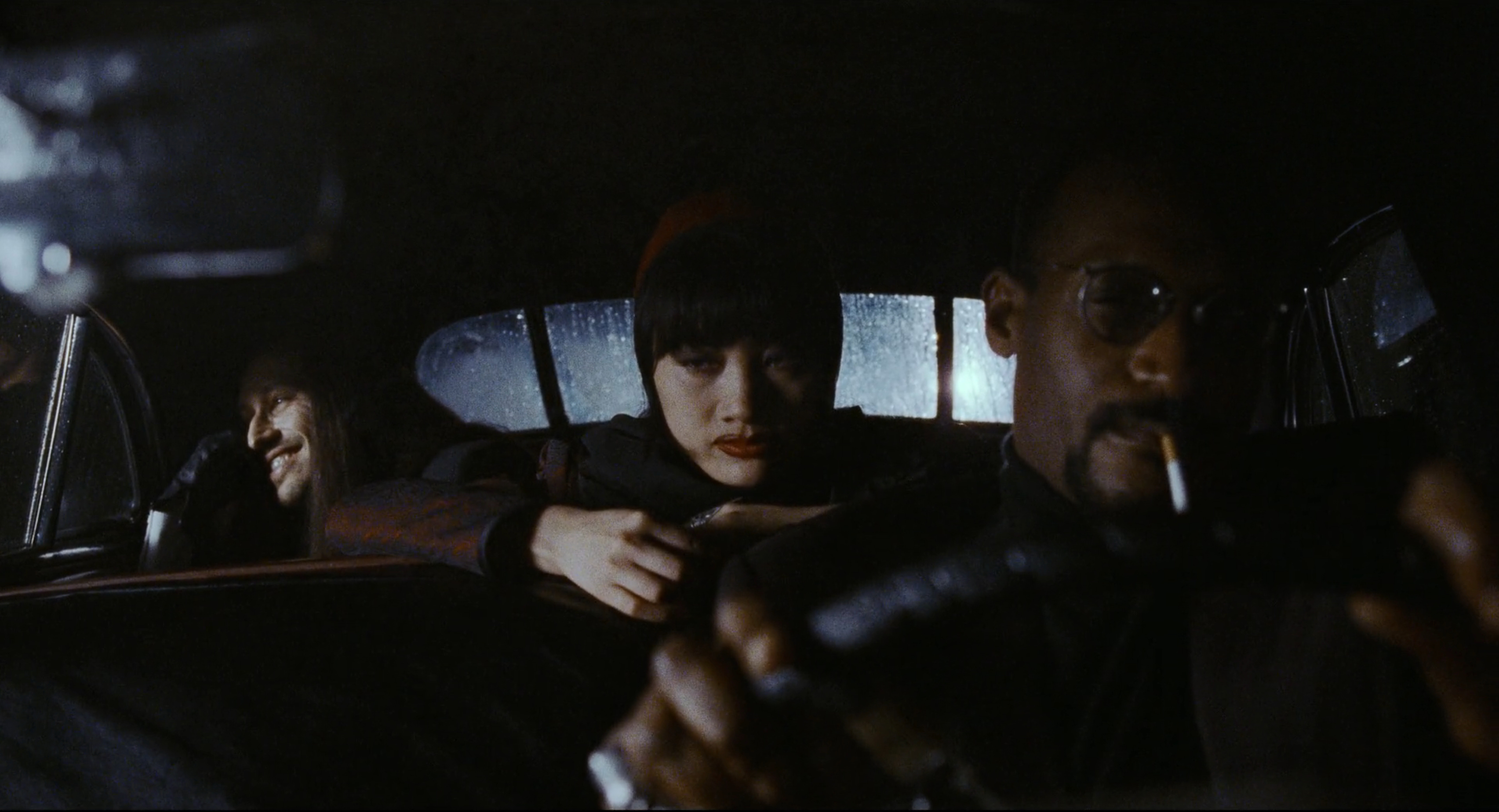
This shot stages all three characters along different planes: far back left talking on the phone, middle centre lost in thought, and front right smoking and driving.
They may be occupying the same car, but the blocking and framing shows they’re all in completely seperate worlds to each other in this moment.
Summer of Sam
As Ritchie (Adrien Brody) and Vinny (John Leguizamo) chat, Spike highlights their disconnect by showing them mostly in seperate frames, but also by placing them in different places in their solo frames to where we would expect them to be — eg. from this wider establishing shot we’d expect to see Ritchie on the left, Vinnie on the right:
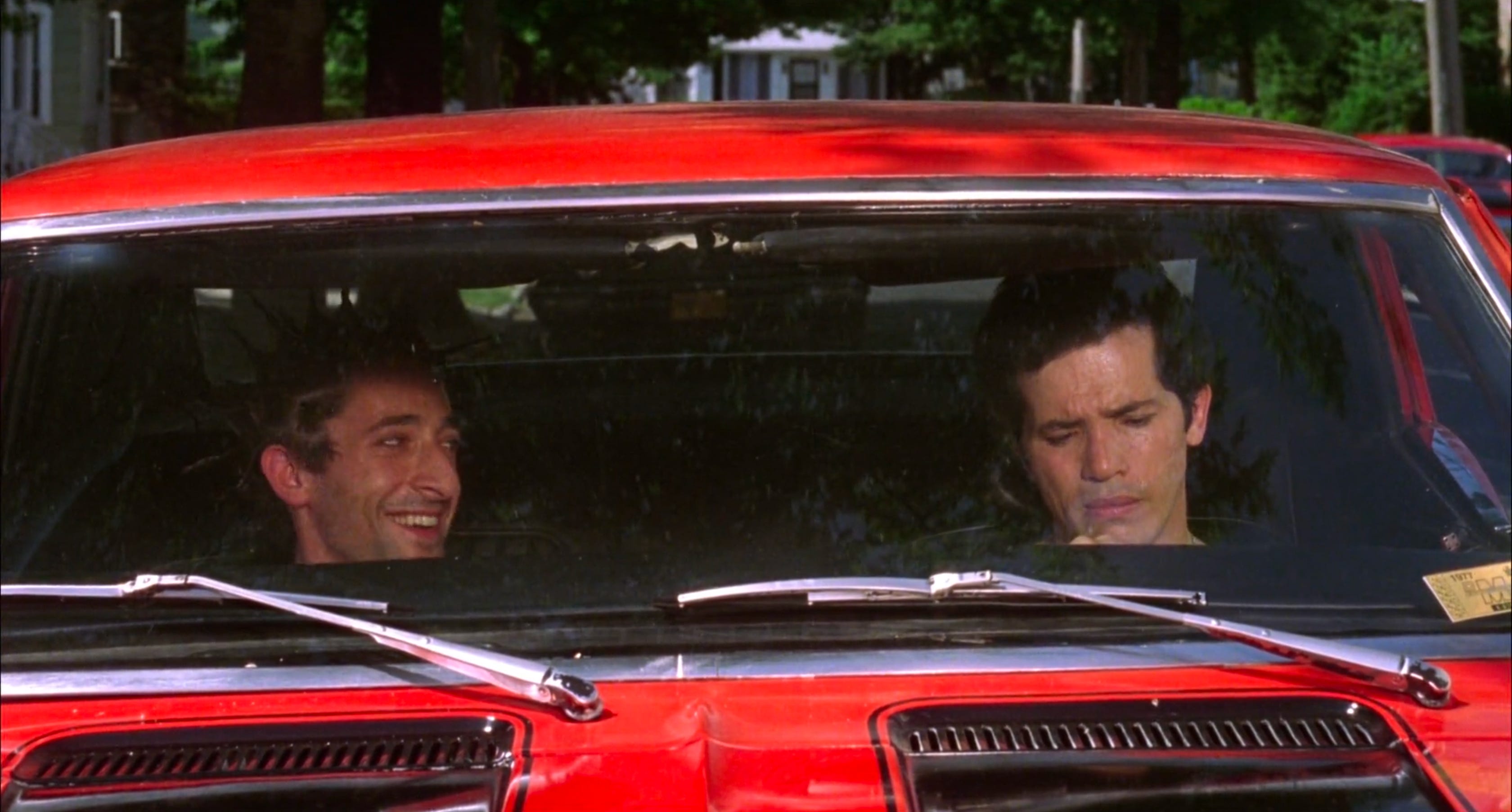
And some of the medium shots and close-up singles do that:


But! Much of the time, especially in wider singles, Vinnie is placed on the left, and Ritchie on the right:
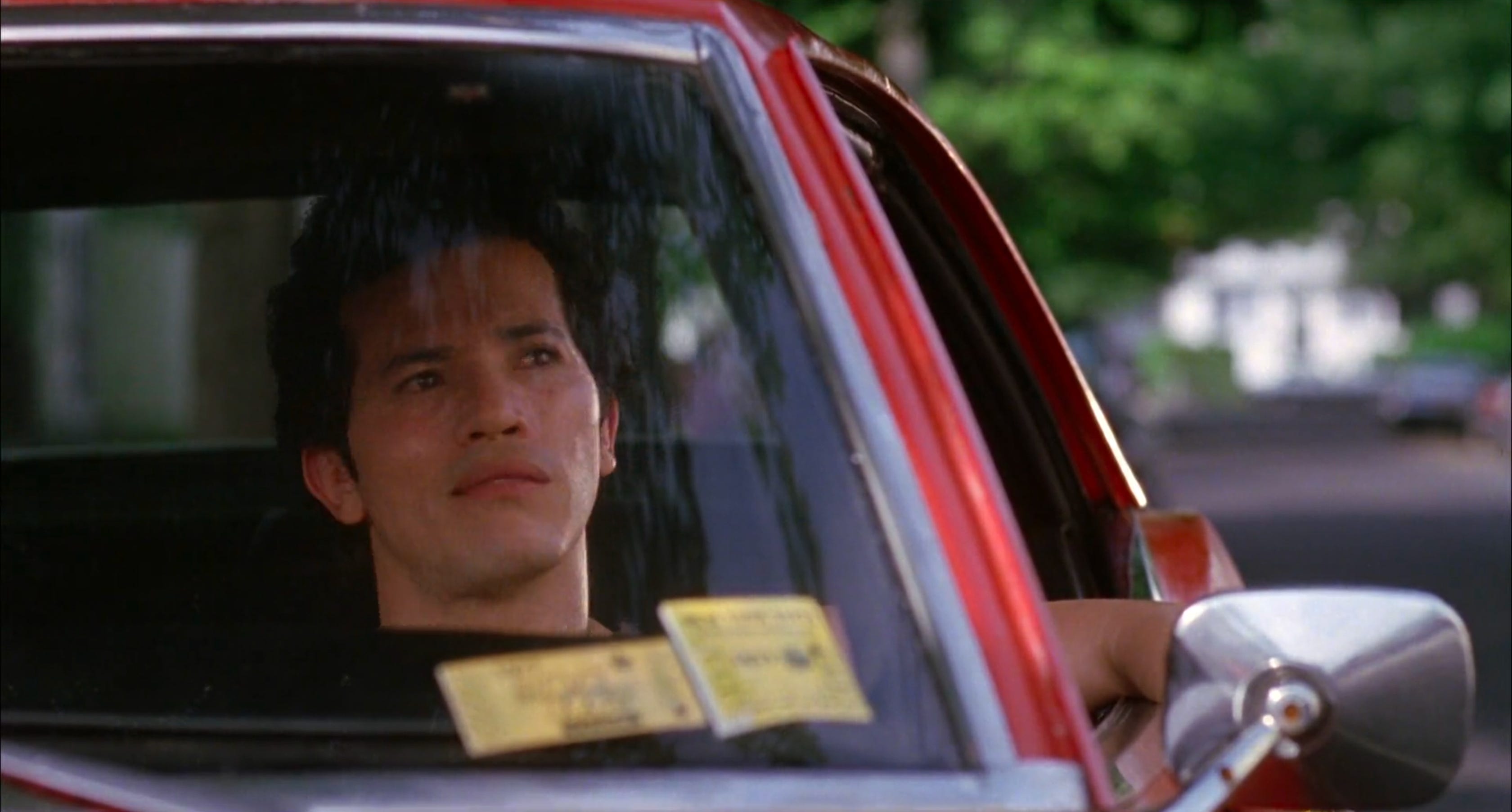
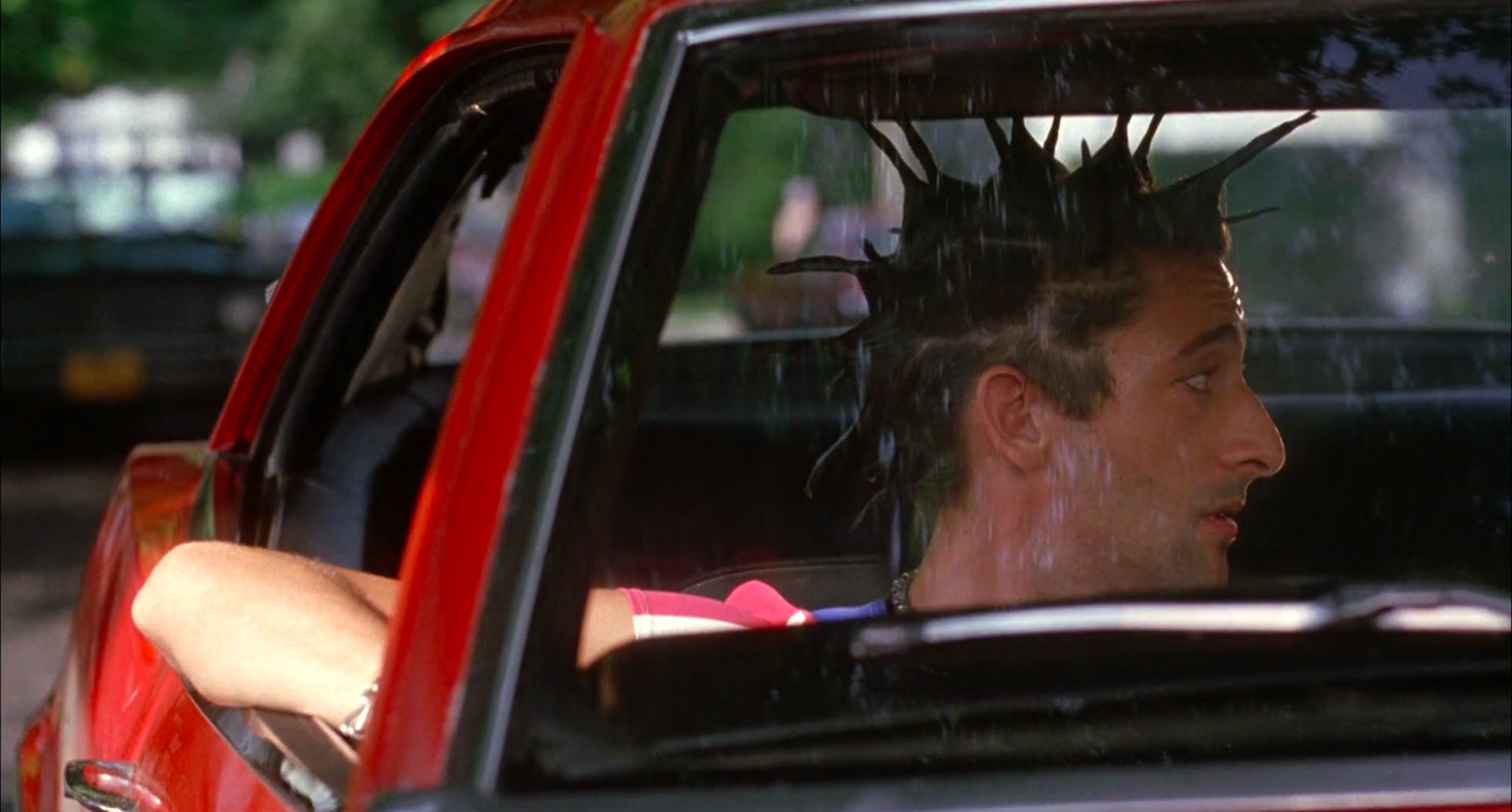
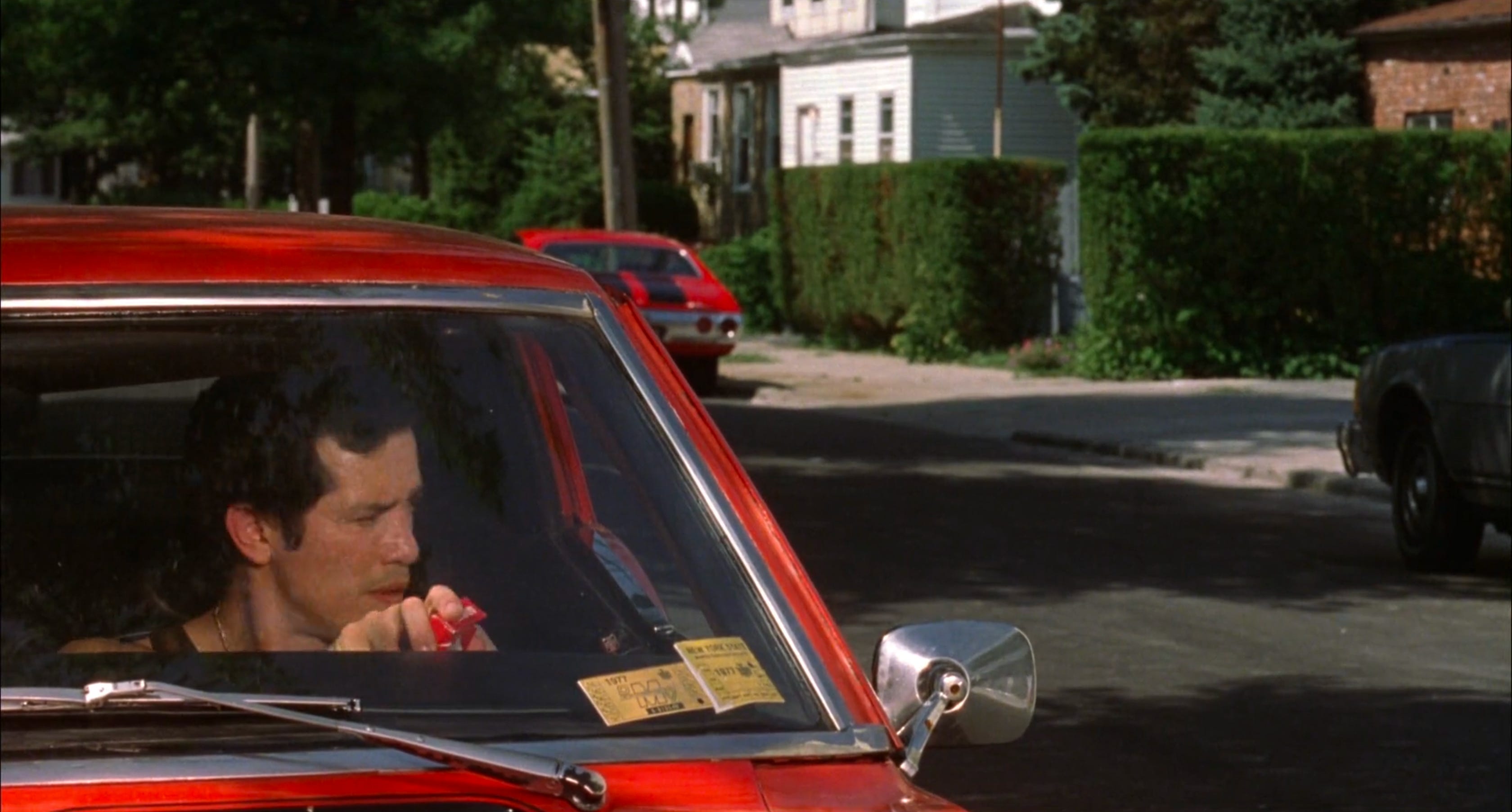
The constant-but-often-minor reframing every time the scene cuts to a single is also somewhat discombobulating; fitting, for a movie which is about how nobody knows who to trust.
Almost all of Jim Jarmusch’s Night on Earth is set inside a car;
we look at how he uses shots to differentiate characters within that incredibly compact, limited space.
Rake
Rake uses a classic split diopter in this car scene, which would have been wildly different had it racked, intercut, or had both characters in the front seat.
Kirsty (Robyn Malcolm) sits up front and Cleaver (Richard Roxburgh) sits in the back, both in focus.
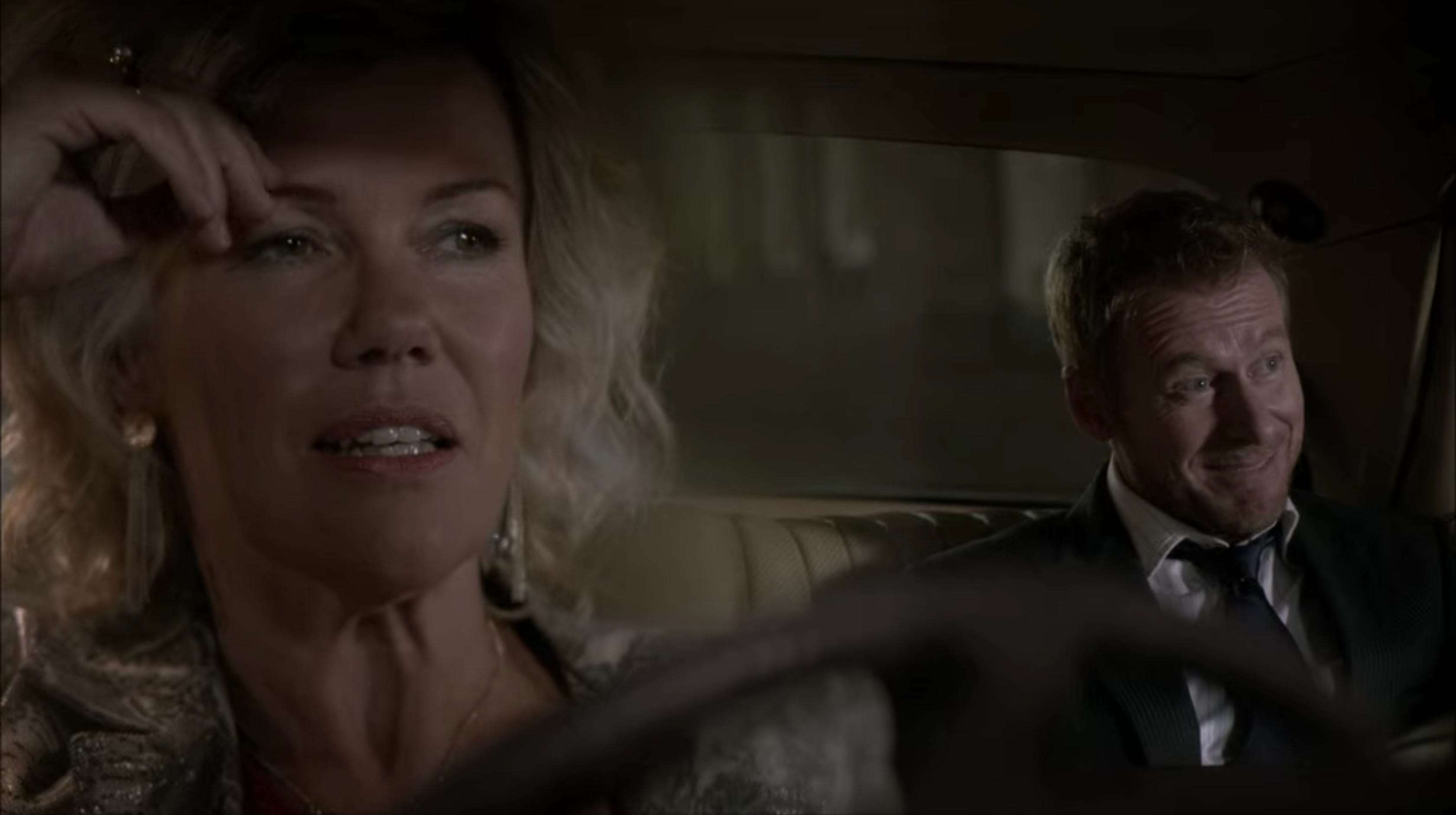
A split can be strong stylistic / framing choice, but why might you want to block these characters this way?
In this case, the front seat / back choice is given a plot reason, but the arrangement also explicitly displays the power dynamic of where Kirsty and Cleaver are at this point in time: she’s in the driver’s seat, with all the control; he’s powerless, far from the steering wheel, symbolically a child.
Mona Lisa
This scene inside a car uses colour, shadows, and a frame-within-a-frame to emphasise how seperate and at-odds George (Bob Hoskins) and Simone (Cathy Tyson) are.
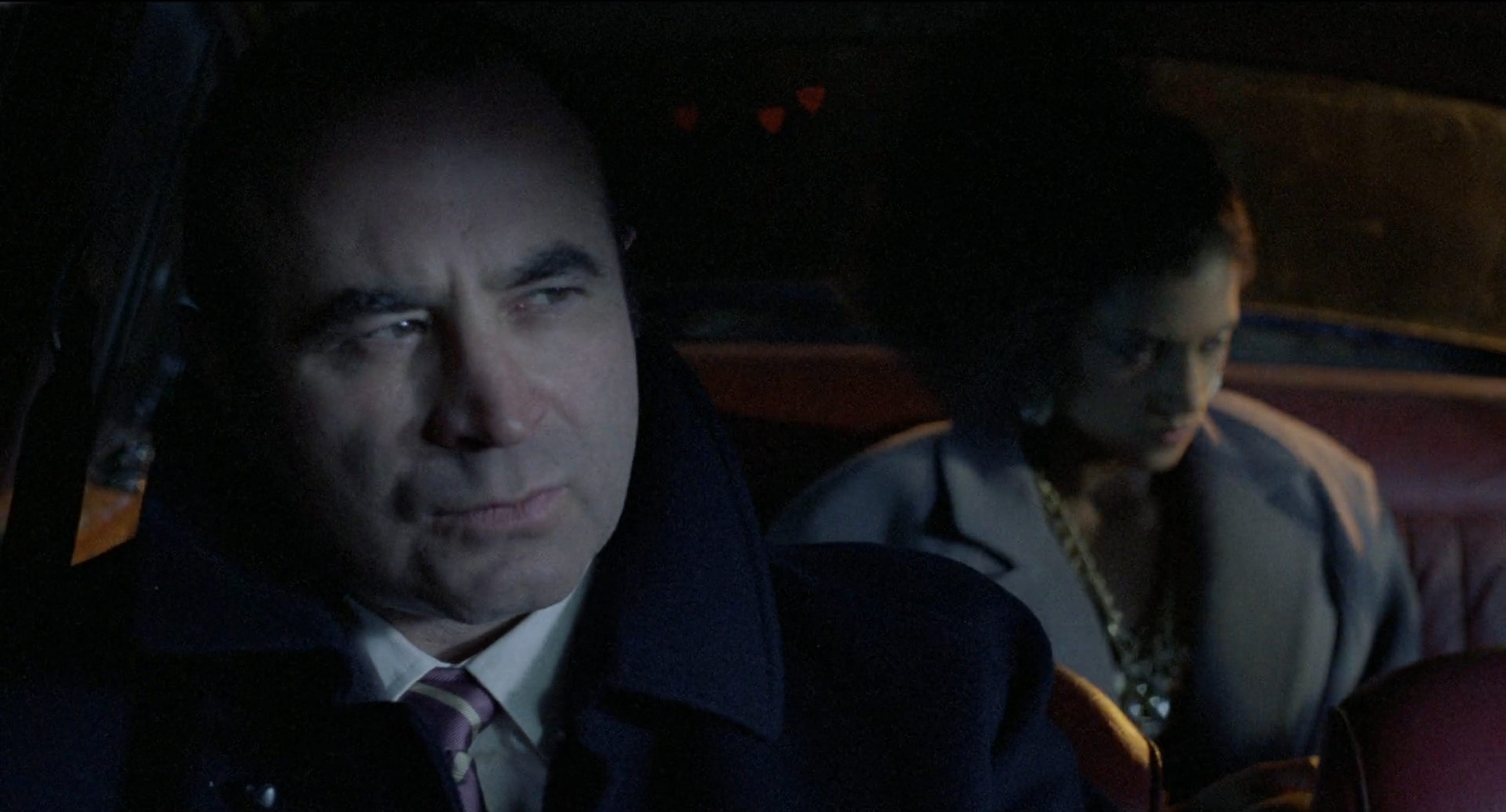
The medium two-shot shows cooler white light on George and more red seat leather around Simone. But it's the singles which really bring it home: George's single is cool blue with his mouth more lit and his eyes mostly shadowed. Using the rearview mirror to frame Simone lets the in-focus section show mostly red, and highlight her eyes.


If you want more outside-the-box options, we’ve looked at
how Widows doesn’t go inside the car at all,
how Two for the Road uses changing cars in a montage,
and how Desert Hearts lights two people in the same car very differently.