
CUBA LIBRE: Shooting Movement on No Money
FRIDAY 13 MARCH
Cuba Libre is a made-for-cheap television-movie riff on 1945’s Detour, itself a low-budget movie which used nifty lighting tricks to make it look like more than it cost.
In most of Australia and some other places,
Cuba Libre is currently available on Kanopy
free with a membership to your local library.
Combining simple shots with movement to drive the story helps Cuba Libre feel more dynamic — and this scene does a lot in three shots where the most the camera does is pan L-R and back again.
1. Setup Single
Okay technically there is a fourth shot, a quick image of Tom (Richy Muller) waiting in the car, asleep.
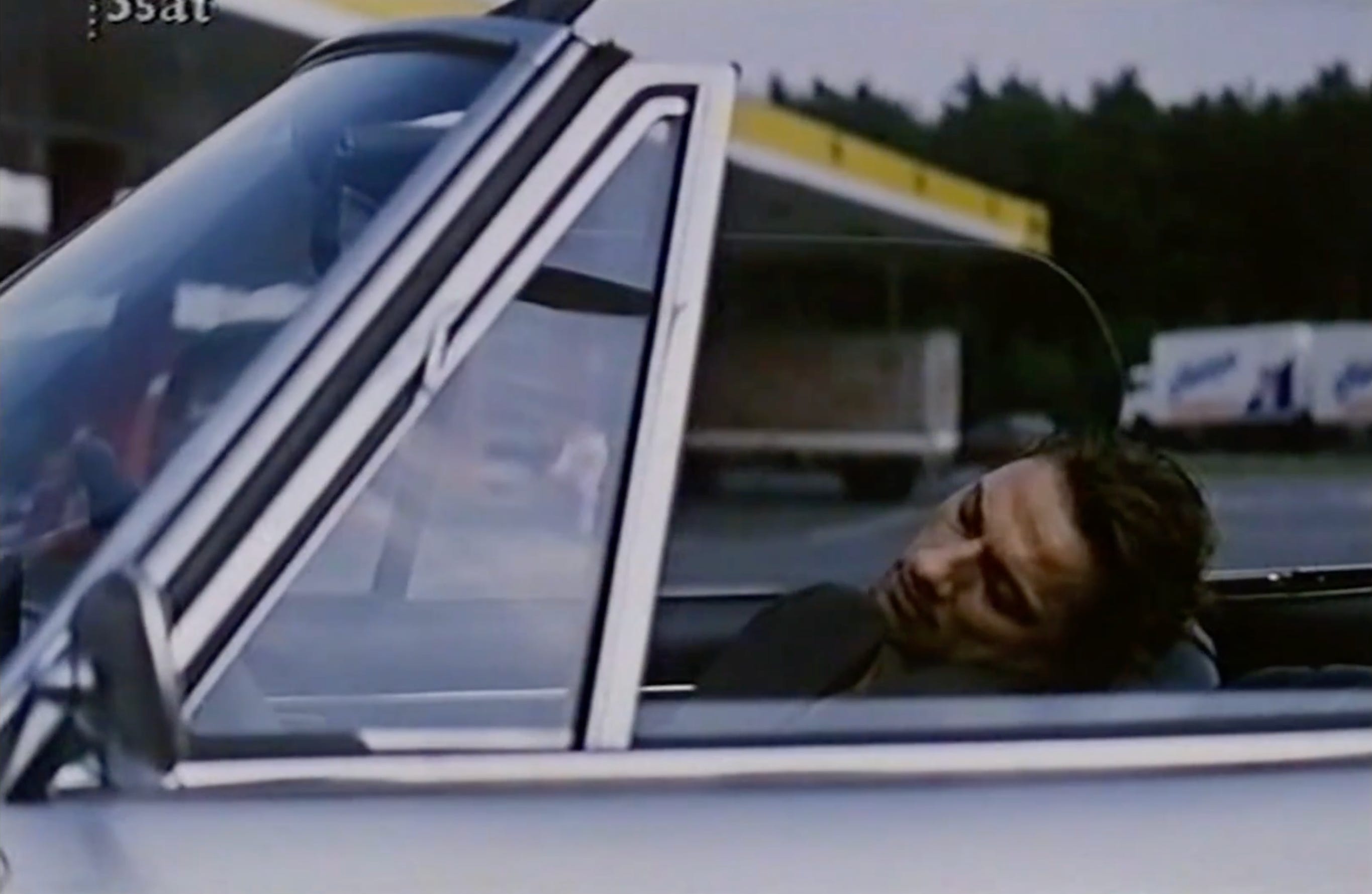
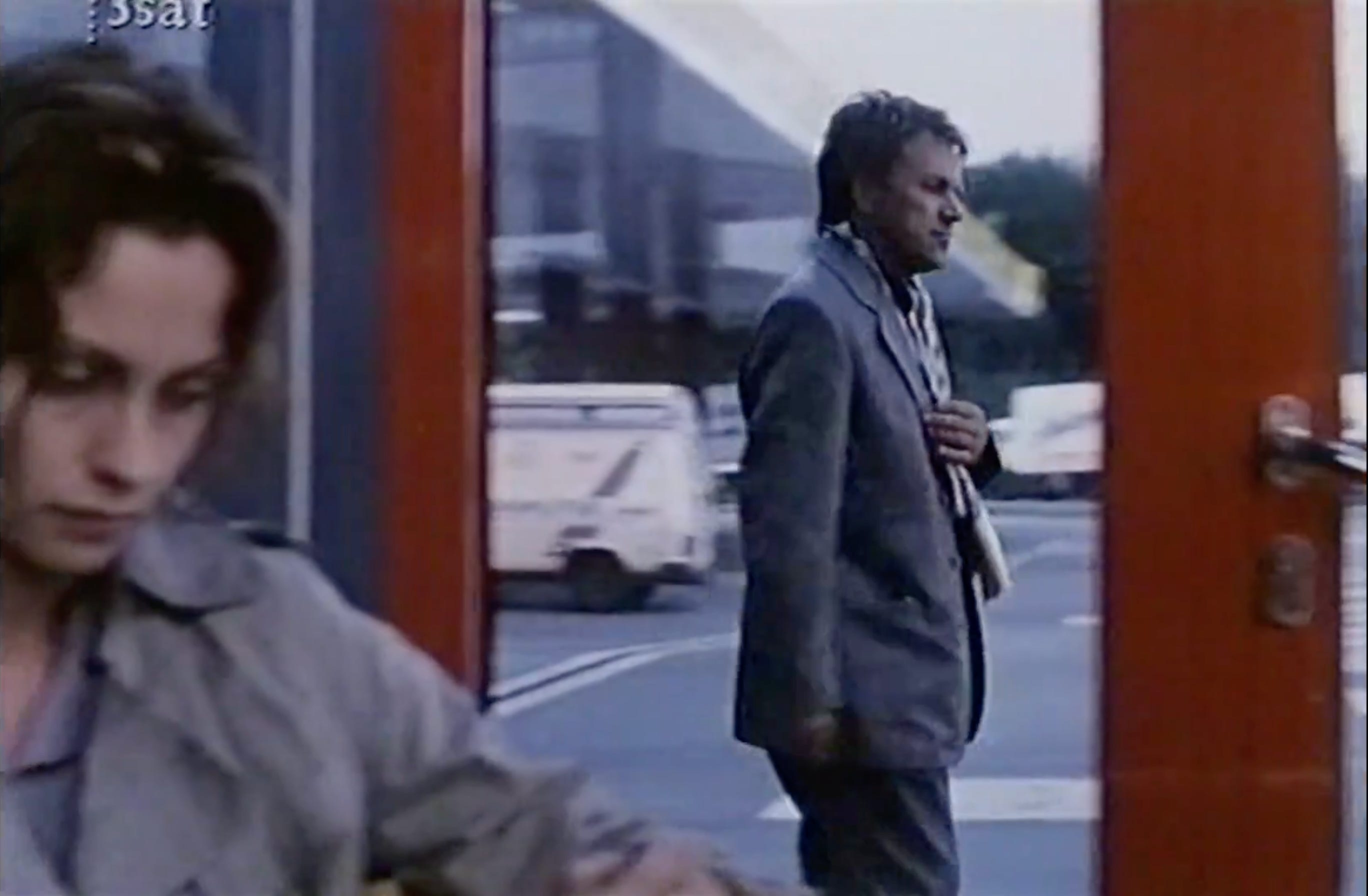
While he snoozes, inside the roadside station, Jimmy (Wolfram Berger) looks at cassette tapes while Tina (Catherine Flemming) orders her coffee (more on the significance of that in this film, here) at the counter behind him.
As Tina walks by, her motion draws our eyes to her, the camera pans slightly to keep her in frame and even more draw our attention, then Jimmy walks quickly out.


2. Sit In, Motion Behind, Pan
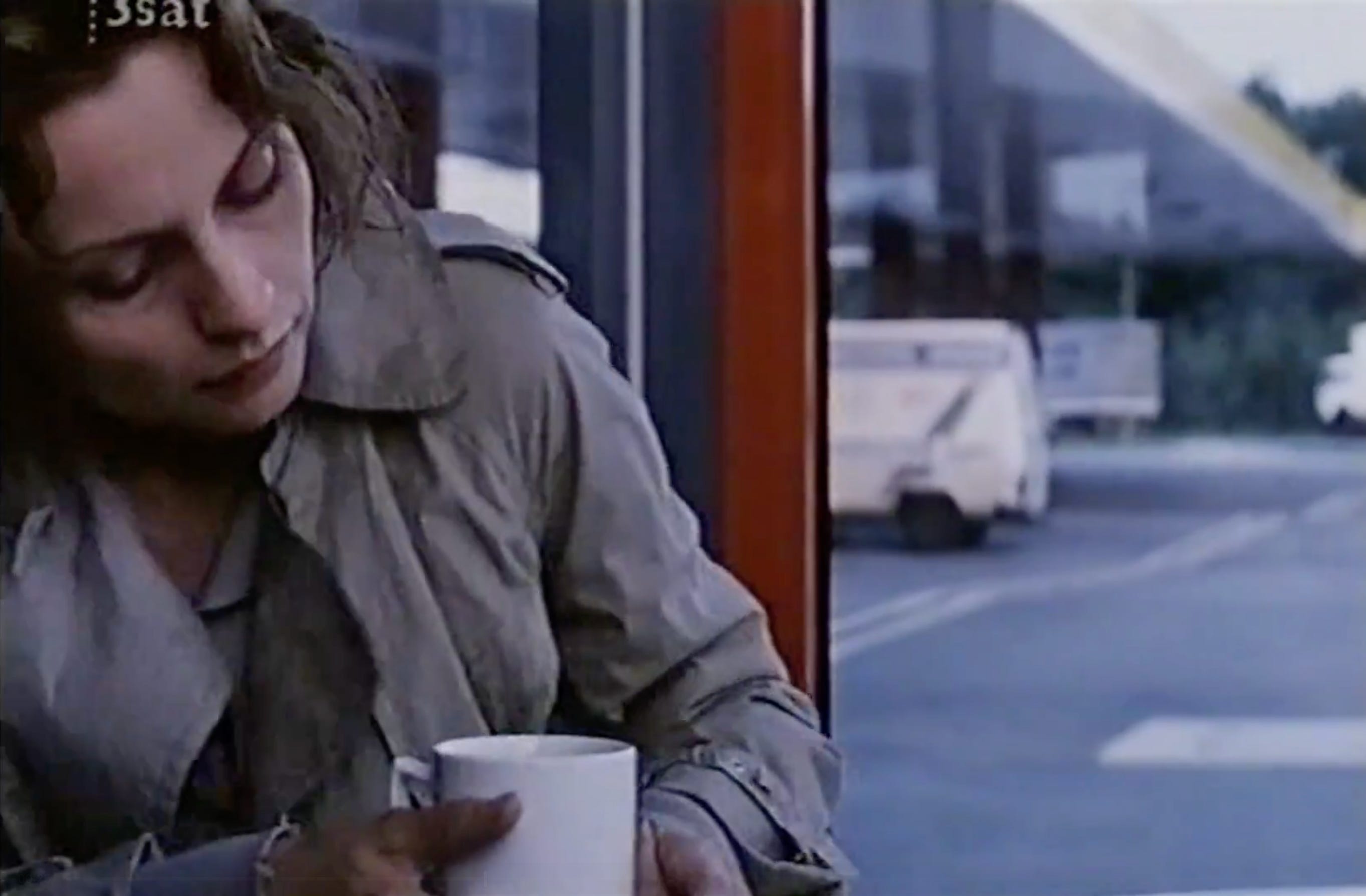
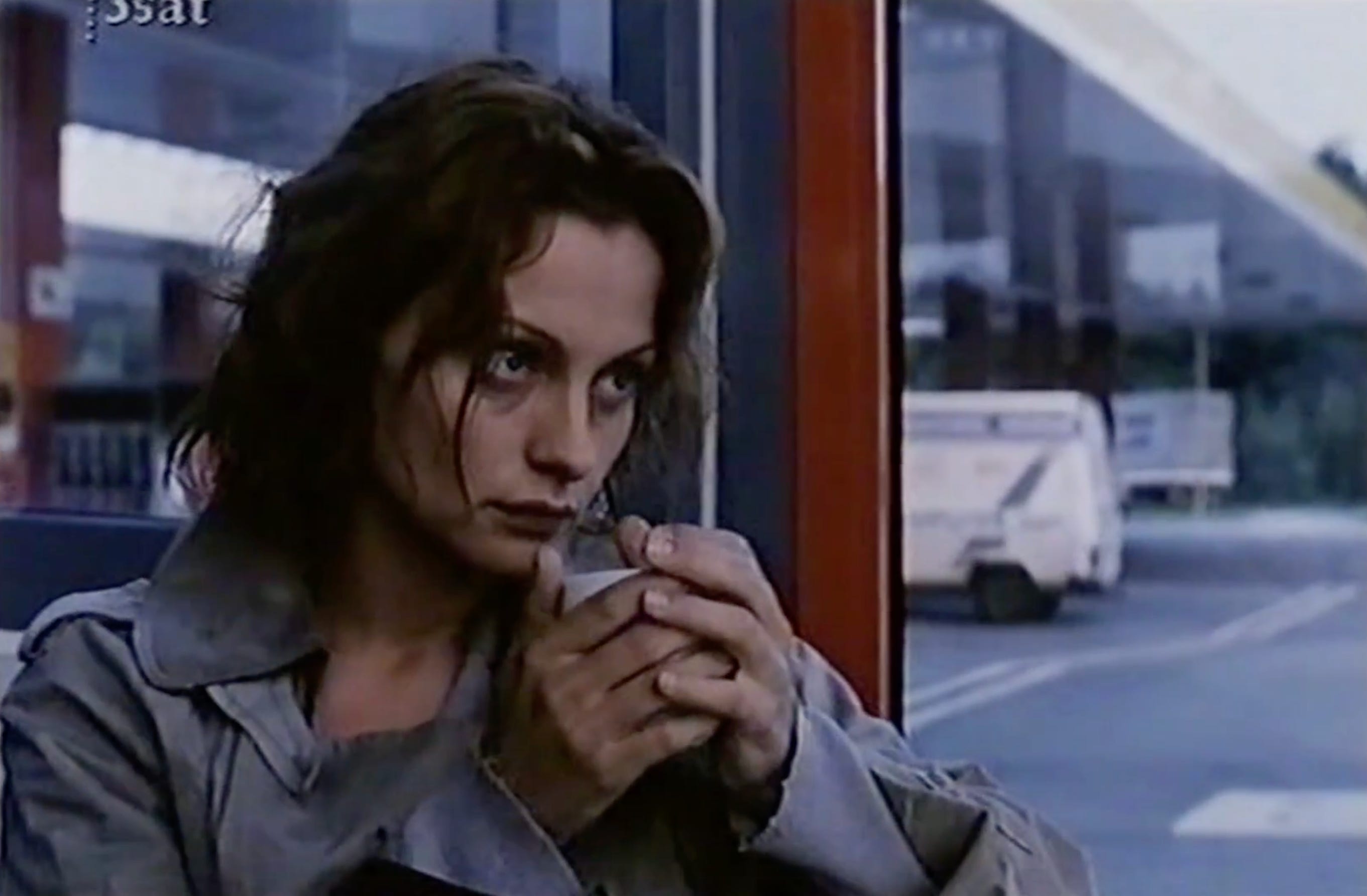
Tina ‘sits into’ the shot to drink her coffee; the camera doesn’t move, but opening the shot with motion makes it feel somewhat dynamic.
Then, Jimmy walks by behind her; more motion, and the camera picks it up and pans right along with him. He gets into the car, then drives the car R-L, back the way he came, and the camera follows it to land on Tina, still drinking and seemingly unawares of the significance of who just saw her.


3. Fixed on Car
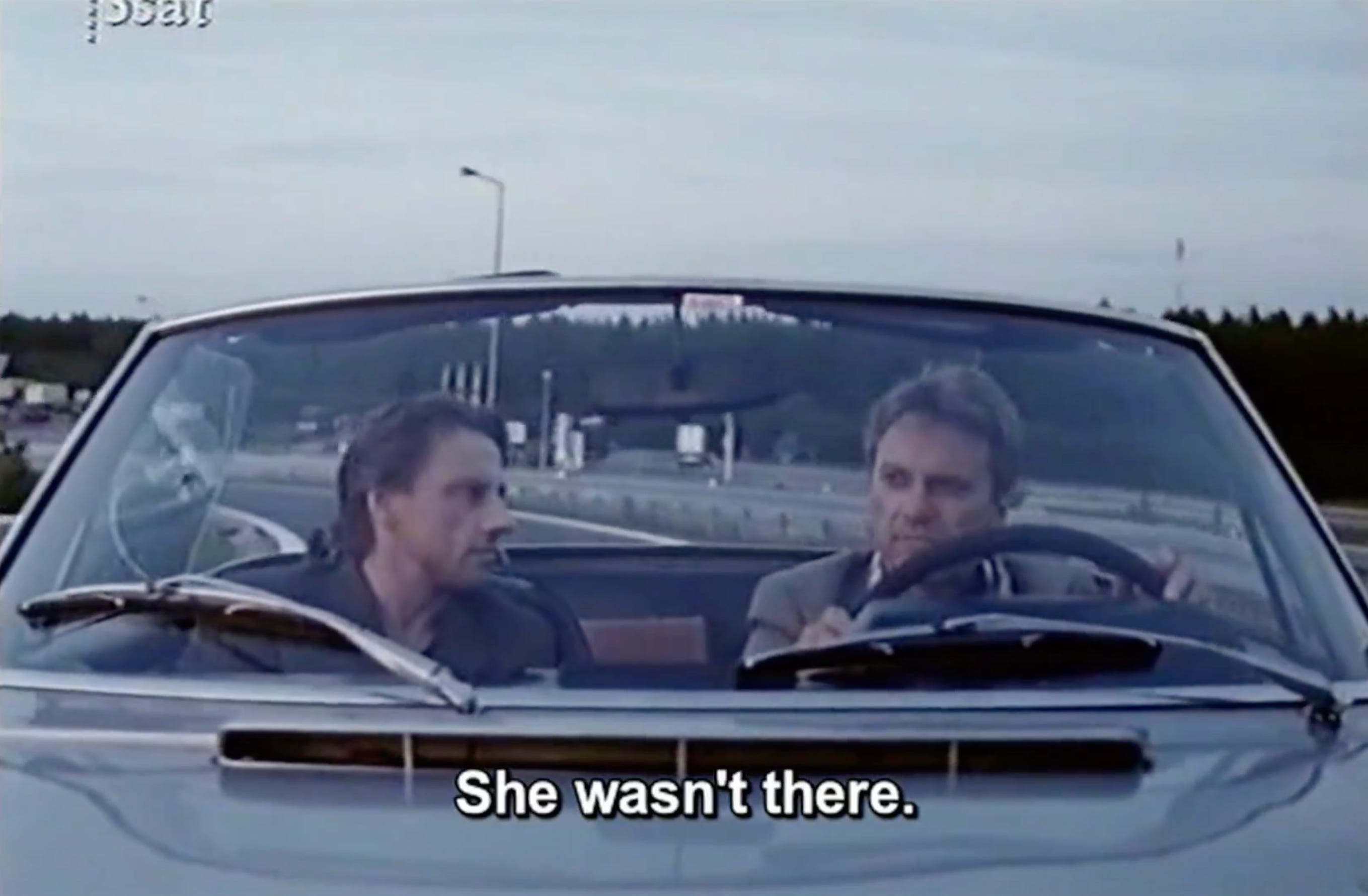
As Tom and Jimmy drive away, the camera is fixed on the hood (bonnet) of the car, and their conversation can be dubbed for audio if needed later, while behind them the change from industrial elements of the roadside station fades to highway signs fades to foliage and trees.


This scene goes on for a lot longer, but the motion of the car in the shot prior is what leads into it, then the dynamism is the changing background, and the content of their conversation as Jimmy explicitly lies to Jimmy, contradicting what we the audience just saw.
Takeaways
When you don’t have much money (which in filmmaking equals everything from equipment to personnel to time to locations to — in 1996 — literal feet of film, you can use certain things to make your single shots — and sometimes, single takes! — dynamic.
Combine shots so action happens in the background, pan slightly or dramatically, give actors actions (aka ‘a bit of business’) such as sitting into frame, jumping into the car and slamming the door, looking at cassette tapes, or sipping coffee, and everything adding up makes the most of your budget, and gives dynamism to the scene.