
Five [more] Shots: WHEN NIGHT IS FALLING
just what it says on the marquee: five [more] of our faves
We’ve looked at a spinning scene transition, a stillframe which sums up the crux of the film, using colour with character, and five ways to make frames-within-frames.
But we needed just five more shots from this Canadian indie about a circus artist and a theologian falling for each other . . .
Double Scene Transition
There’s a lot happening in this scene-to-scene-to-scene transition.
First, Tory and Timothy (real-life partners Tracy Wright and Don McKellar as carnival co-managers who function as the film’s Shakespearian clowns) set us up visually and emotionally.
This blue-hued scene involves two sparking-electrical-moments; the ‘rule of three’ means we expect another spark when Timothy taps the fuse box, but instead . . .
the film cuts to Petra in her red and gold caravan.
This is visual distinct from the prior scene so we’re immediately aware we’re in a new location. The candle is positioned where Timothy was gesturing, so we’re looking at the correct place in the frame. The slo-mo effect of Petra blowing out the candle accentuates the flame sputtering and smoke drift . . .
then on the cut, our eyes are looking approximately at the arrow tracing the same path the smoke was, moving the same R-L direction. This scene is stark white and wide open, which tells us we’re in a third place, likely the next day.


The arrow draws our interest, so we follow its path, then Petra walks in to retrieve it, motivating the camera to follow her, then we follow its trajectory as she shoots again, finally succeeding in getting through the window, which leads us inside to Camille.
A kinetic and interesting way to carry the viewer through from Point A to Point C.
Juxtaposition
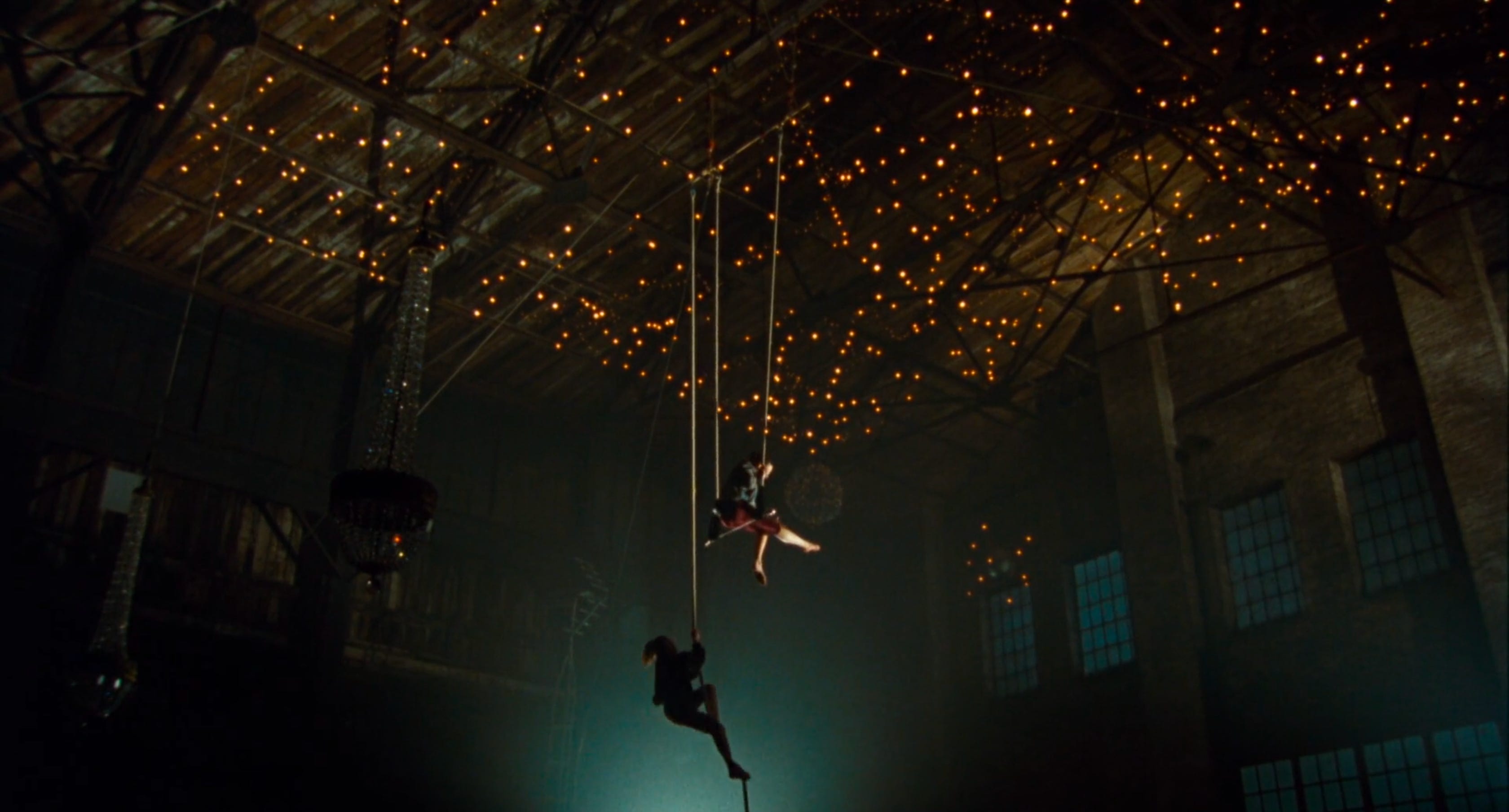
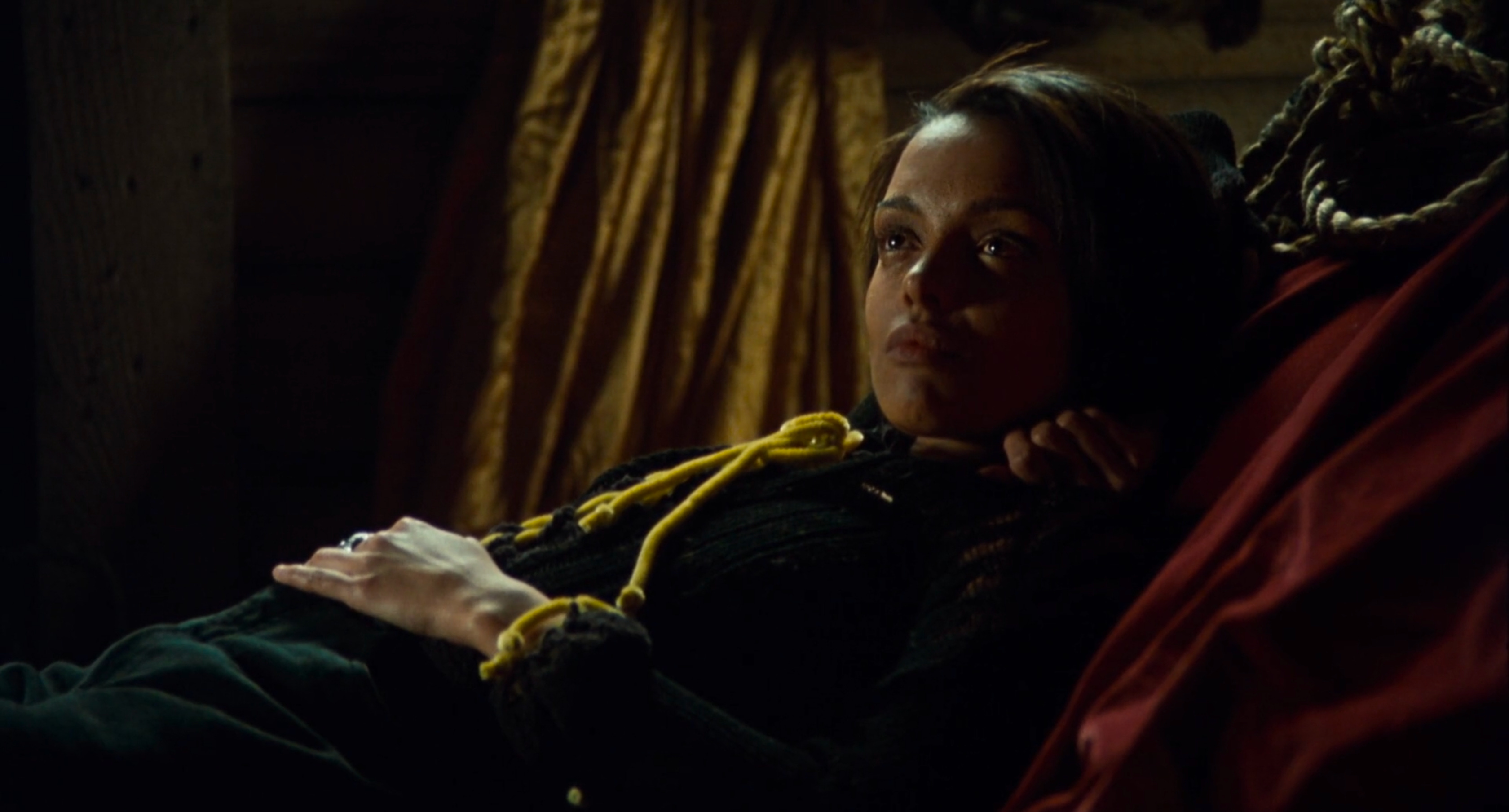
The wide, low angle of artists soaring contrasts beautifully with a tilted-down medium-closeup of Petra lying down watching them.
Showing Exactly What’s Happening
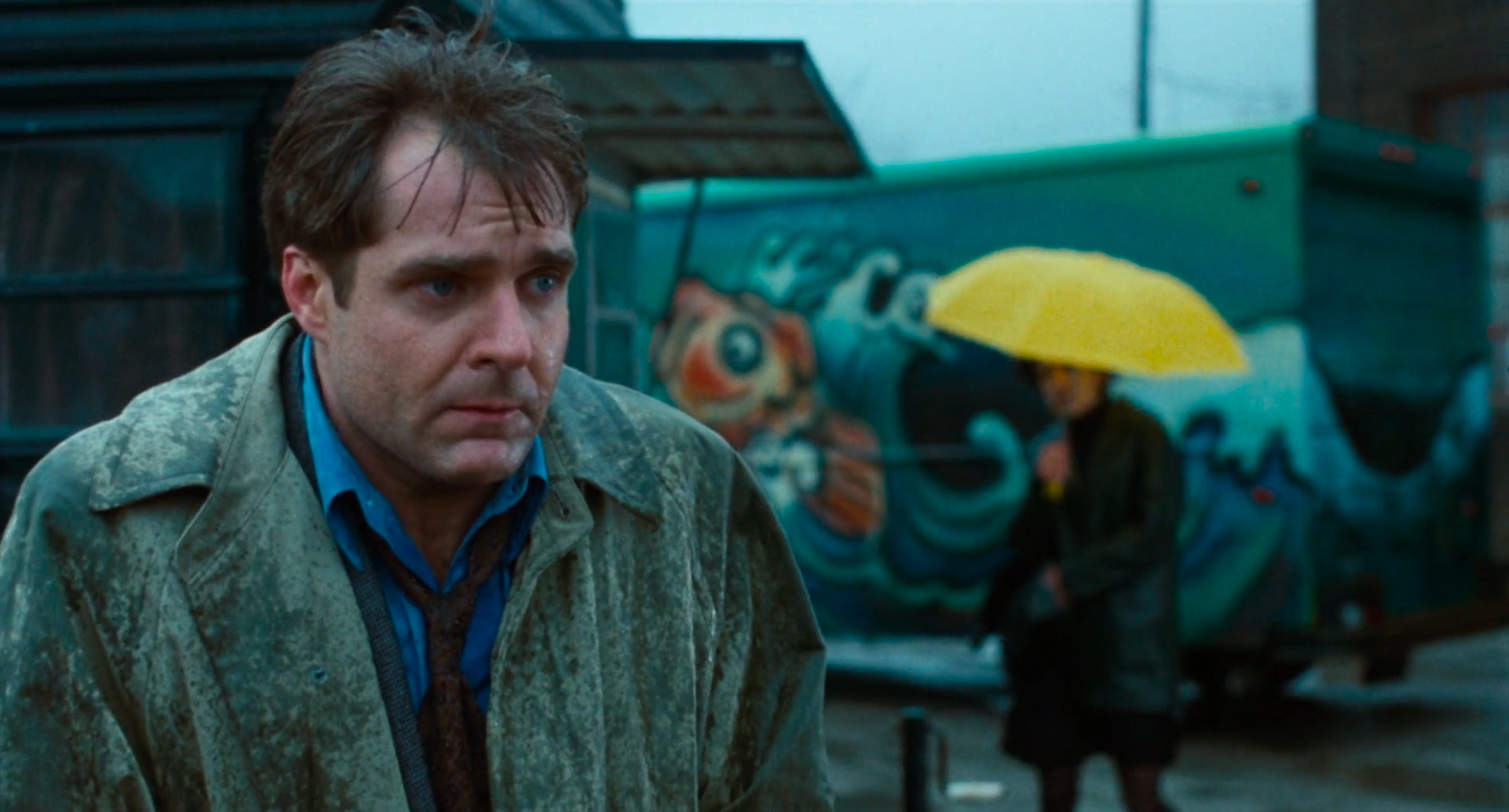
Even without context, exposition, or action, you can look at these two frames in this order and understand what’s happening:
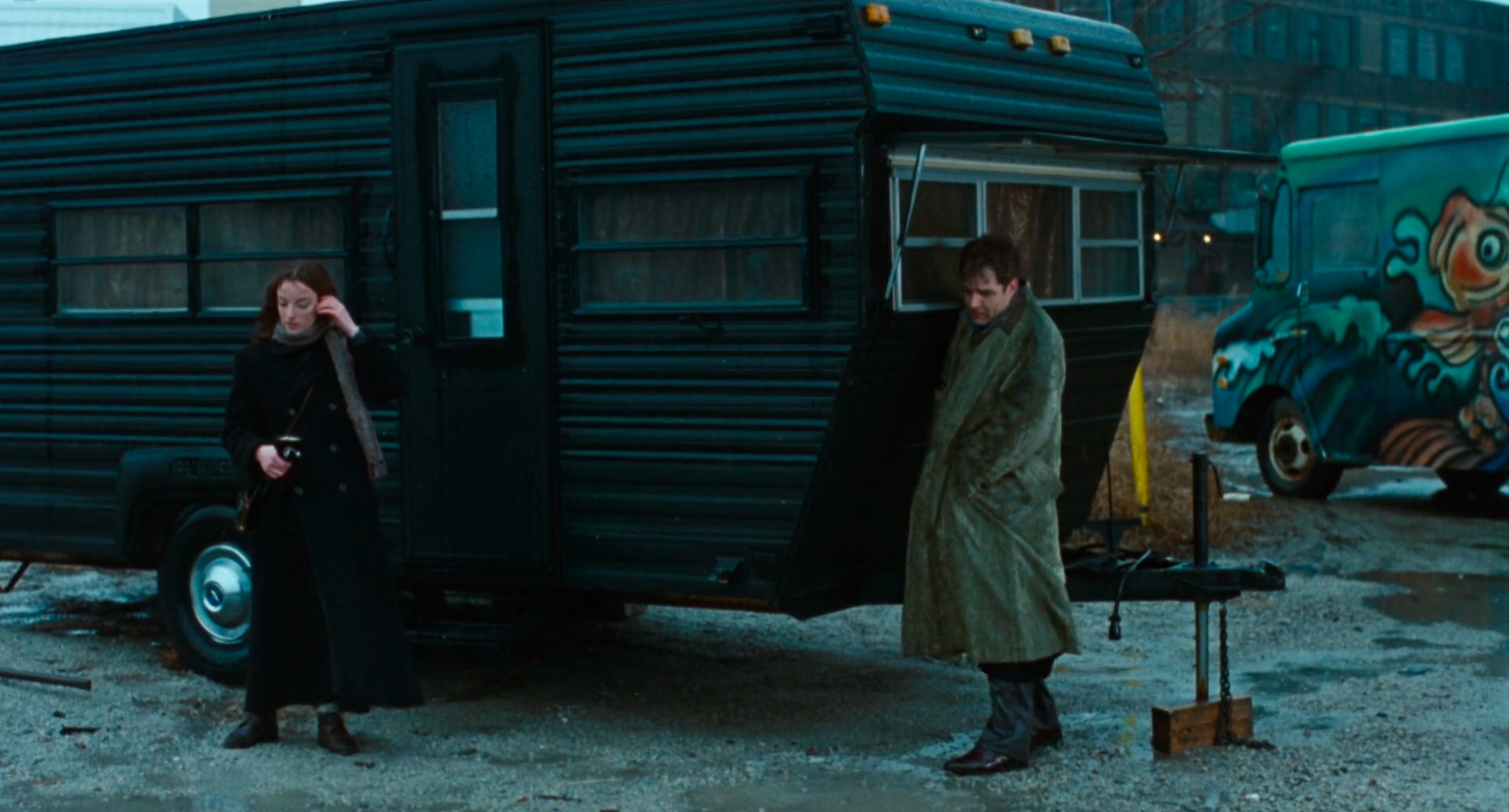
Martin watching Camille leave has made him sad; the blocking of the first showing him seeing her without her noticing him.
Then him alone in the rain with the bright yellow POP of umbrella in the background really underlines his misery at standing shelterless in the rain.
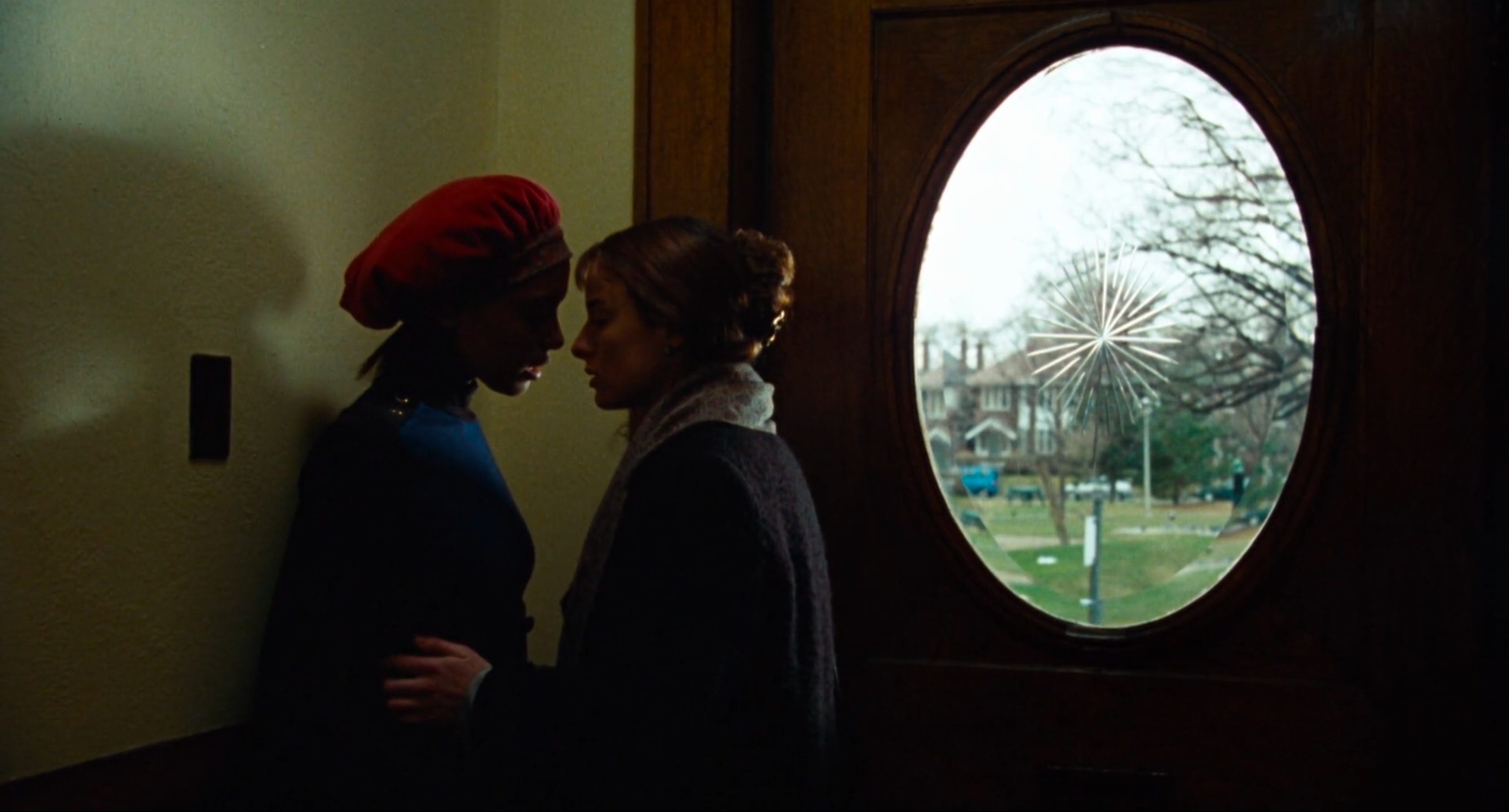
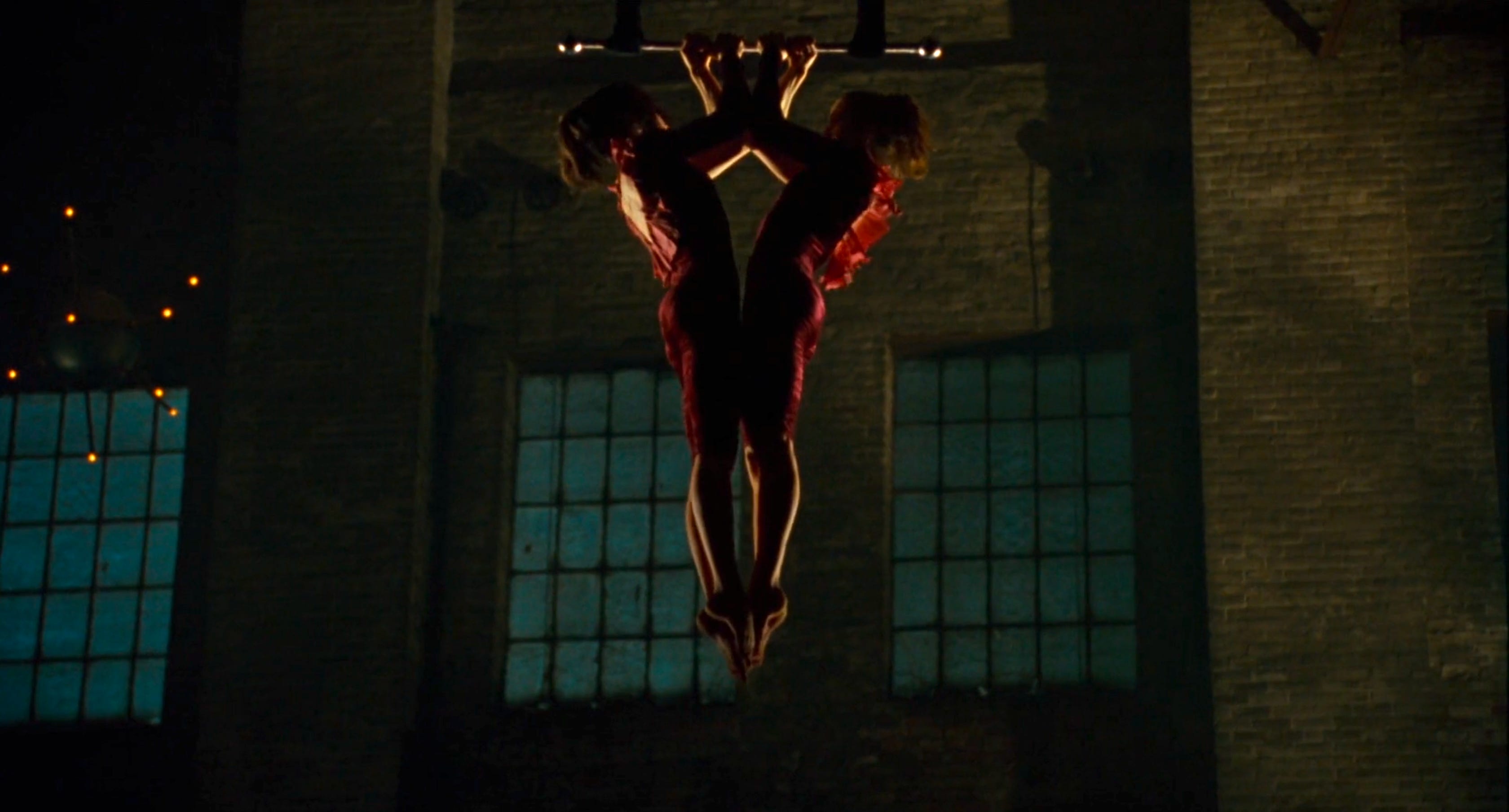
Shapes of a Heart
It’s very handy that two people about to kiss often make the shape of a heart, but so can two people suspended in space.
When Night is Falling uses its two lovers and later two trapeze artists to make clear its explicit reference to the matters of the heart it is so concerned with.
Big Wides and Close Closeups
On a small budget, two things are free (well, ish.)
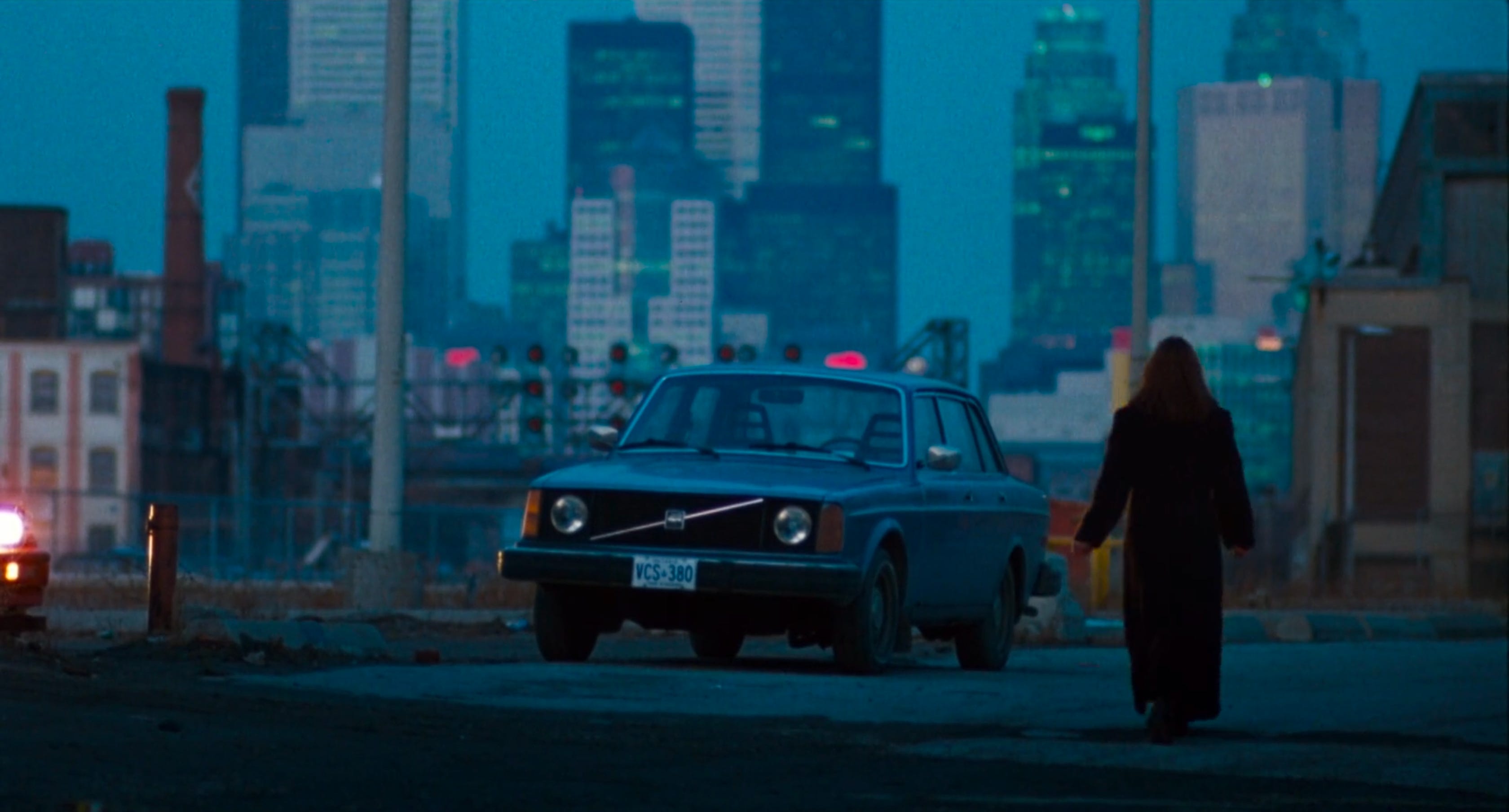
Wide scenic shots with only natural light, and VERY close closeups where you don’t need to use much set dressing, props, wardrobe, etc., you can focus on one key piece of pretty wardrobe, or get a few colourful bits and bobs to sit blurry in the foreground of someone’s pretty face, and voila!
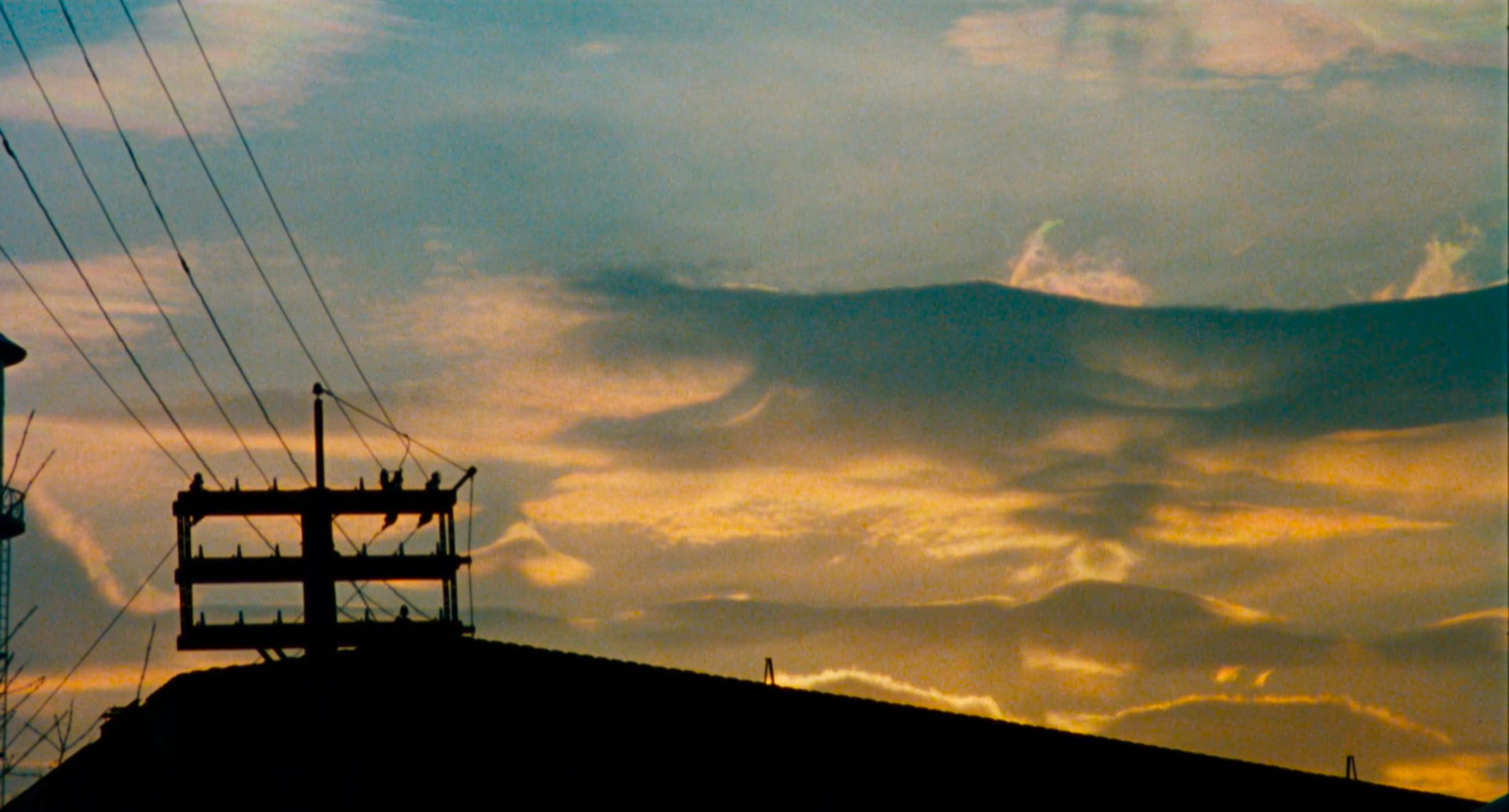
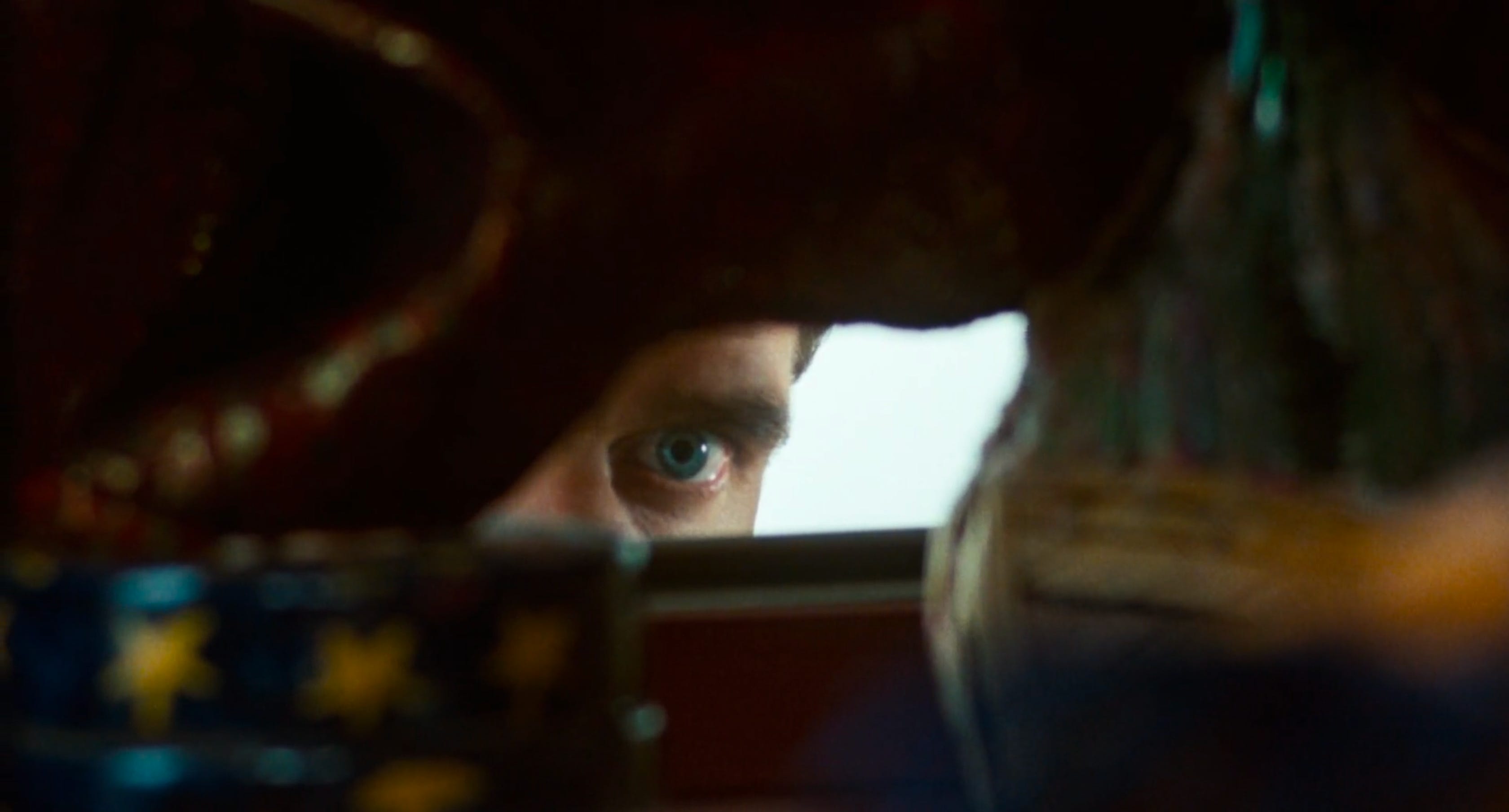
If all else fails, a lot of fairy lights, practical lights such as car headbeams, or just film lights themselves, can also help add to your pretty faces or natural skylines.


You could also sit for an hour or two with a camera and get two wildly different coloured shots in the same natural location.
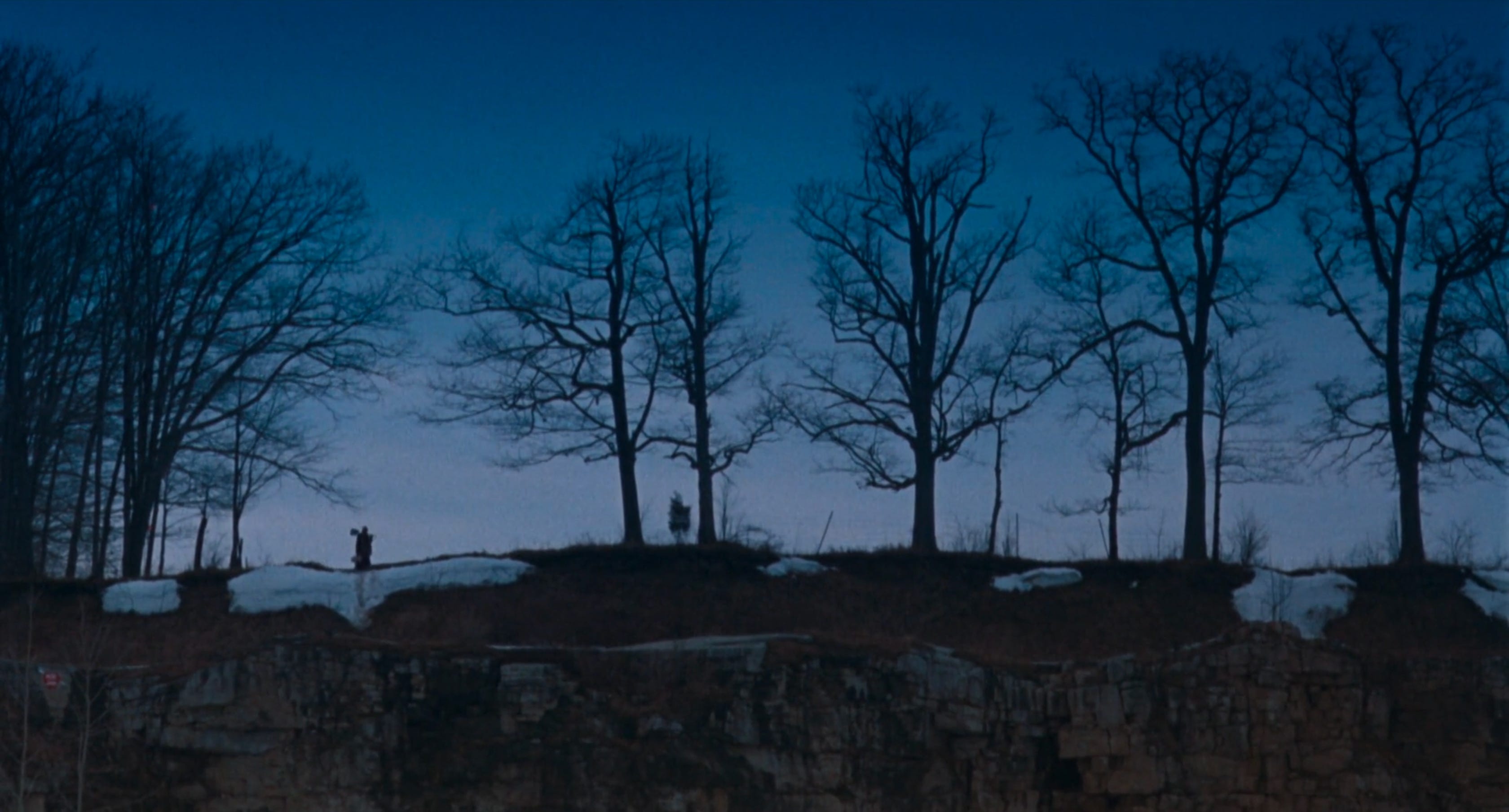
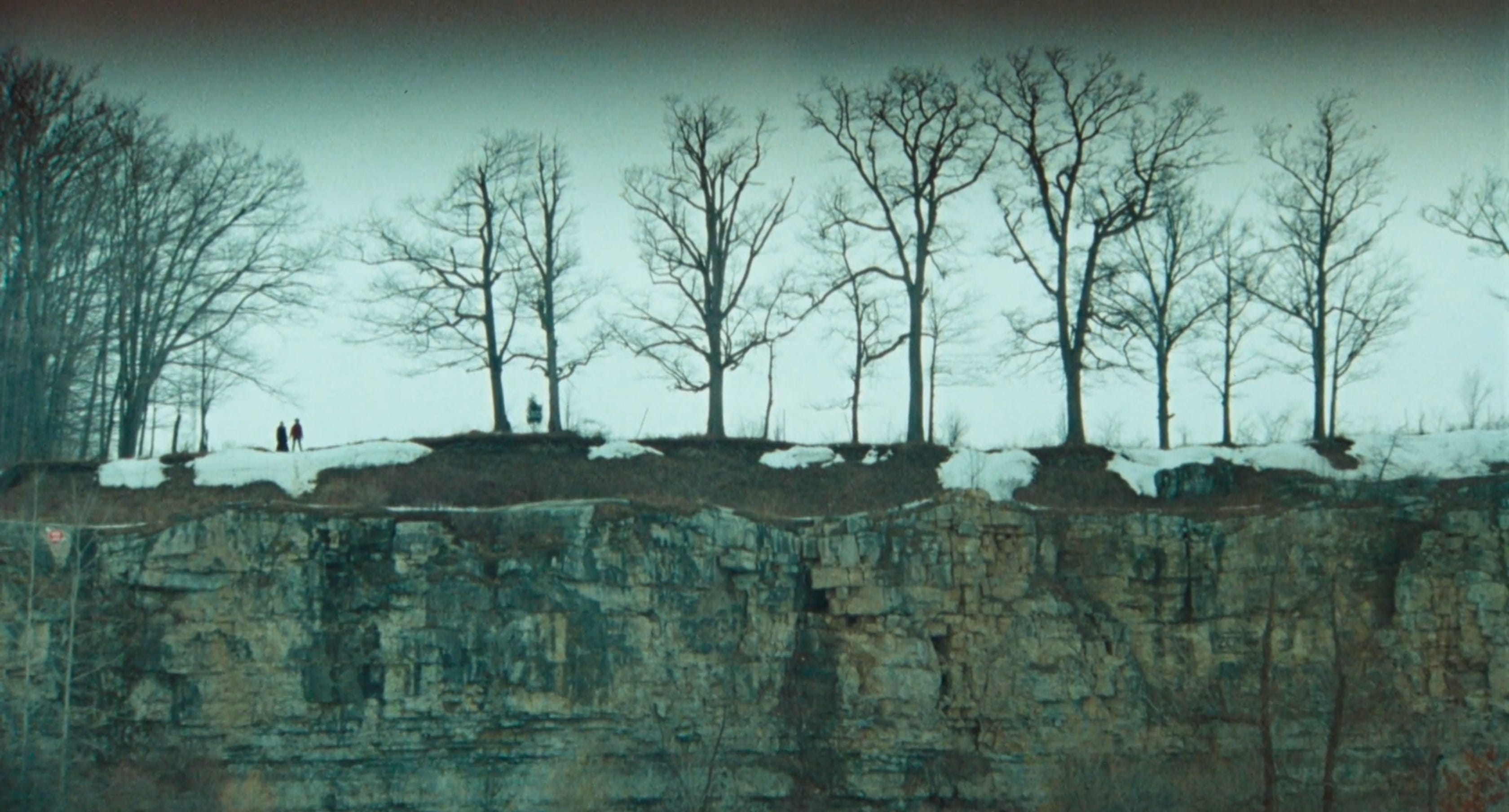
When Night is Falling does all of these things often, and it truly adds up to make it look like several million bucks more than it actually cost to make.
I just love this film so much