
The Split Diopter Shows All: THE CHILDREN'S HOUR
Grabbing the Audience's Eye With Intent
The Children’s Hour uses a split diopter twice in its near-two-hours, both scenes involving Karen (Audrey Hepburn) in very different ways.
Being Seen
The first split diopter shot is within a scene which has established Mary (child actor Karen Balkin) is spying on Karen and Martha (Shirley MacLaine) from the hallway.
After Mary kisses Martha and leaves to go to her own room, the scene cuts to the wide split diopter shot (0:25).
We are ‘with’ Mary, in focus and close to the camera, but when we follow her eyeline Karen is also sharply in focus.
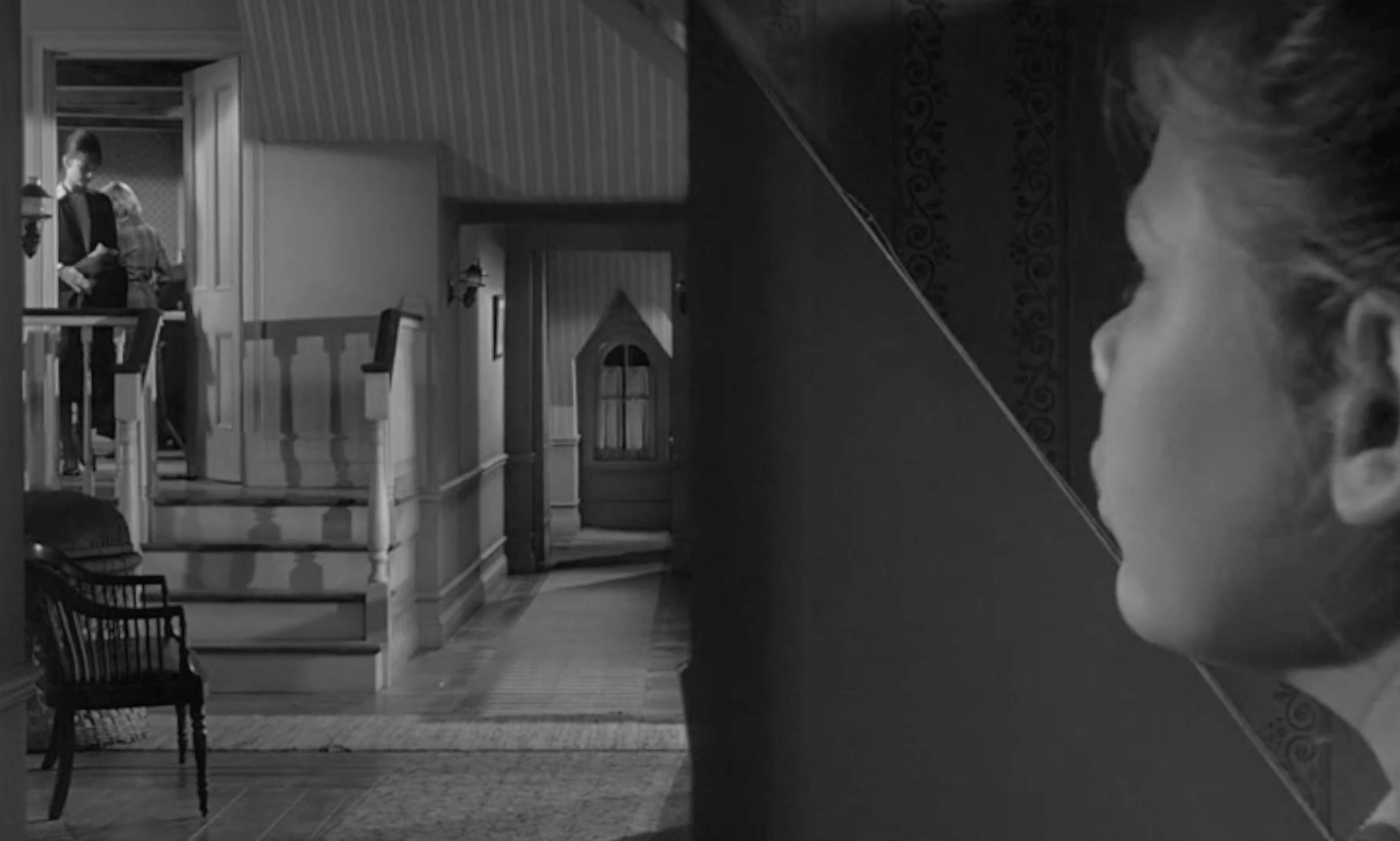
The point is to tell us, the audience, what Mary sees and thinks she understands; a perception which will forever alter the course of Karen’s life as well as her friend and supposed lover Martha (Shirley MacLaine).
Seeing
When Mary’s grandmother Mrs. Amelia Tilford (Fay Bainter) comes to visit there’s a very quick split diopter shot in the middle of her diatribe about taking Mary out of school . . . and this is the moment we realize Karen has figured out what is happening.
It’s not a coincidence they are in similar places on screen as they were when Mary saw Karen, and Mrs. Amelia facing the same direction, though refusing to look Karen in the eyes.
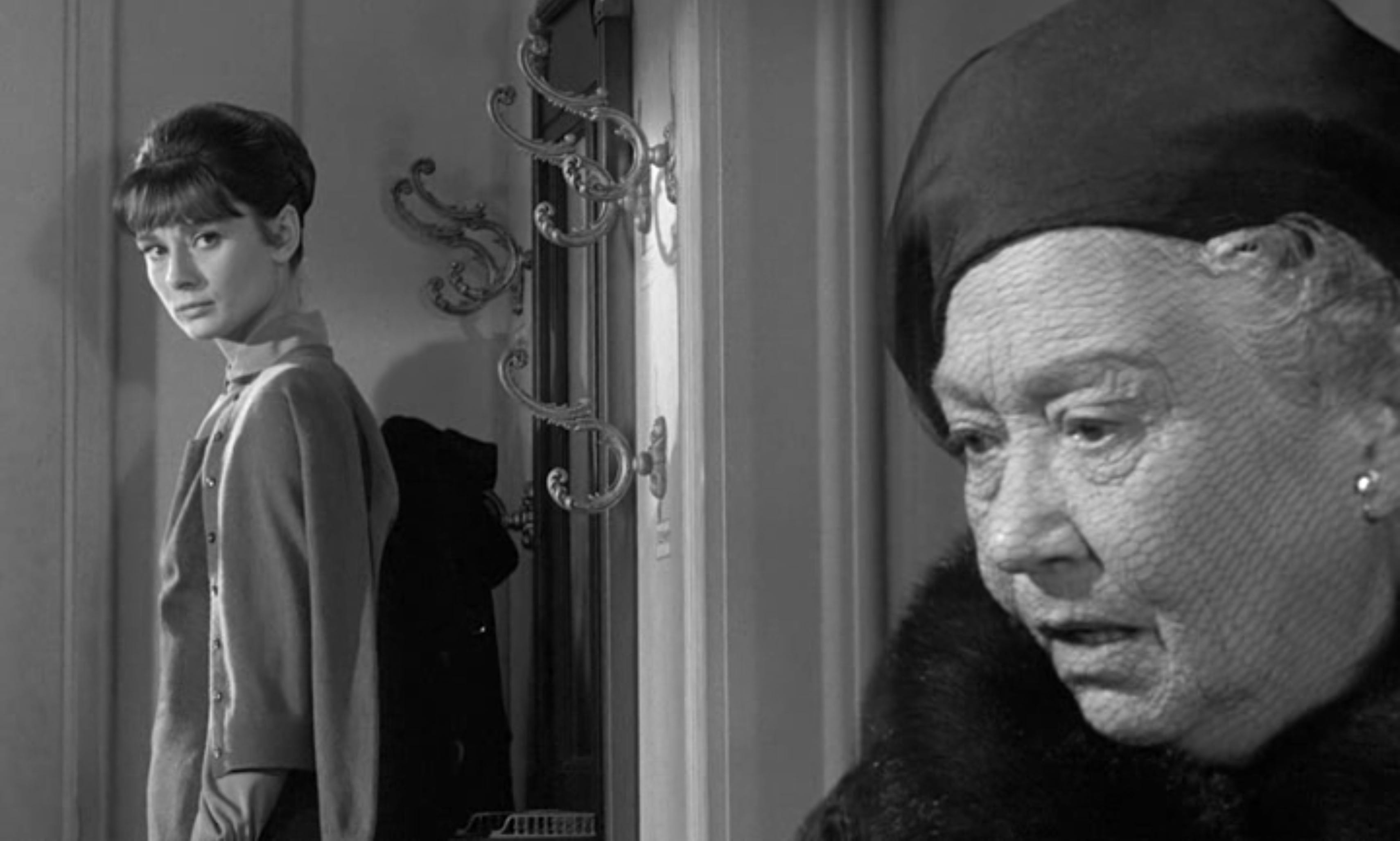
In this scene Karen is standing close to the door; it almost looks like she’s ready to run for it, but it’s also similar to her blocking in the first split diopter scene, where she continually goes back and forth to the door before leaving . . .
Geometry
Also note the wonderful use of triangles for Mary, which stand it sharp contrast to the rectangle boxes where Karen stands in a doorway — often cinematic shorthand for ‘a liminal or in between space.’


Takeaways
The use of a split diopter often calls attention to itself, both because there’s a ‘blur’ through the shot which is also impossible to fully hide, and because people at such disparate distances both being in focus feels slightly unnatural; it’s not how our eyes work, and it’s very difficult to get cameras to work this way.
Sometimes shots want to call attention to themselves ‘for fun and aesthetics,’ or a dozen other reasons.
But consider if you use the technique which is attention-grabbing, and use it only twice in your film, you are directing your audience to compare and contrast the shot. The Children’s Hour split diopter shots invite us to make two related conclusions about ‘seeing and understanding.’