
Week 25.29 - Socials Roundup
Posts from 14 July - 20 July 2025
Week 25.29 posts include shots from When Night is Falling (1995); two different uses of car mirrors in Ten Pound Poms (2023-current); Castello Cavalcanti (2013); and Blindspotting (2018).
Ten Pound Poms
Two different scenes in Season 1 Episode 3 use different car rearview mirrors, to quite different effects.
Showing What Characters See
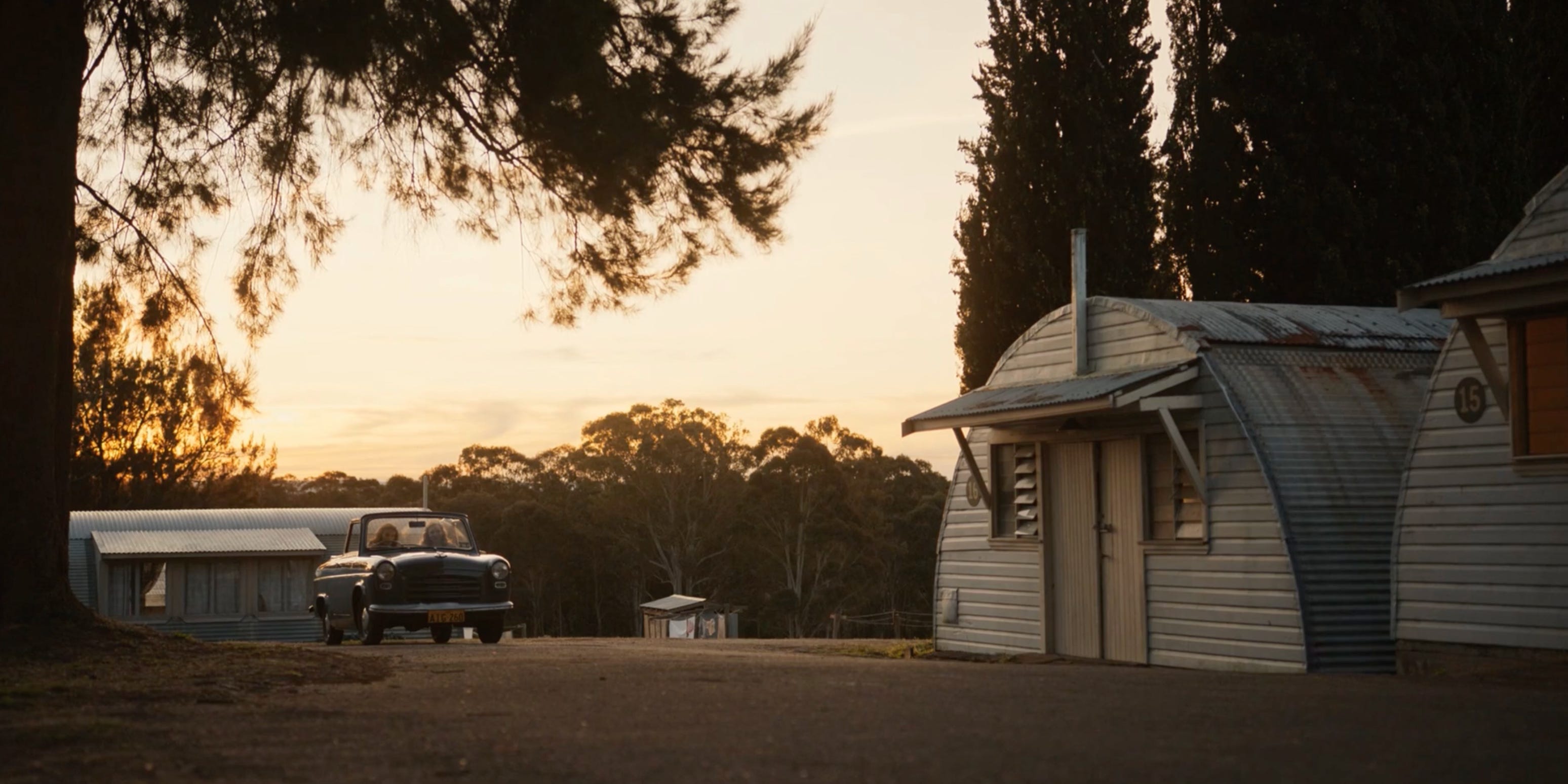
The scene is careful to draw our attention to the three important components at the top: Kate (Michelle Keegan), Annie (Faye Marsay), and the rearview mirror.
(the sexy sun flare is just an added bonus)
As Kate waits for Annie, she adjusts her rearview mirror, then Annie runs from her hut in the background. Both characters in motion in the medium shot draw our attention, so the cut to a 180 degree closeup of the mirror isn’t confusing.
In that closeup, we presume Kate sees what we see: Annie in the rearview mirror. When Kate turns, the shot racks to her face, giving us a closeup of her happy expression.


Once we’ve seen Kate’s response — simply more interesting than waiting for Annie to traverse the large patch of grass getting to the car — the scene cuts back to the medium shot, the camera moves in a semi-circle to add a bit of a feeling of dynamism to the scene, then the car door closing is used as a good cut point to transition to a wide of Kate and Annie driving away.
While this shows us one character at a time, and uses the mirror to bridge them coming together, the next use is to show us two characters’ faces and actions at once.
Frames within Frames
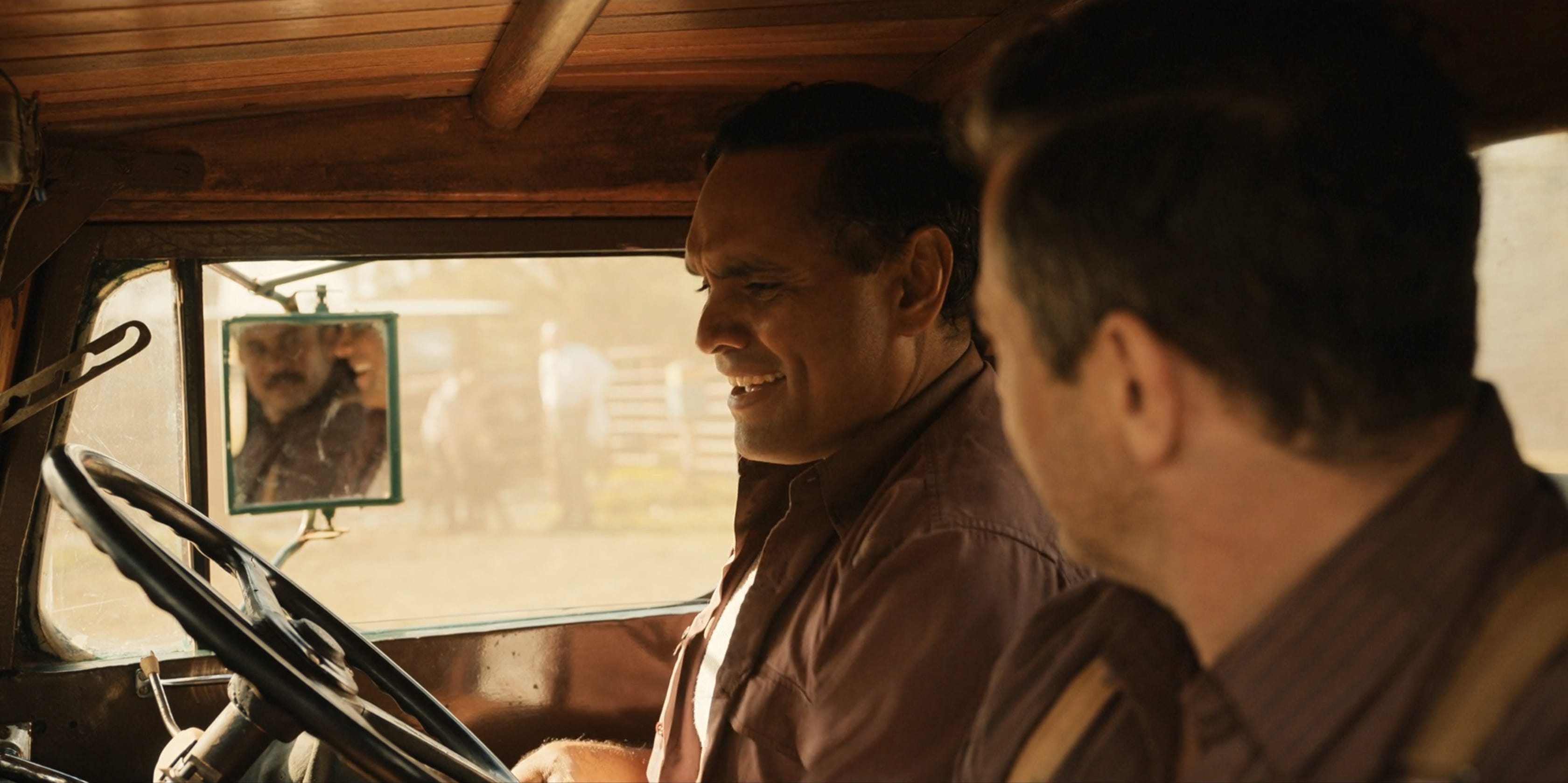
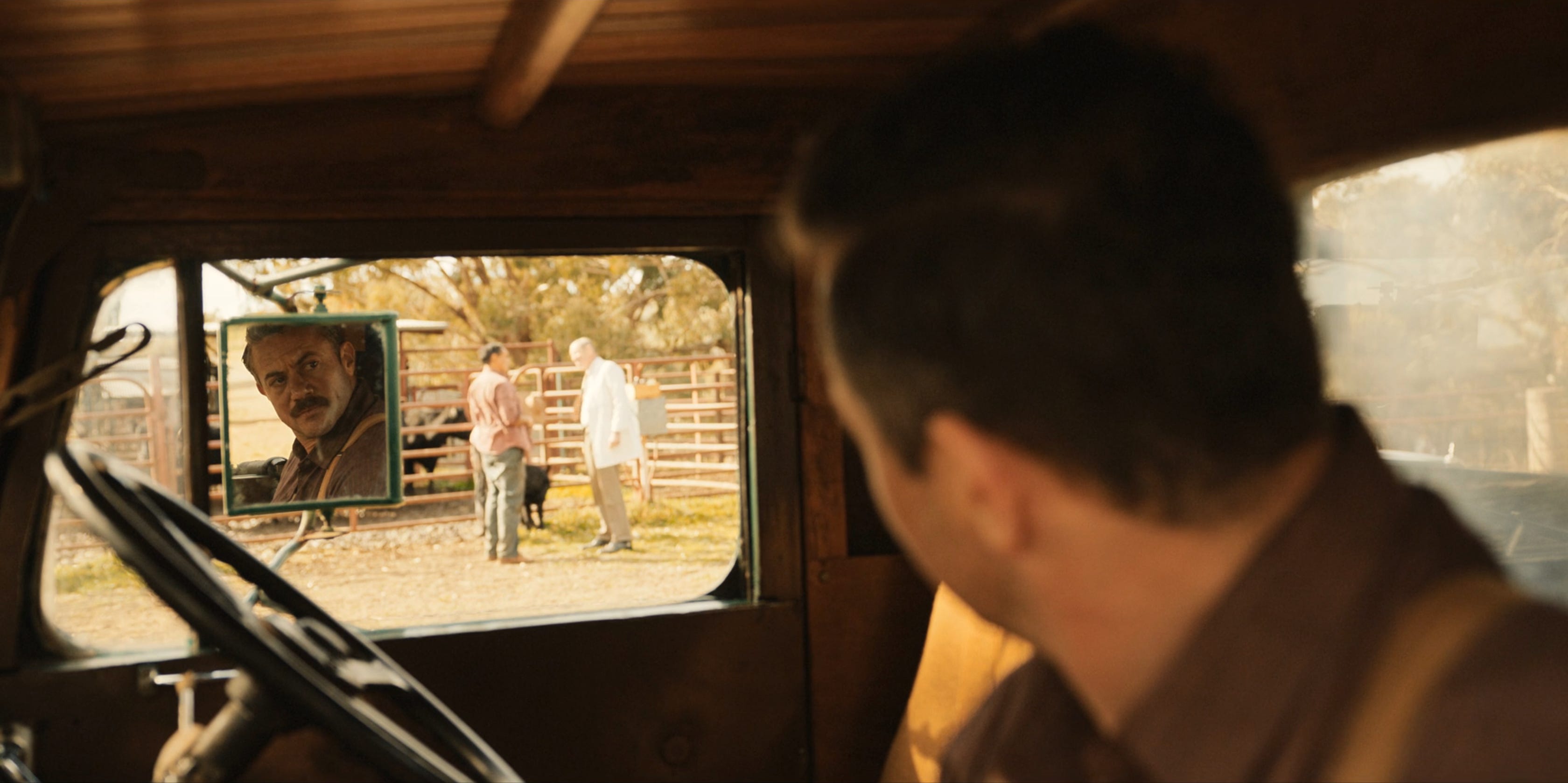
When Terry and Ron (Warren Brown and Rob Collins) pull up to an off-the-books medical dispensary, the shot is over Terry’s shoulder so we can’t directly see his face. But the car’s exterior mirror shows us Terry’s reactions both to Rob’s explanation, and then Rob haggling in the distance with the vulturous dispensers.
Castello Cavalcanti
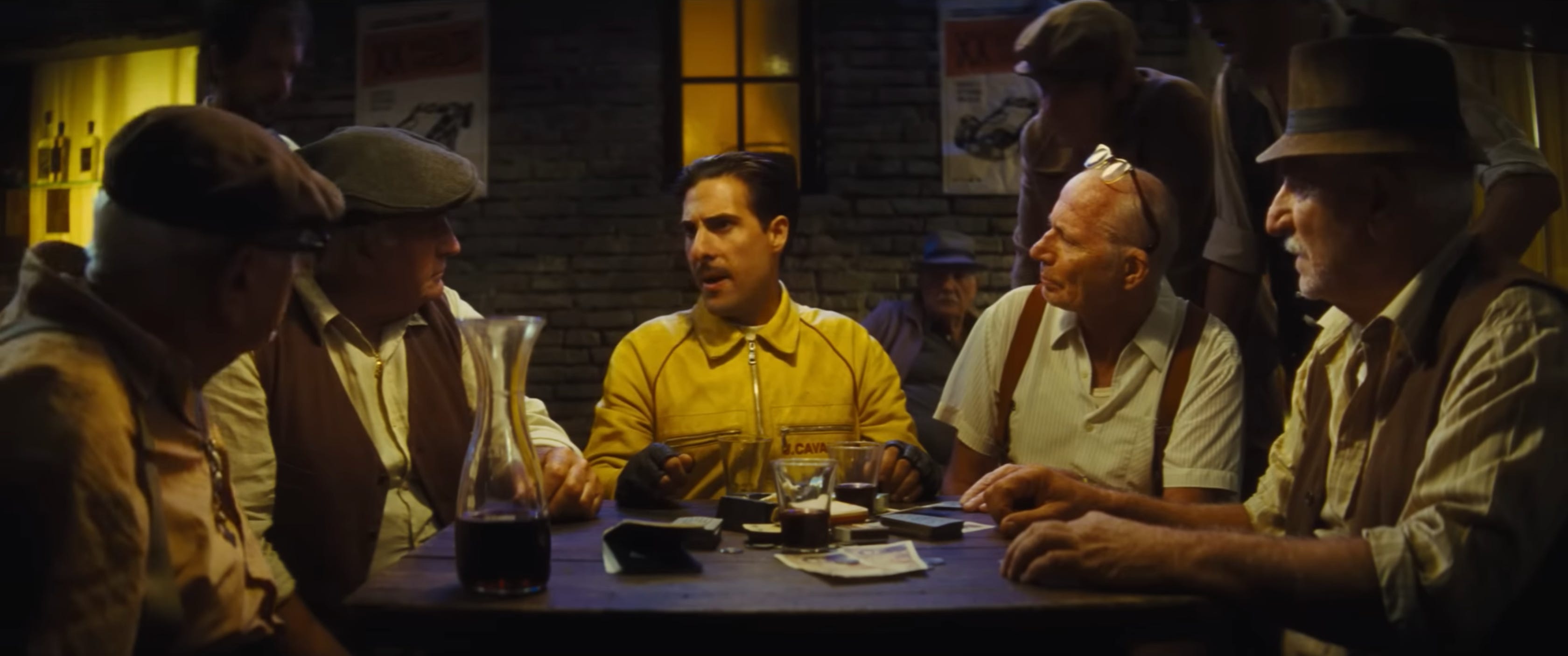
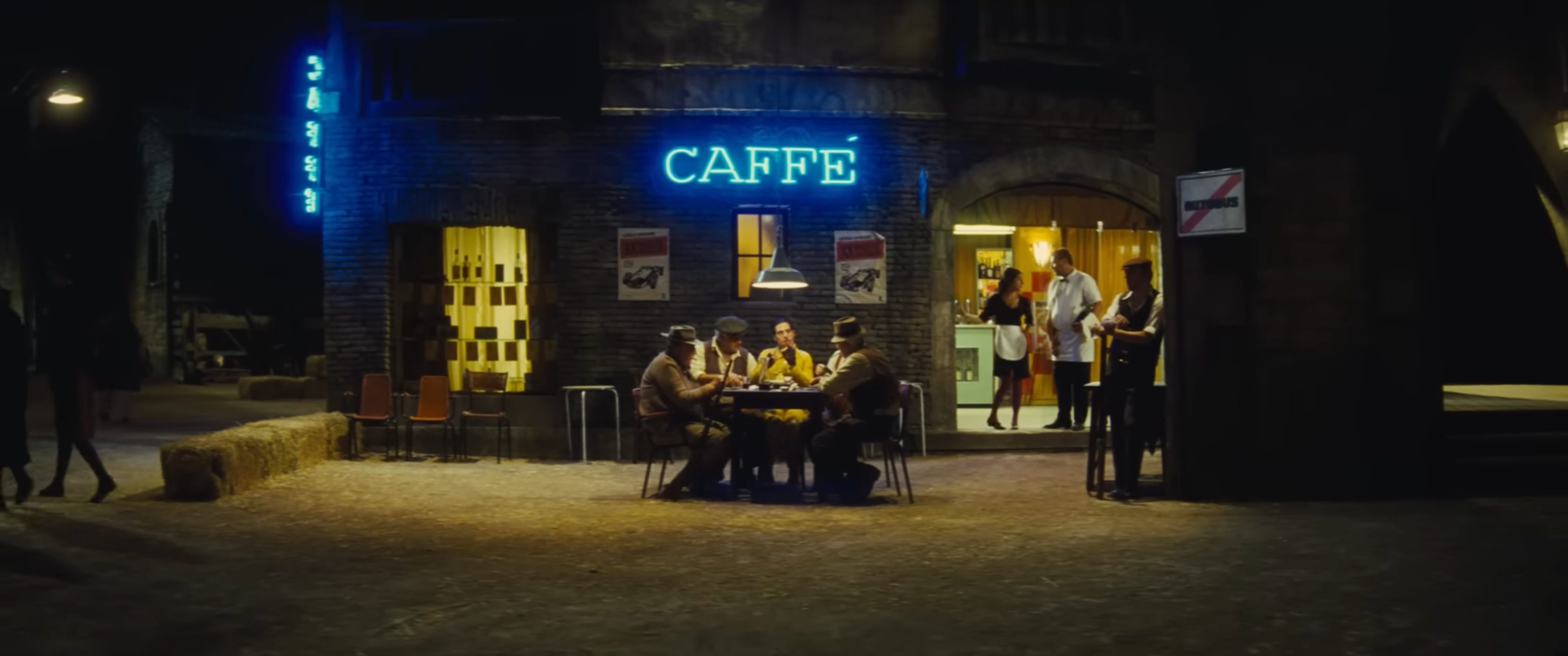
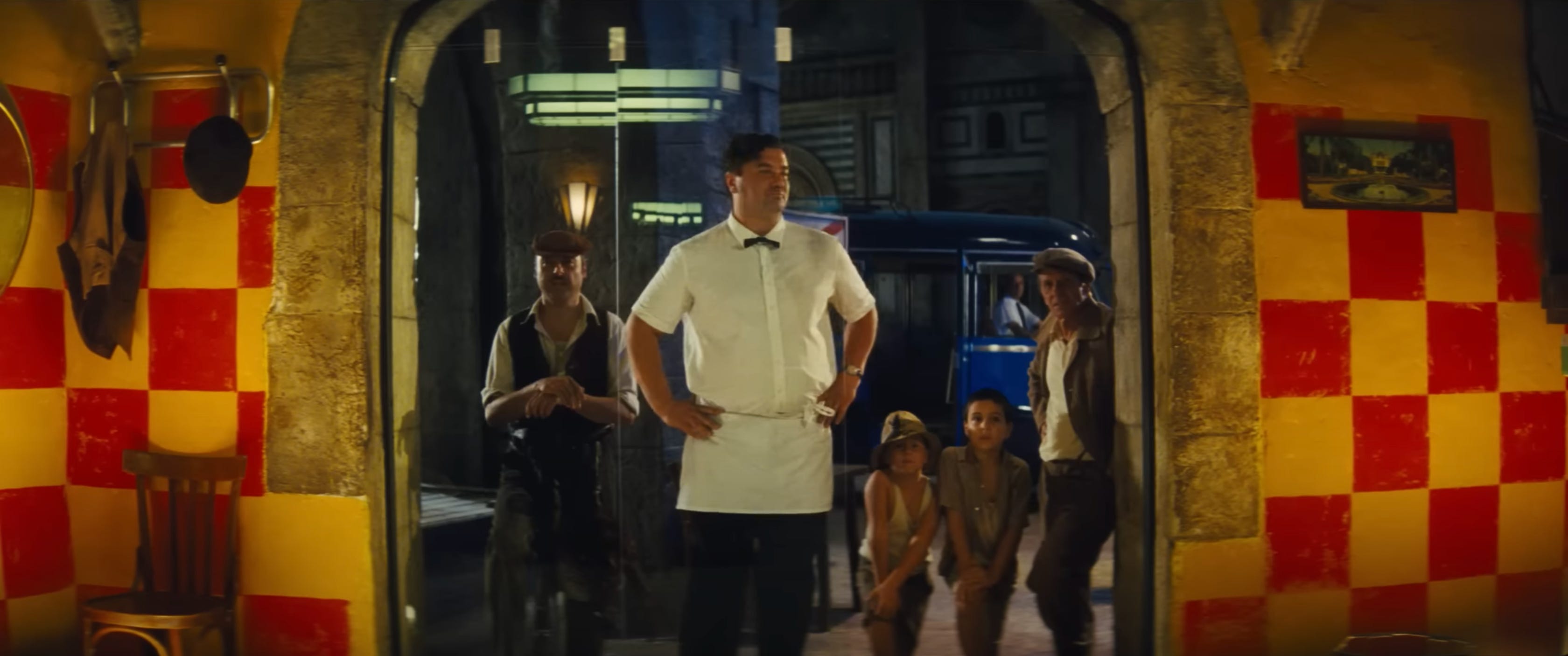
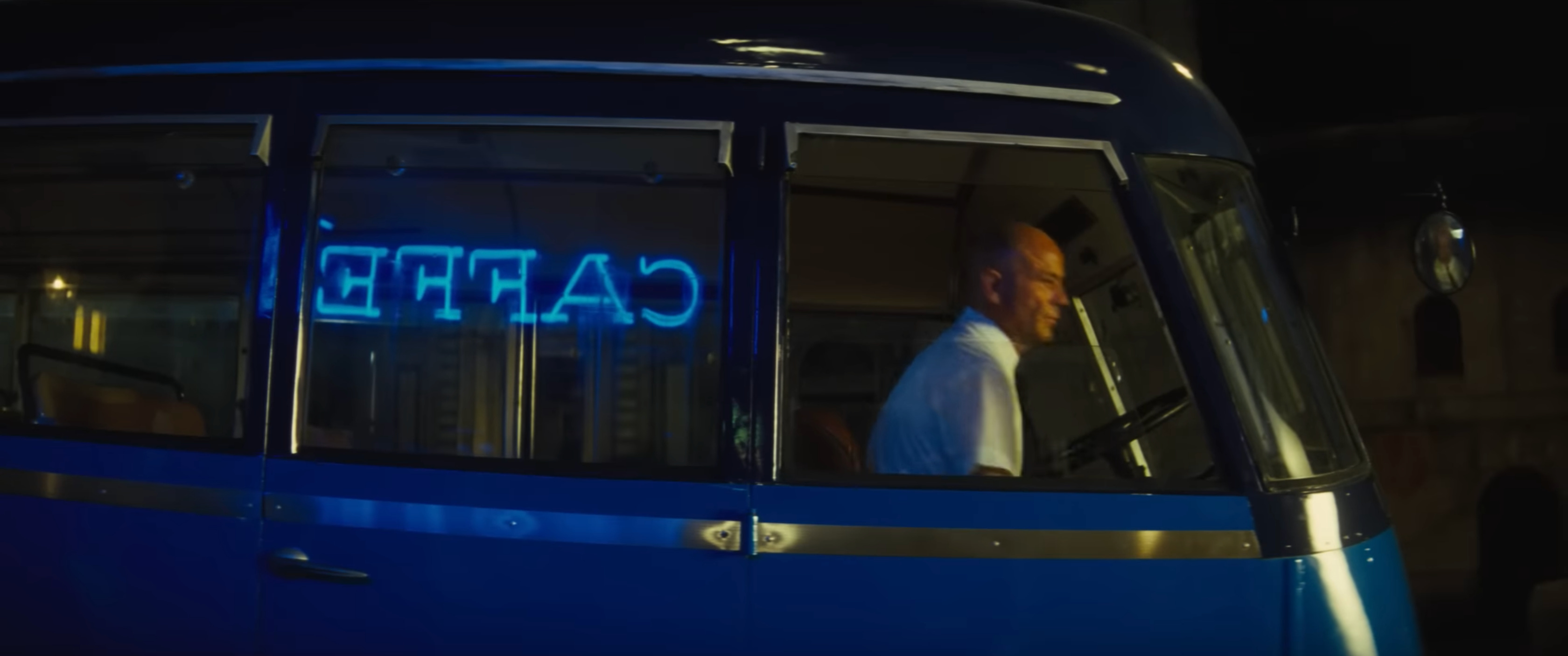
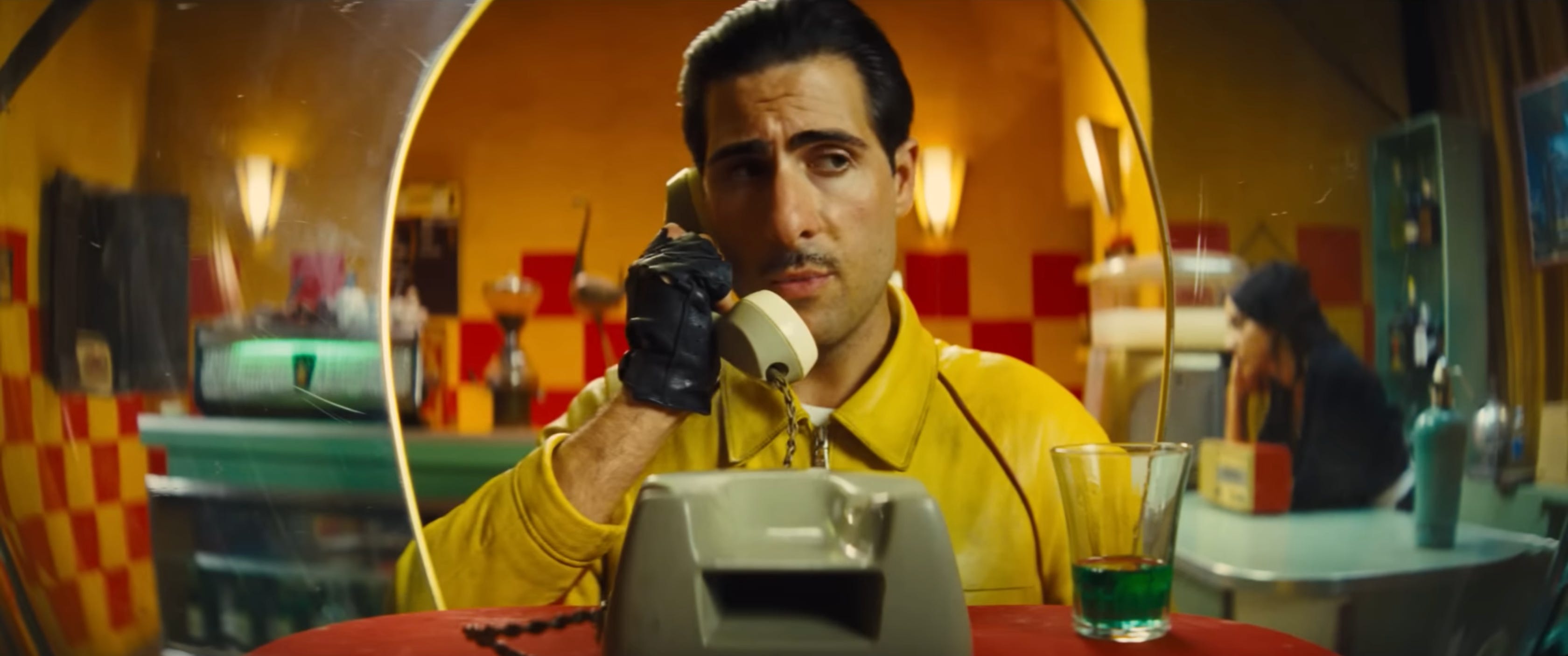
Wes Anderson’s short film also uses a lot of frames within frames; but very differently than Ten Pound Poms.
Outside in the town square, people are used in medium shots as sorts of ‘columns’ to guide eyes towards the person in the centre of frame. Even when we can see their faces, the central figure is lit to draw attention within the mostly-symmetrical frame.
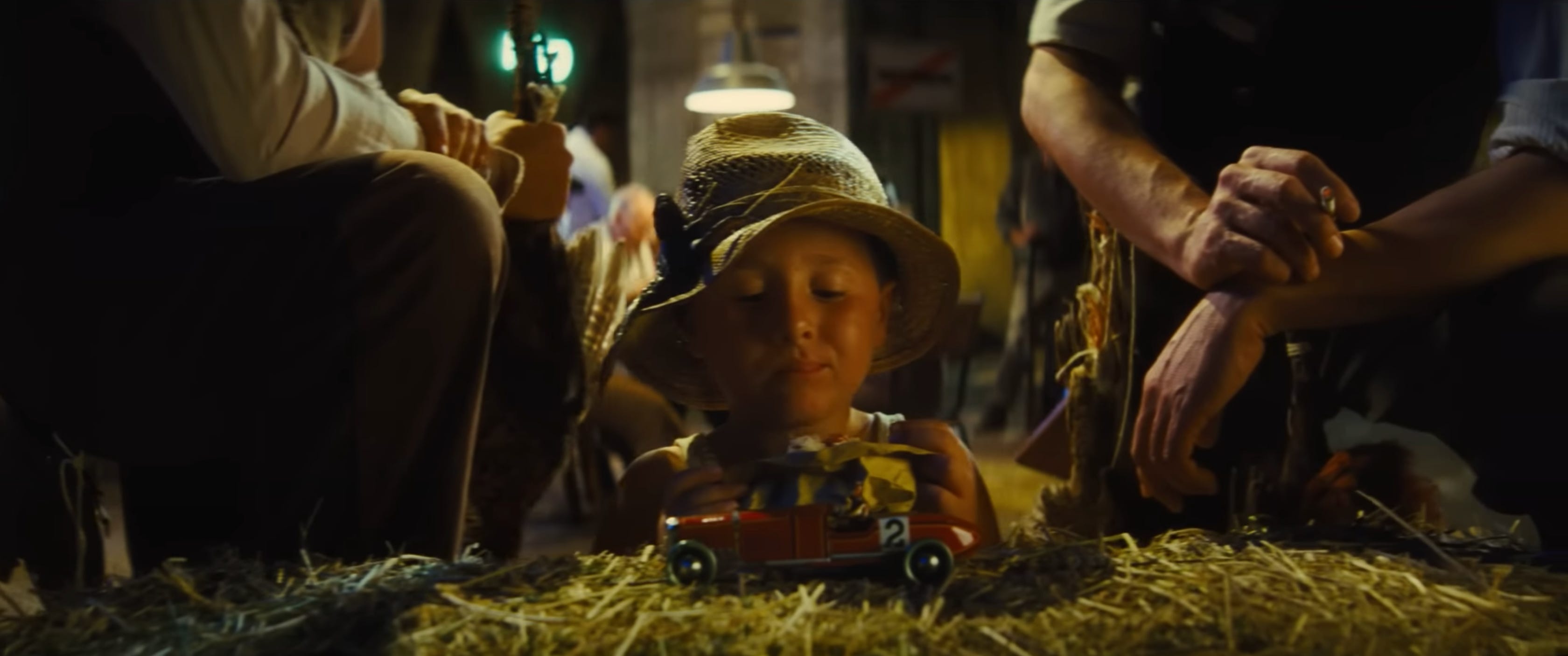
The wide restaurant door creates a mini-frame from both the outside and inside, showing yellow-within-blue from the outside and blue-within-yellow from the inside.
The bus windows create this frame’s rule-of-thirds.
Finally, we have this transparent ‘frame’ (similar to this frame-within-a-frame shot-reverse-shot from Betty Blue).
When Night is Falling
This wordless sequence takes us from Petra turning cartwheels under electrical towers, to her tumbling over and looking up, to a POV shot of a tower spinning counterclockwise (as it might look to someone dizzy). The scene then cuts to a shot looking directly down . . . but not at Petra, instead at the object of Petra’s affections and current dizzy thoughts, Camille.
(NOTE: there’s quite a bit of spinning in the video, both camera spinning and camera looking at people spinning, be aware it may be dizzying.)
Camille is spinning the same direction as the electrical towers, which not only continues the motion, but directly connects Petra and Camille across scenes, even though everything else has changed; stark black and white to saturated colours, outside to inside, directly upwards to directly downwards, free versus repressed (as Camille is immediately interrupted by her fiancee), etc.


Blindspotting
Similar to this from Poker Face, with someone scaring another character — and us! — by appearing in a place we just saw was empty.
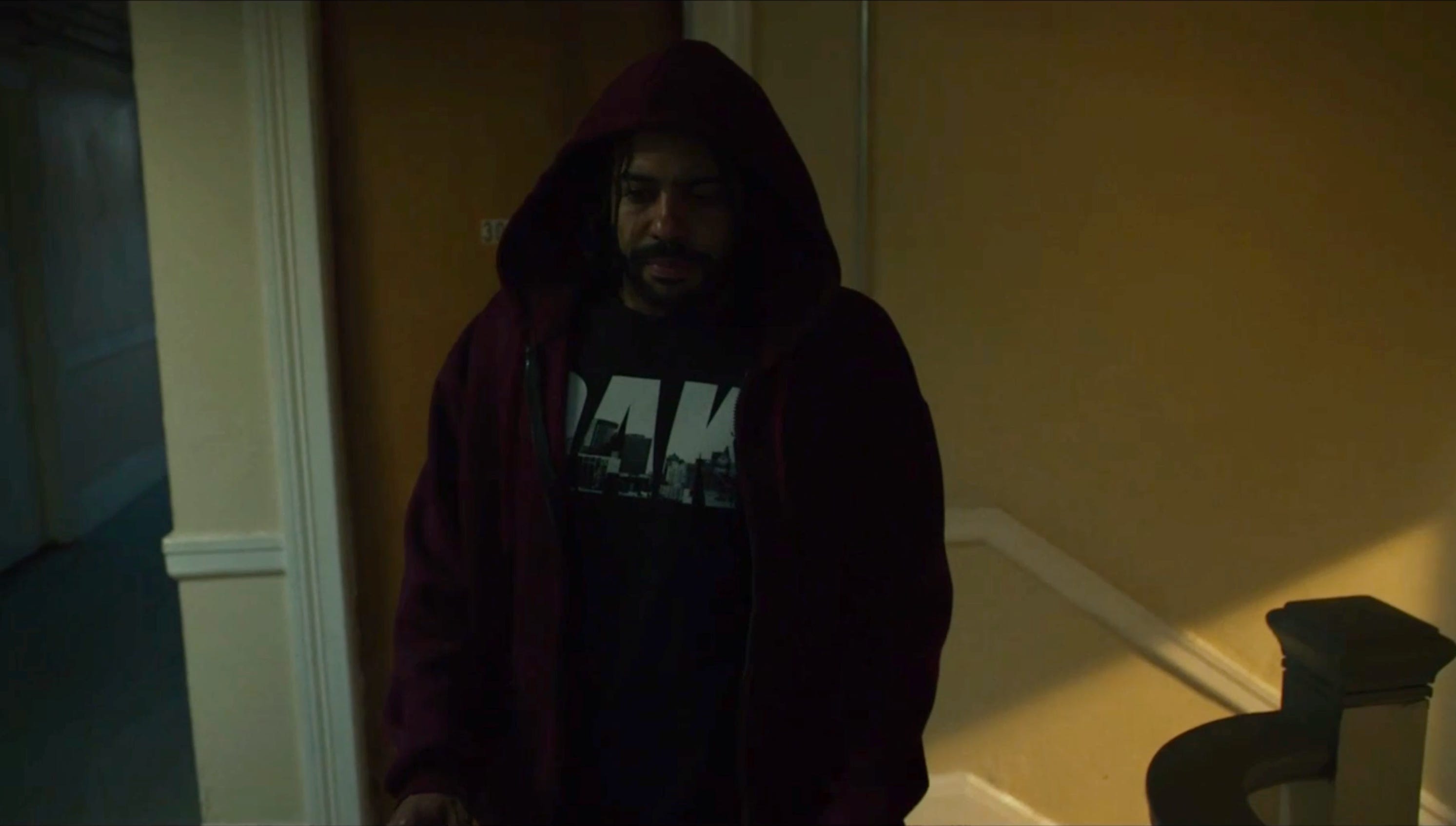
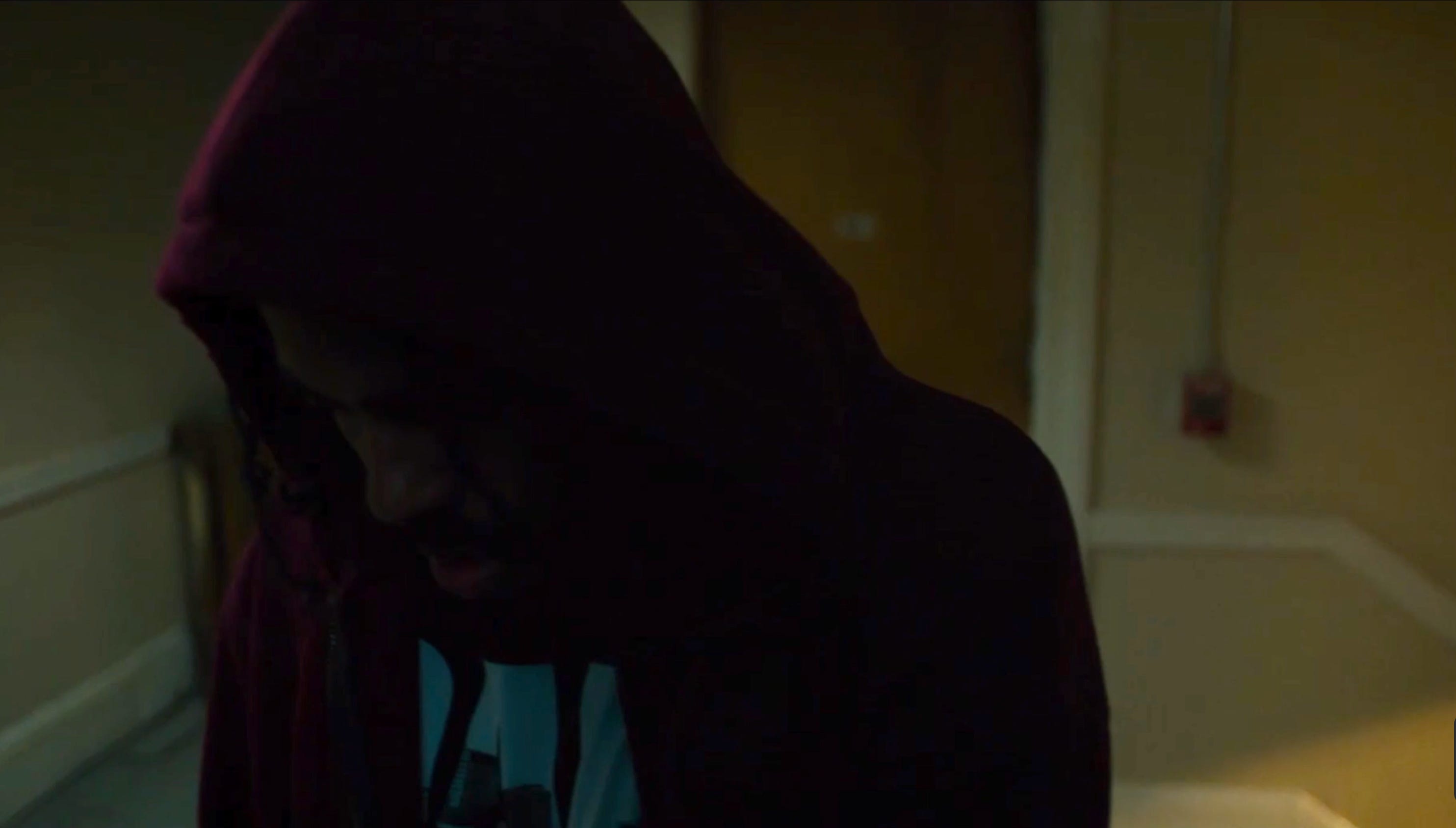
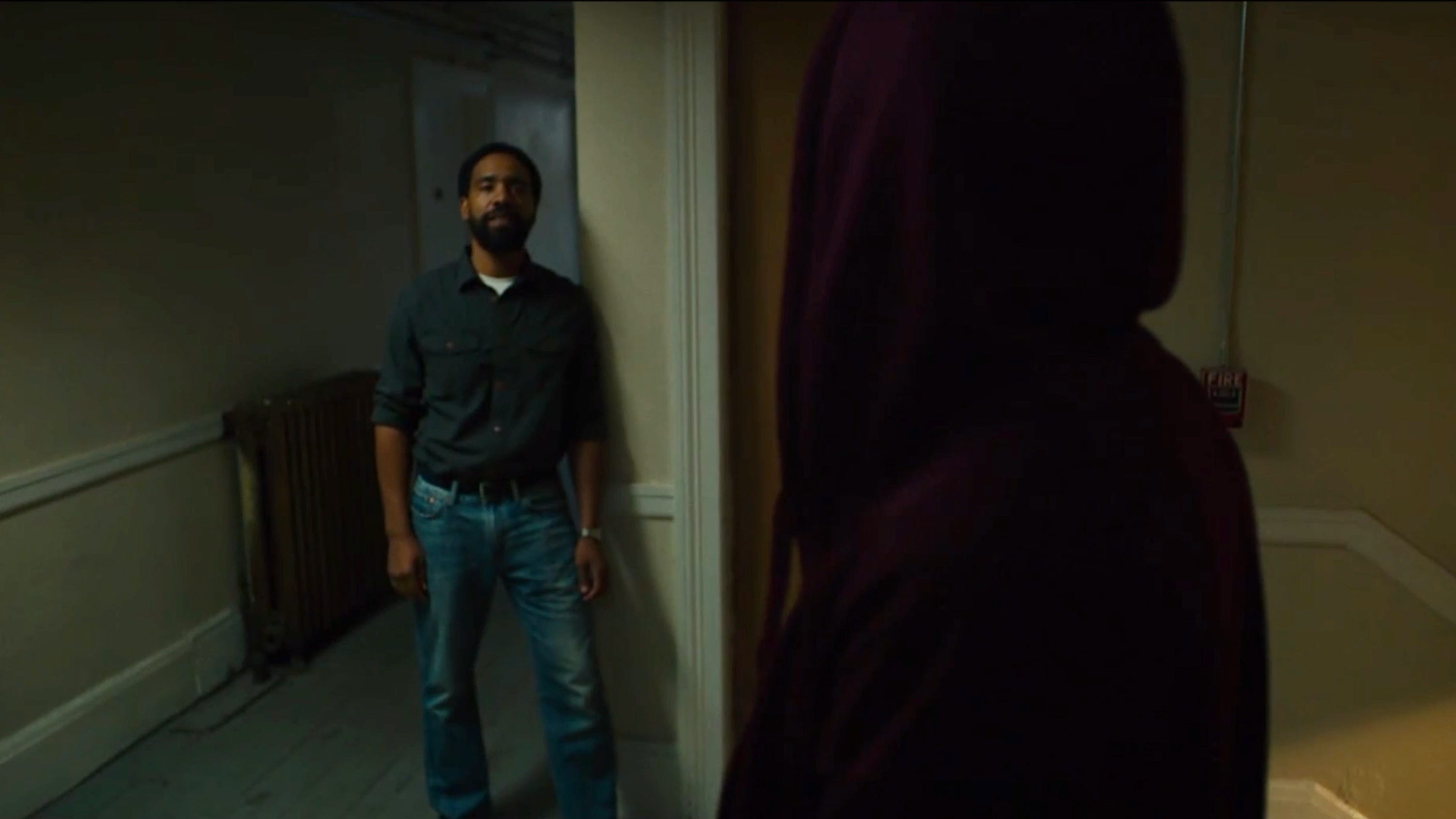
But where Poker Face used a Texas Switch, Blindspotting uses blocking to create, well, a blind spot.
Specifically, it uses one actor standing between the camera and the ‘jump scare spot’ to allow the second actor to get into position.
Simple, elegant, effective.