
Various Uses for Minimal Light: HELL DRIVERS
Using a Mix of Practical and Motivated Lighting for Maximum Impact
This 1957 truck-driver-noir (part of a whole subgenre) is gorgeously shot.
In these two scenes, sparse practical lights, accentuated with minimal off-screen lights, are used to different dramatic effects.
Light Bulb In a Cage
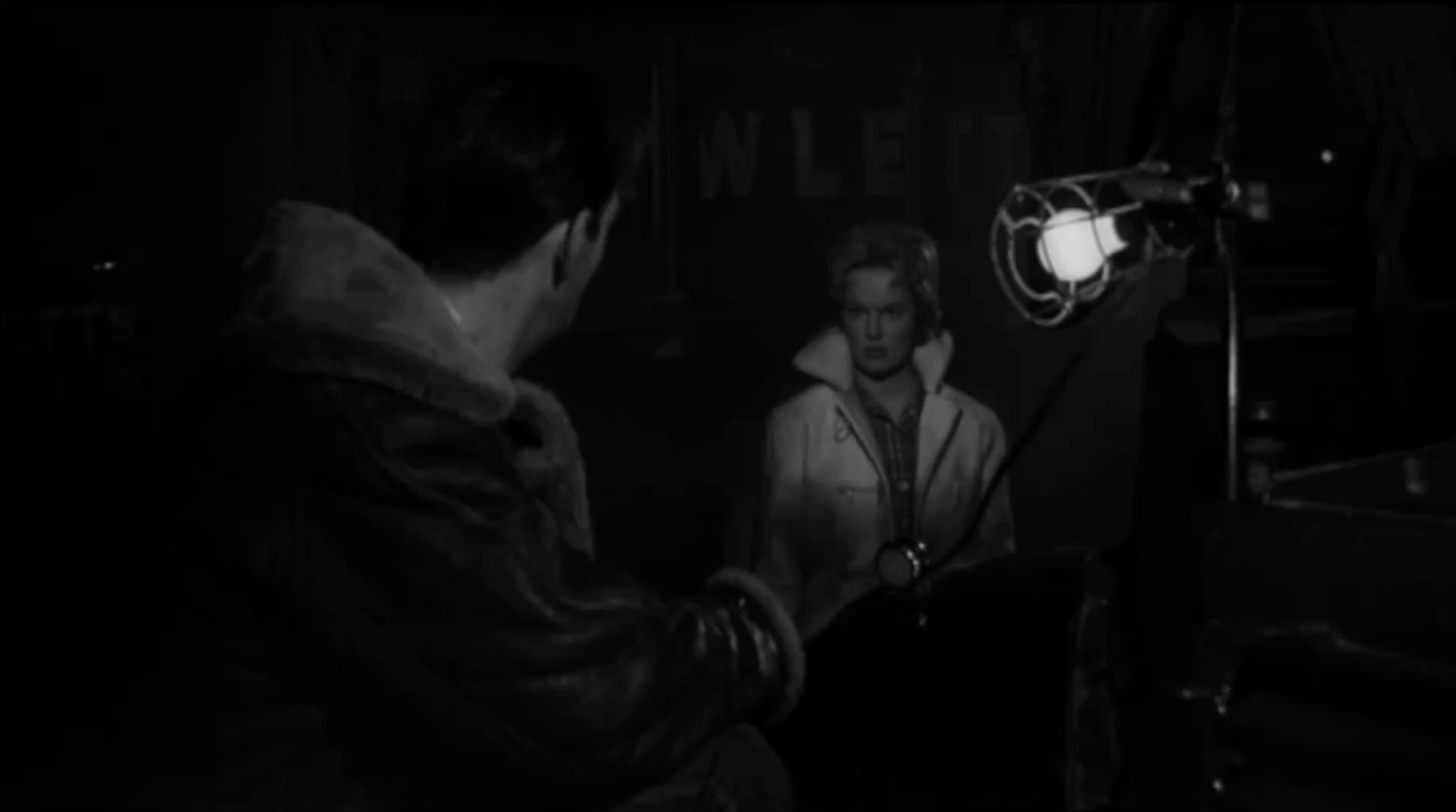
In a scene prior, Tom (Stanley Baker) has been working on his truck with a hand-held caged worklight. As Lucy (Peggy Cummins) comes to visit, the light is hanging on the wall, and boy does the scene ever make great use of it!
Stepping Through the Light
When Lucy steps toward Tom, she literally walks through the darkness before emerging into the light, a visual representation of what she and Tom have done / are doing in the heart of the story itself.
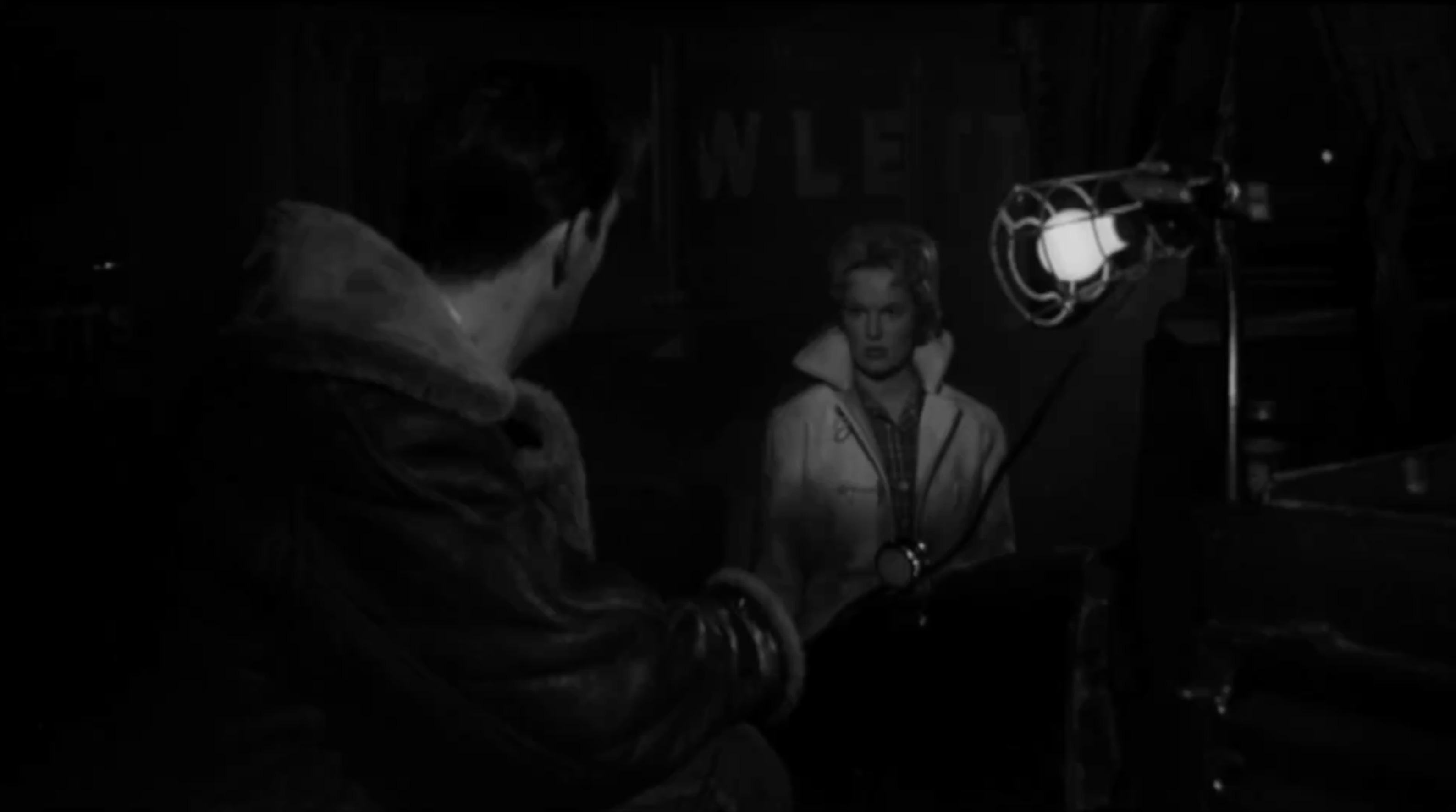
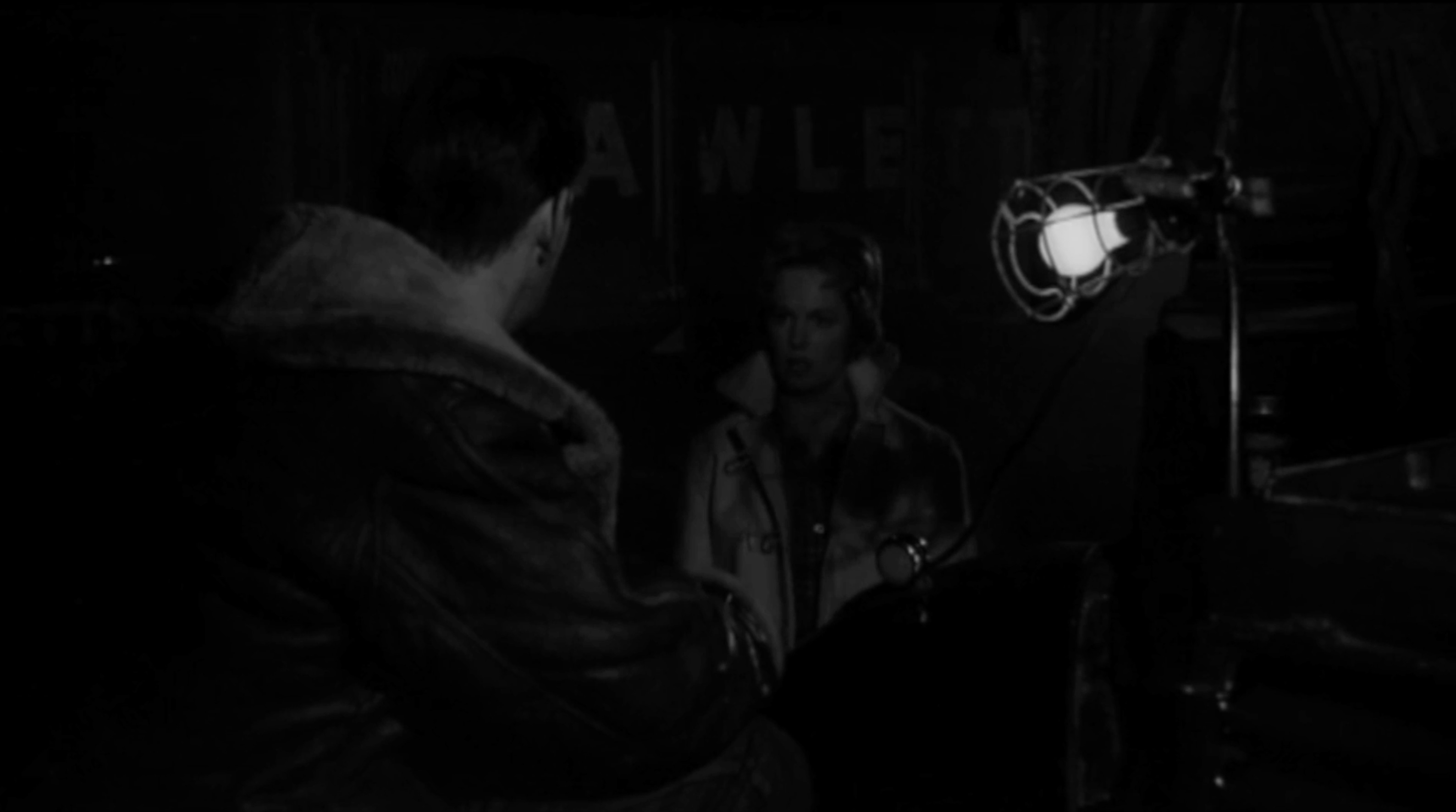
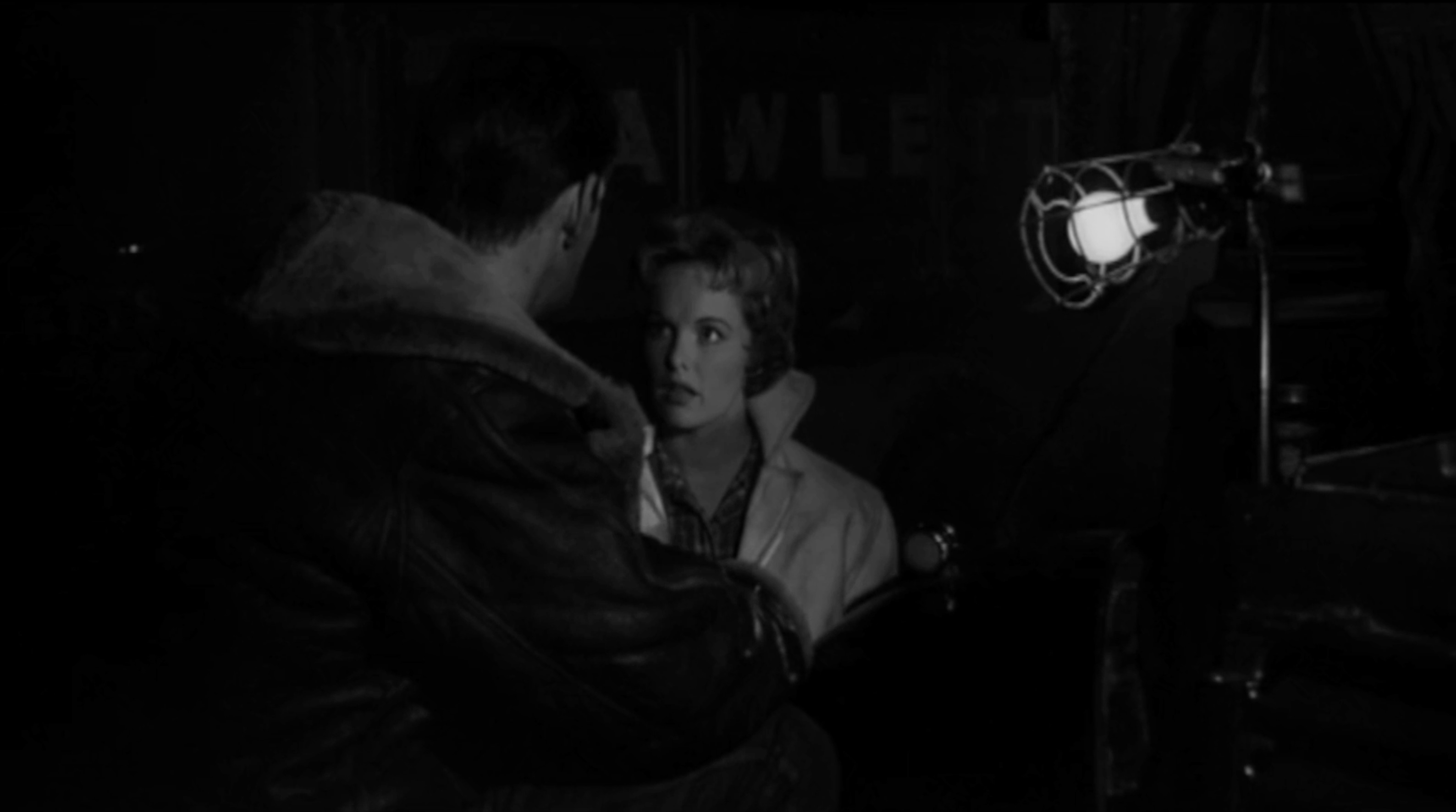
Then, the scene uses its one light to highlight Tom and Lucy’s passion and create a vignette effect around the lovers.
Note, Tom’s worklight is not actually the only source on set; how much we can see of both Tom and Lucy’s face shows there’s another light near the camera shining at them, and when Tom moves the light (0:28-0:30) you can see the second off-screen light being dimmed quickly to off.
But those lights work together to give the effect of a single light source shining hot on their passion.


Brightness to Black
As they kiss, Tom moves the light behind them.
Hell Drivers was made in the UK and thus not directly subject to the Hays Code, but if they wanted a US release, anything more than kissing would have to be signalled instead of explicit.
And little signals ‘we’re about to do much more than kiss’ than this:


This movement is a clever, practical way to ‘fade the scene to black’ before the next scene begins, also in compete darkness . . .
Moving Through Externally Motivated Light
Strike a Match
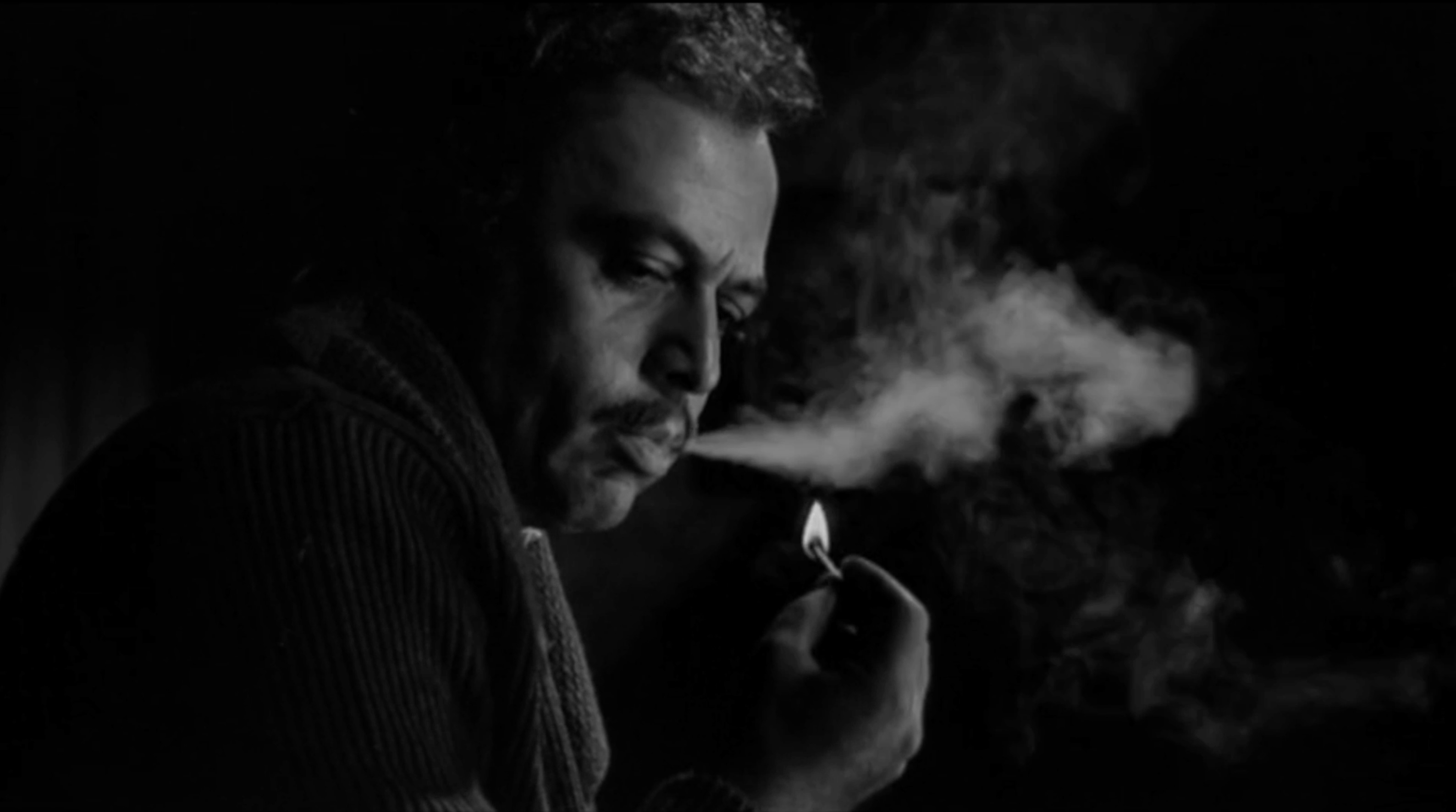
The black screen takes us into a new scene, broken when Gino (Herbert Lom) strikes a match to light his cigarette.
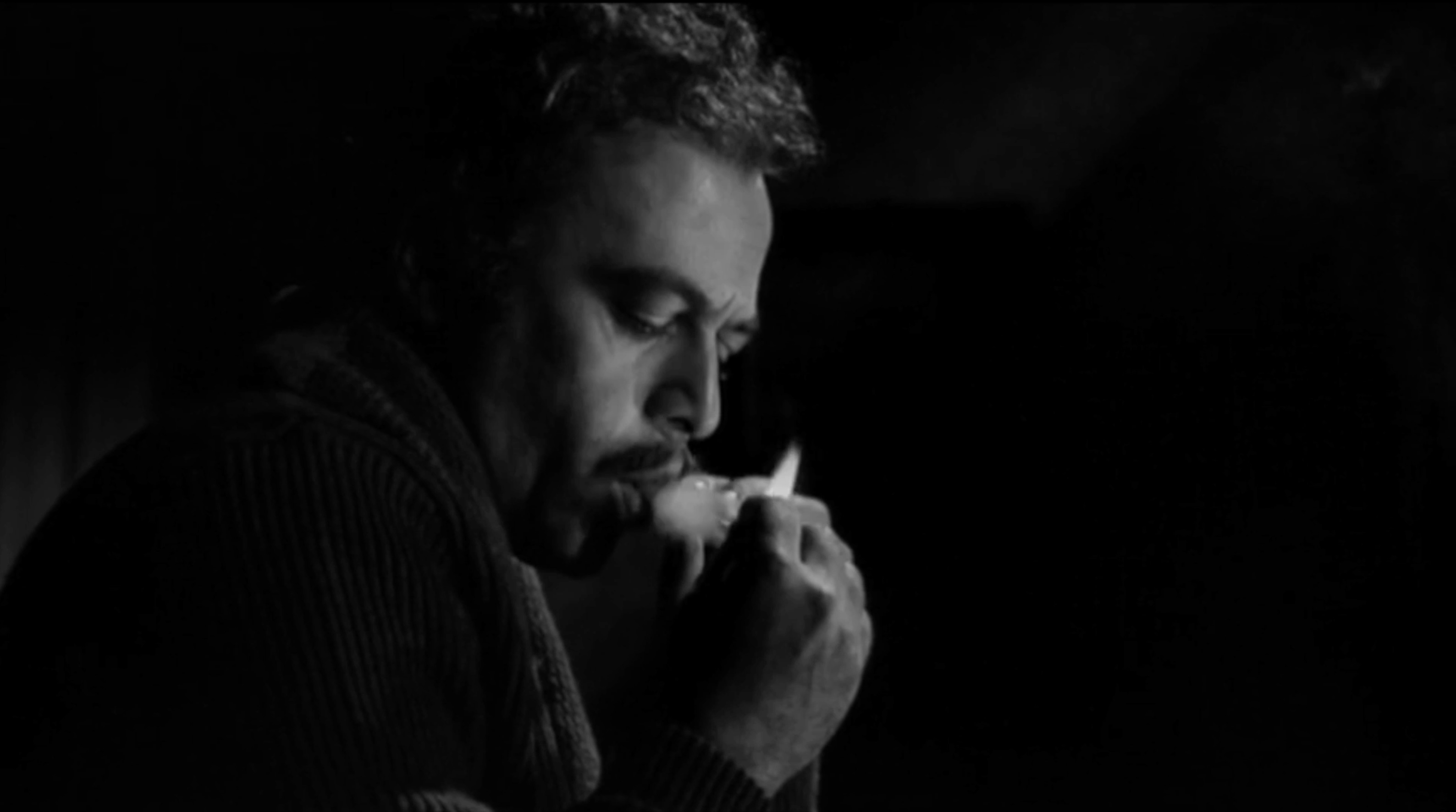
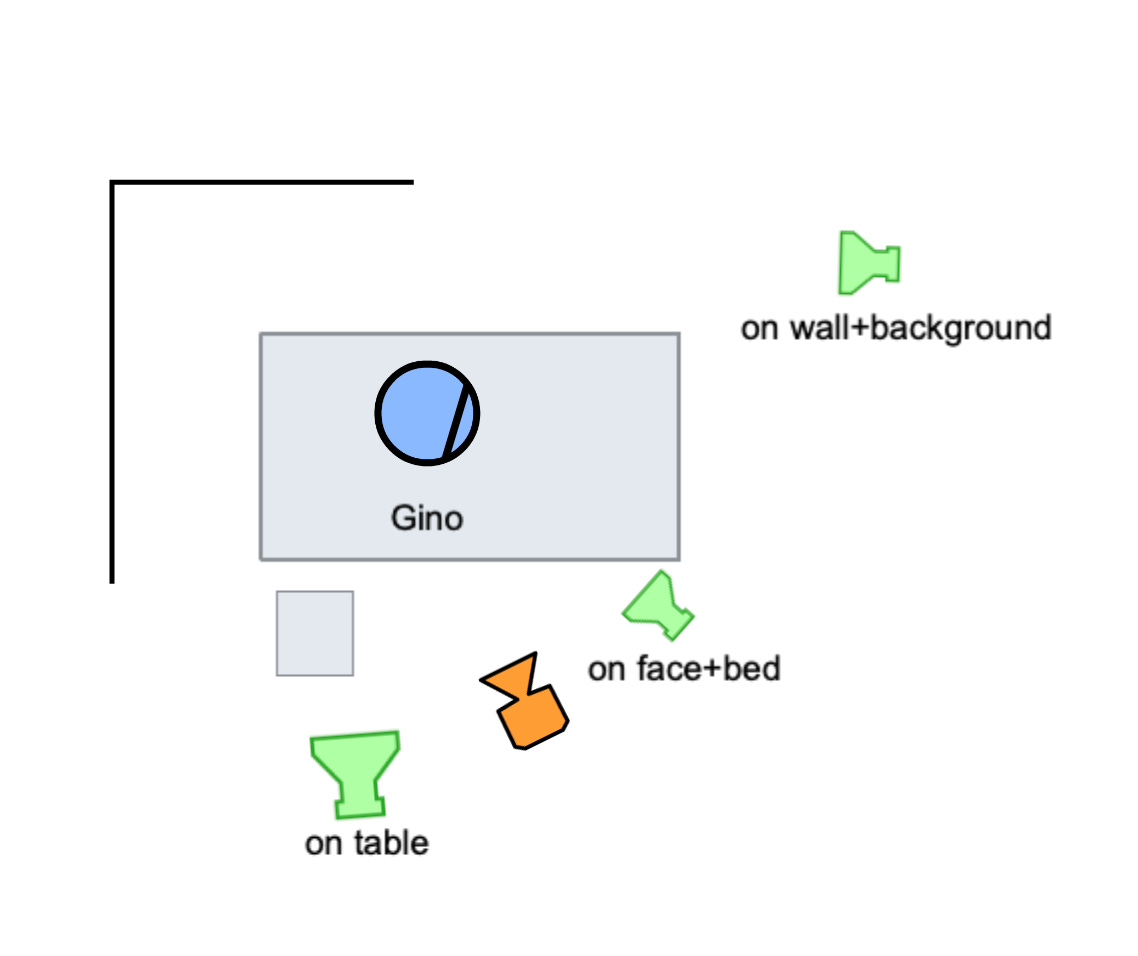
This scene does something similar to the first scene, pretending the light on Gino’s face is coming from one match, while clearly a fourth source off-screen actually lighting things.
I say fourth source, because in addition to the match and the accessory light on Gino’s face, there are also (at least) two other lights in the scene.
Supplemental Lights
As Gino moves and the camera moves with him, we get objects and areas of the room lit by other lights which illuminate a small area of his bedspread as he looks at a ring, his bedside table as he drops the ring box into it, and then parts of his face when he lies down.


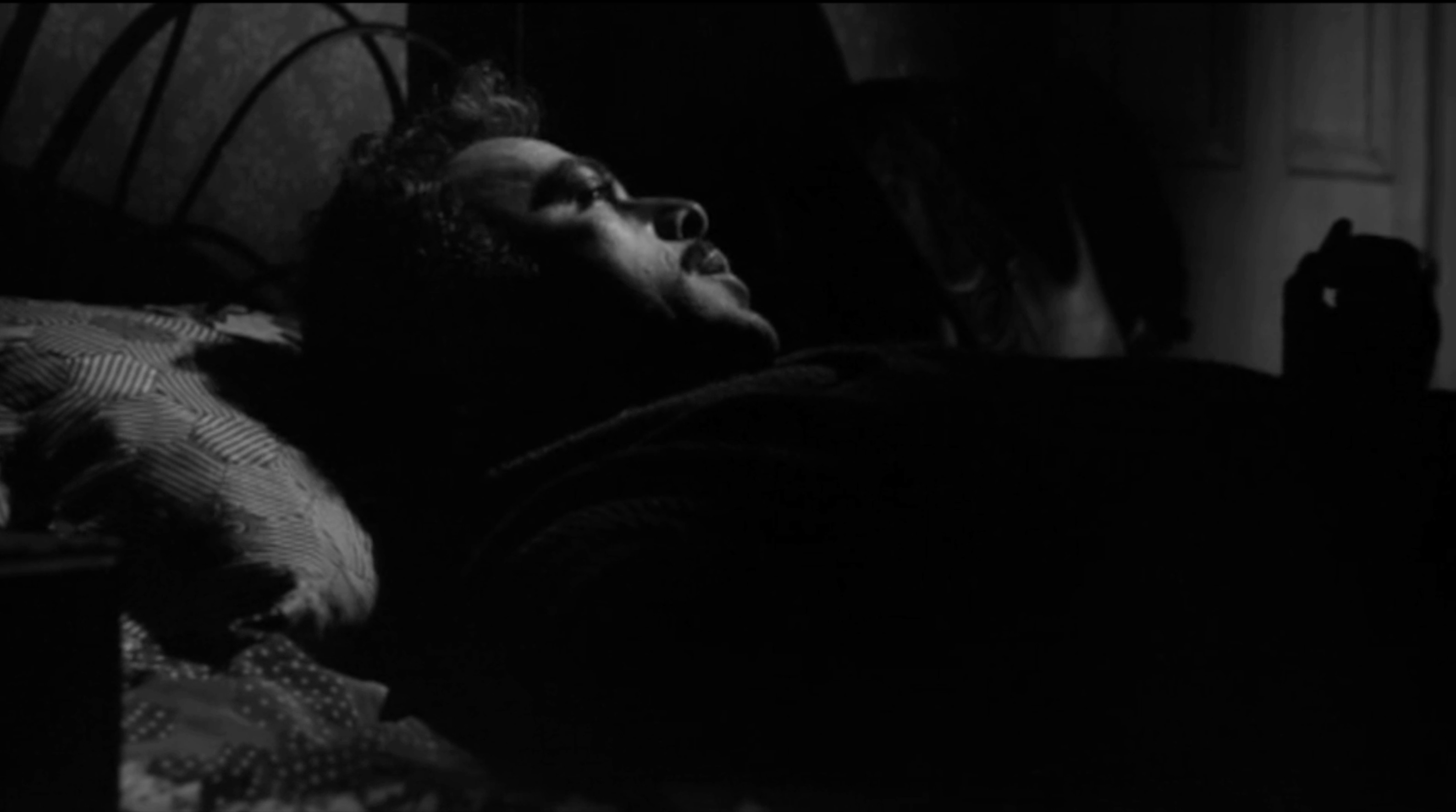
Because the camera stays tight with Gino, it’s difficult to quite tell what the layout is like, here’s a rough guess:
Back to Black
Because we only see these things at one time, it’s still plausible when Gino sits up at the end that his room is wholly shadowed.
As Gino sits up and moves into the shadow, the screen again fades to black through a mix of having turned off the face+bed light, practical camera movement away from the still-lit area, and manually fading the image itself in post.
This, too, is symbolic; Gino has given up on asking the woman he loves to marry him, and so he is moving into darkness of sadness.
For more on motivating your dramatic black-and-white lighting,
check out our piece on Night of the Hunted
Additional Details
Wardrobe, makeup, and props all work with the cinematography, particularly Lucy’s white coat which helps her ‘pop’ in the mechanic shed, and a bit of shine on Gino’s ring box so it will catch the light.
The blocking is also designed for impact; not just bigger motions such as Lucy walking through the scene, but where Gino holds his cigarette, the better to watch the match and cigarette smoke curl against inky blackness.


Takeaways
Colour films were prolific by 1957, but Hell Drivers used its stark light-and-darkness with intention; we can learn a lot by the lighting and blocking which is applicable to both black-and-white and colour design.
Film Details & Further Reading
Hell Drivers (1957)
Director: Cy Endfield (who also wrote it)
Cinematographer: Geoffrey Unsworth