
Using Mirrors to Disorient: BLACKOUT
shot-reverse-shot, but make it three ways, twice
Blackout stages a climactic confrontation between Casey (Dane Clark) and Phyllis (Belinda Lee carrying the prototypical femme fatale name) in a two-way mirror.
We’re looking (with the scene split into two clips) at:
enabling a dramatic entrance
shot-reverse-shot, both using the mirror and not
re-blocking mid-scene
using the mirror for a final surprize
This post is all about look and dramatic effect.
If you want more about the practical nightmare of shooting a scene like this, we’ve done a primer on that, here.
Making an Entrance
The mirror enables a moment of dramatic irony, as we see Casey before Phyllis does. The mirror allows us to see Casey alongside Phyllis’s body language and her face, so we can look for the exact moment she sees him in the reflection.
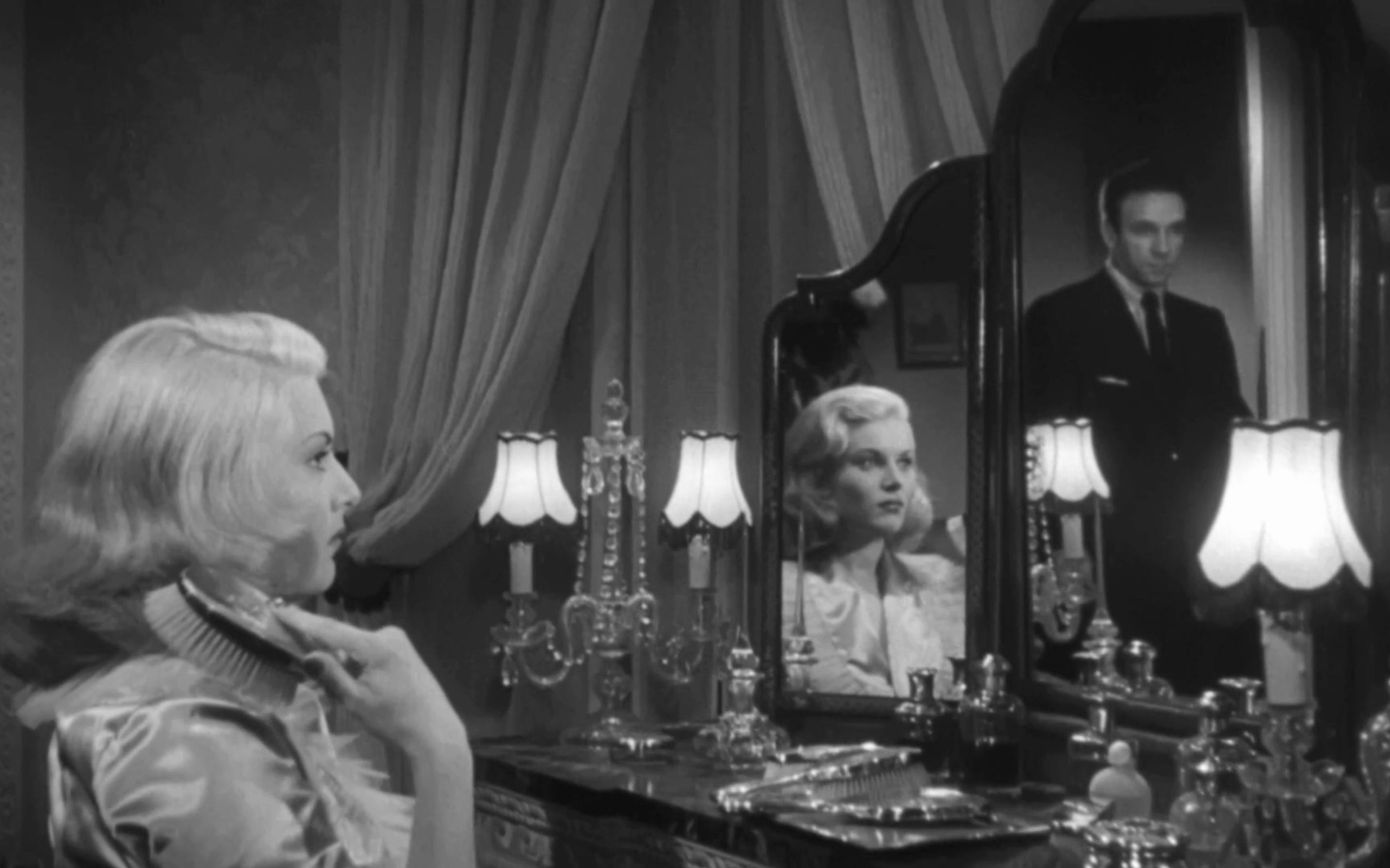
When Phyllis turns towards Casey, she turns away from where he is on screen; this begins a fun disorientation, which the mirror continues to facilitate through the scene.
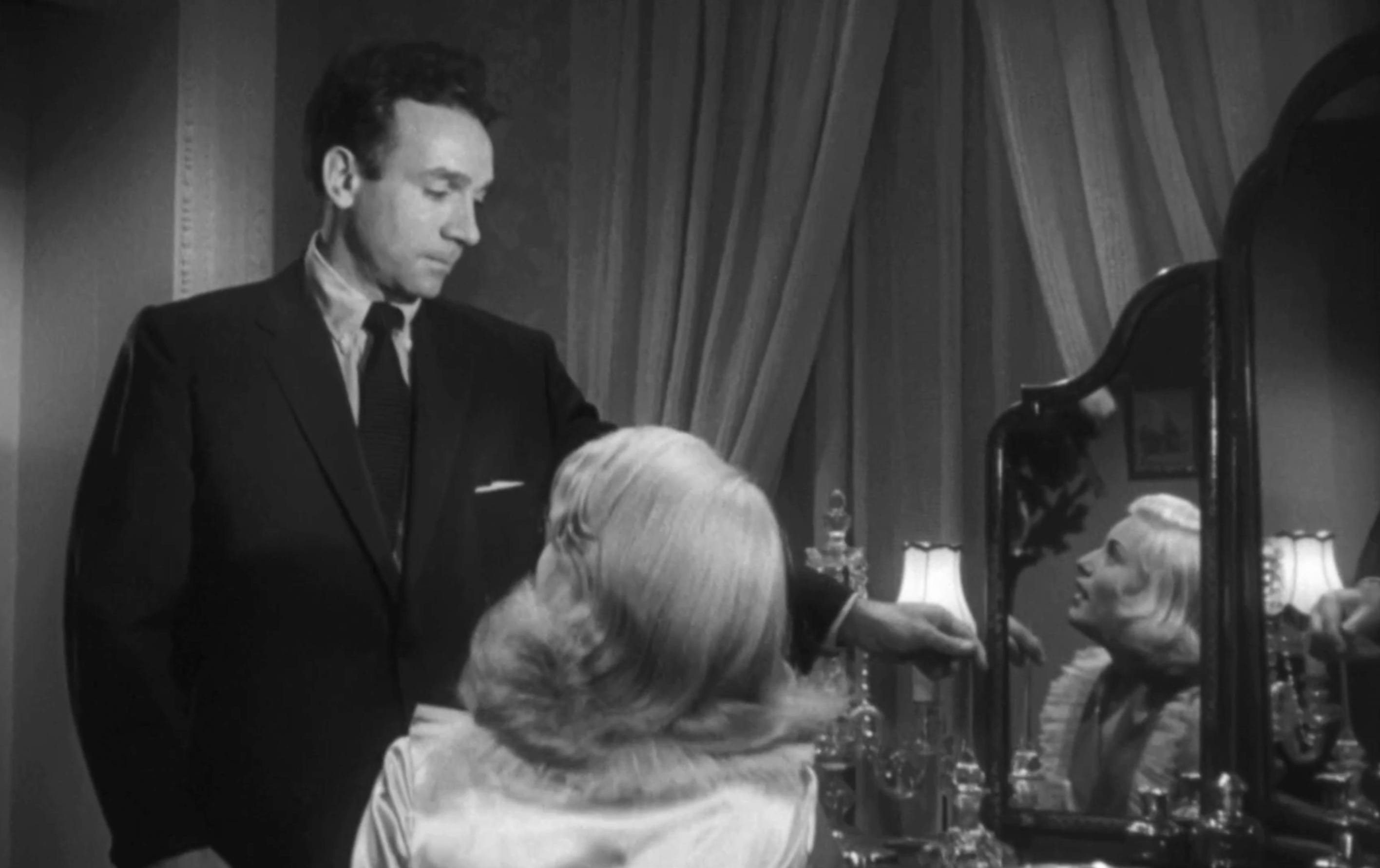
Then when Casey walks into frame, the camera moves to reframe the shot so we can see him ‘in situ’ while still seeing Phyllis’ face in the mirror (and some of Casey’s hand, which is aesthetically delightful and also in context somewhat threatening).
Shot-Reverse-Shot
Just because both Casey and Phyllis are fully visible in the one shot doesn’t mean a director ONLY wants to use the one angle.
Often, as here, you do want at least one more setup.
The additional shot(s) can help focus more on one person’s face for certain moments, give options in the edit whether for pacing or performance, etc.
After the camera reframes, there are two static shots (both below) which comprise the first half of the scene.
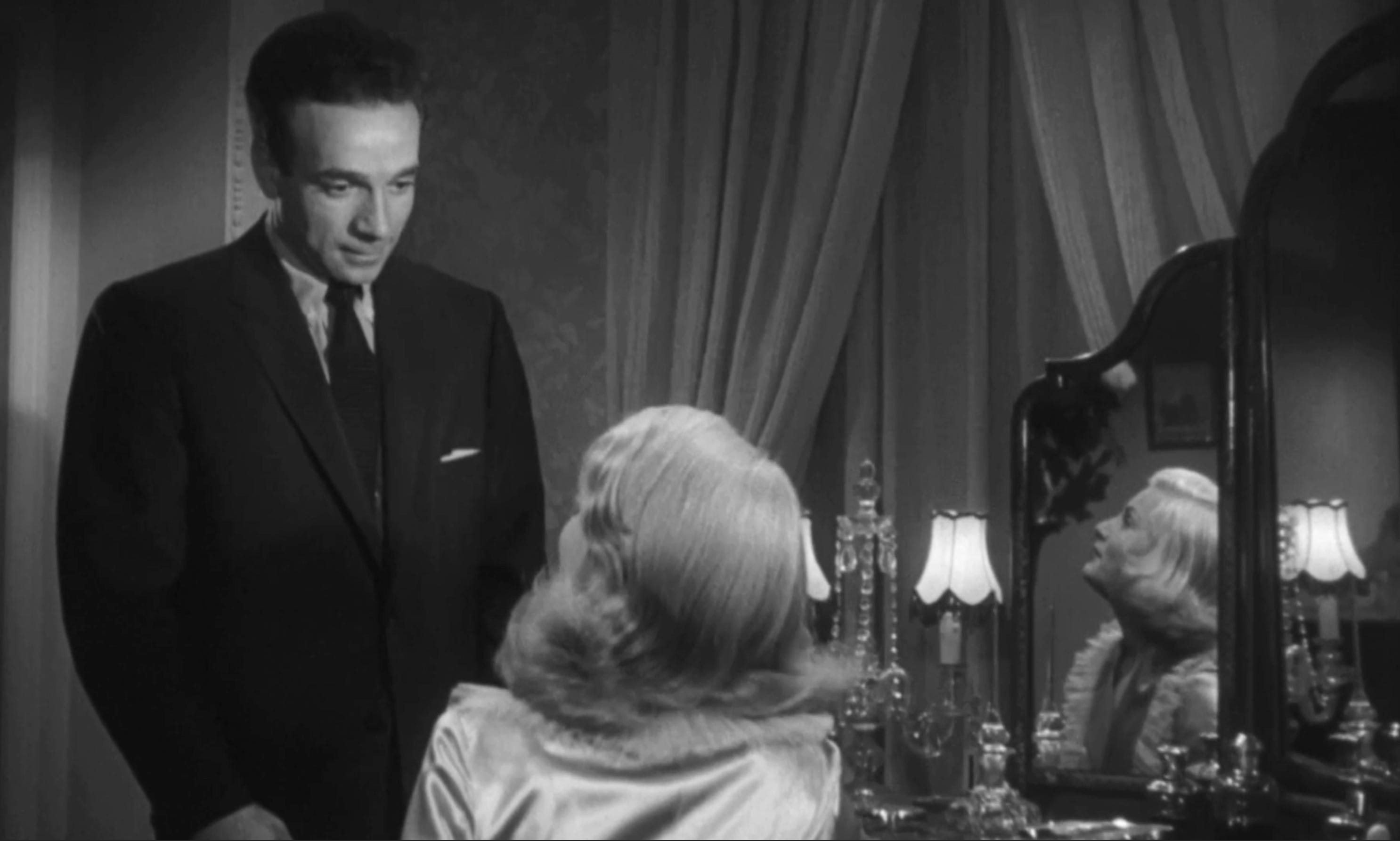
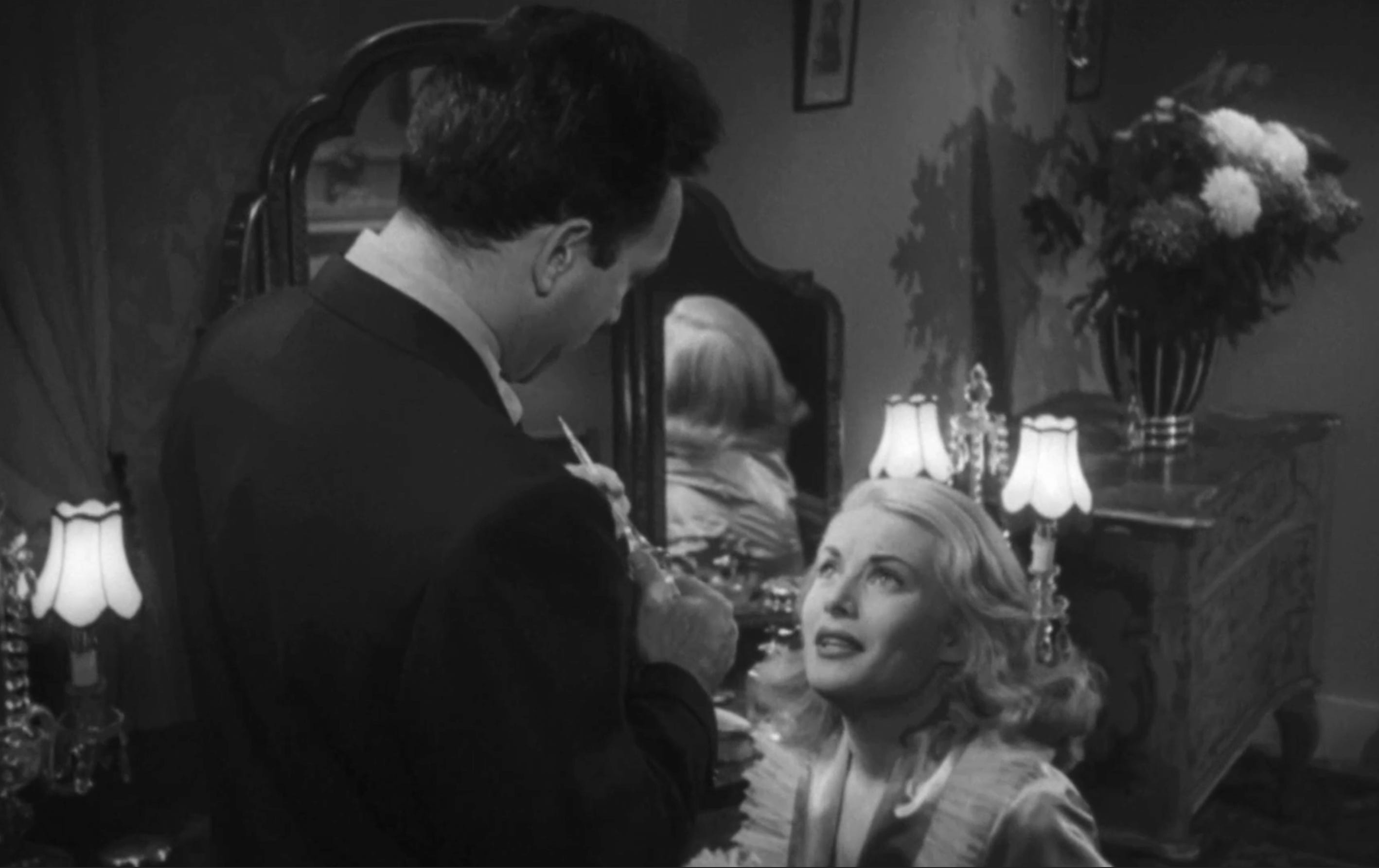
Only one of the angles really makes much use of the mirror; hang onto that thought because they’re about to . . .
Switch!
This is when it starts getting really juicy!
As Casey moves, the camera shifts to reframe, essentially establishing another main mirror shot (shot 1, below), and then on the cut establishing a different reverse-shot (shot 2, below).
Because even after the switch, the reverse-shot where the reverse has no mirror in it (shot 2, below), and again, it’s only Phyllis’s face we see, not Casey’s. That they repeat the pattern shows the intent to make us look at Phyllis.
But, why?
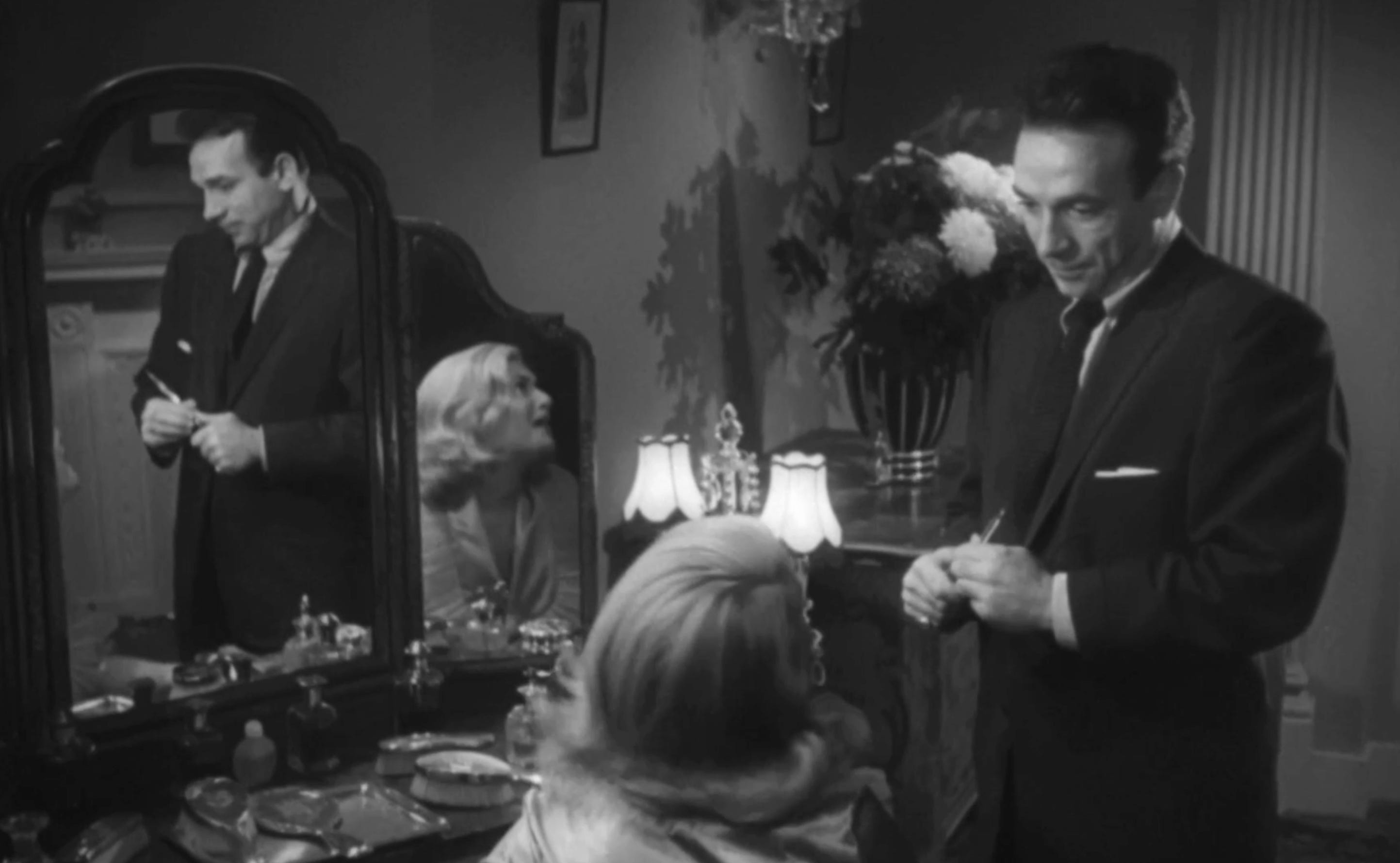
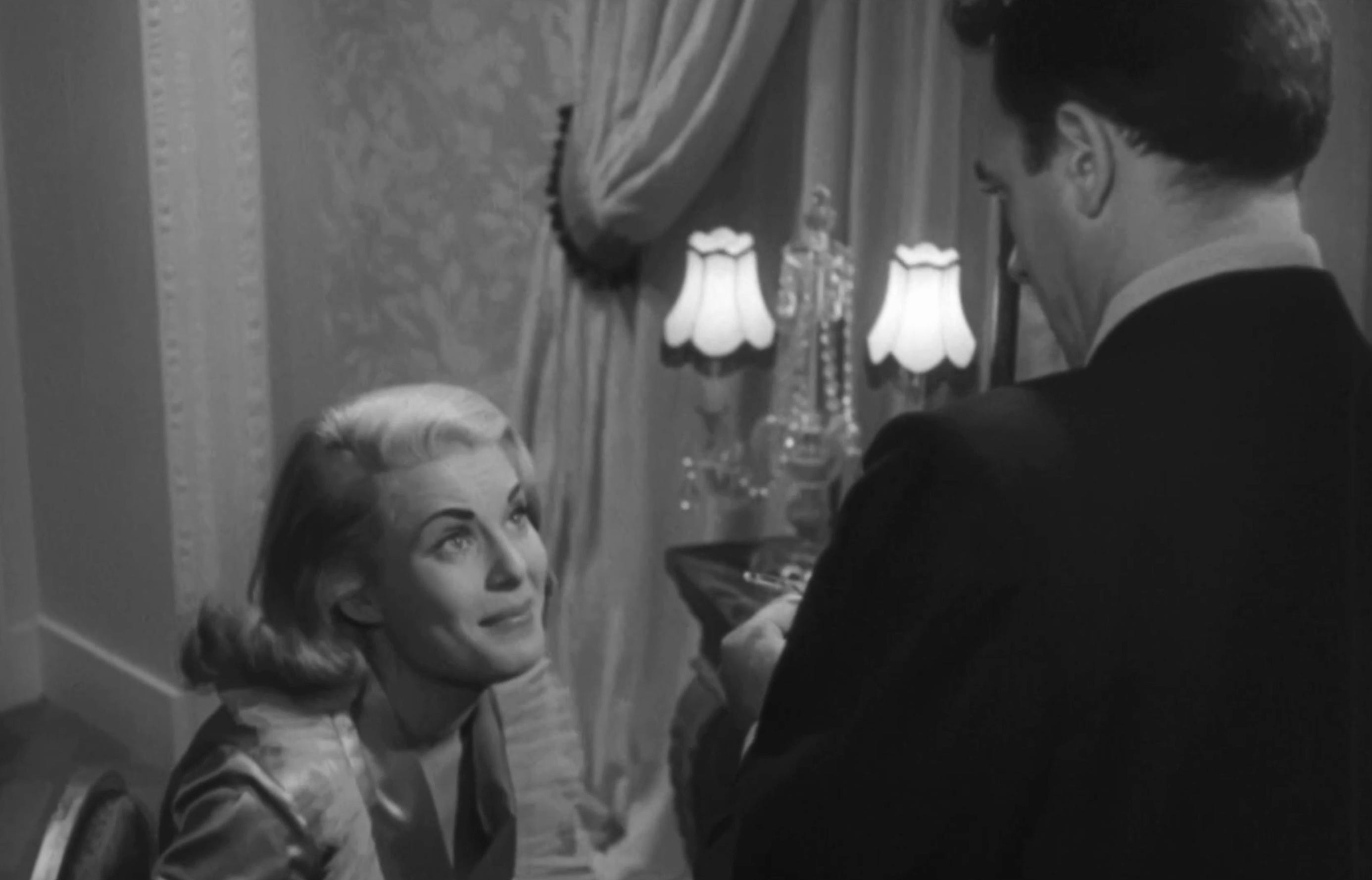
The whole film is about confused state of mind — the titular Blackout is a series of events Casey cannot remember, and here he is confused about Phyllis’s true loyalties and motives.
At this point in the film, we the audience know everything Casey knows, what we (and Casey) do not know is whether Phyllis really has been loyal.
This choice to hide Casey’s face makes us concentrate on Phyllis’s in the ‘reverse’ shot, and keeps us in his disorientation. Whenever the reverse-shot is deployed, it’s pushing us to stare at Phyllis’s face only at that time, even while at other times during the conversation we can see them both, and chose who to concentrate on, or to look back and forth between them.
Surprize! and Cover Up
Casey’s look at the mirror leads to a cut, to a closeup of what (presumably, logically) Casey sees: the door knob turning as someone else is about to enter.


The doorknobs are so distinct when the scene soon cuts back to a wider shot of the doors opening as a gun! comes through! the doorknobs immediately identify it.
The cut back to the door allows the ‘real violence’ to happen off-screen; possibly to get around the Hays Code, but almost certainly to keep us in suspense about what Casey actually does.
Because cutting to a medium shot of Phyllis on the ground, leaving us to wonder . . .


And that’s where we leave you, without spoilers.
Takeaways
Much of this scene is about disorienting us, but it doesn’t intentionally cross the line to confuse us, or use choppy editing; instead, it does things like have Phyllis turn ‘away’ from Casey when he comes in, and use the mirrors so we have multiple places to look at once . . . except for the reverse shots, which ‘force’ us to concentrate on Phyllis.
In all shots with the mirror, we see both faces, though we have to not only actively move our eyes to do so, the mirror framing around one or both reminds us of the artifice of the characters.
The mirror allows some disorientation, a shot-reverse-shot setup, re-stages, and also a couple other cool tricks (“the final surprize”). It’s a perfect choice for a climactic scene in a film about a man’s confused state of mind.