
Stunt Breakdown: DEATH IN BRUNSWICK
how to make the most of your big booms and your star's face
Just before this 1990 Australian indie, Sam Neill starred in Dead Calm (incredible) and had his first massive foreign film role with The Hunt for Red October. Around the corner were The Piano and Jurassic Park. His signing on to Death in Brunswick surely lent the film credence (which possibly meant funding!), but they had to keep him safe as houses while maximising his mug.
What are the basics of a stunt like this? Let’s talk editing theory, along with making the most of both your budget and your star’s face.
Setup
The big blowup starts with Carl (Sam Neill) outside a bar; we see him standing near the entrance, then a shot of the car pulling away, followed by a wide to establish him in relation to the building.
Then, Carl looks across the street as another car pulls up.


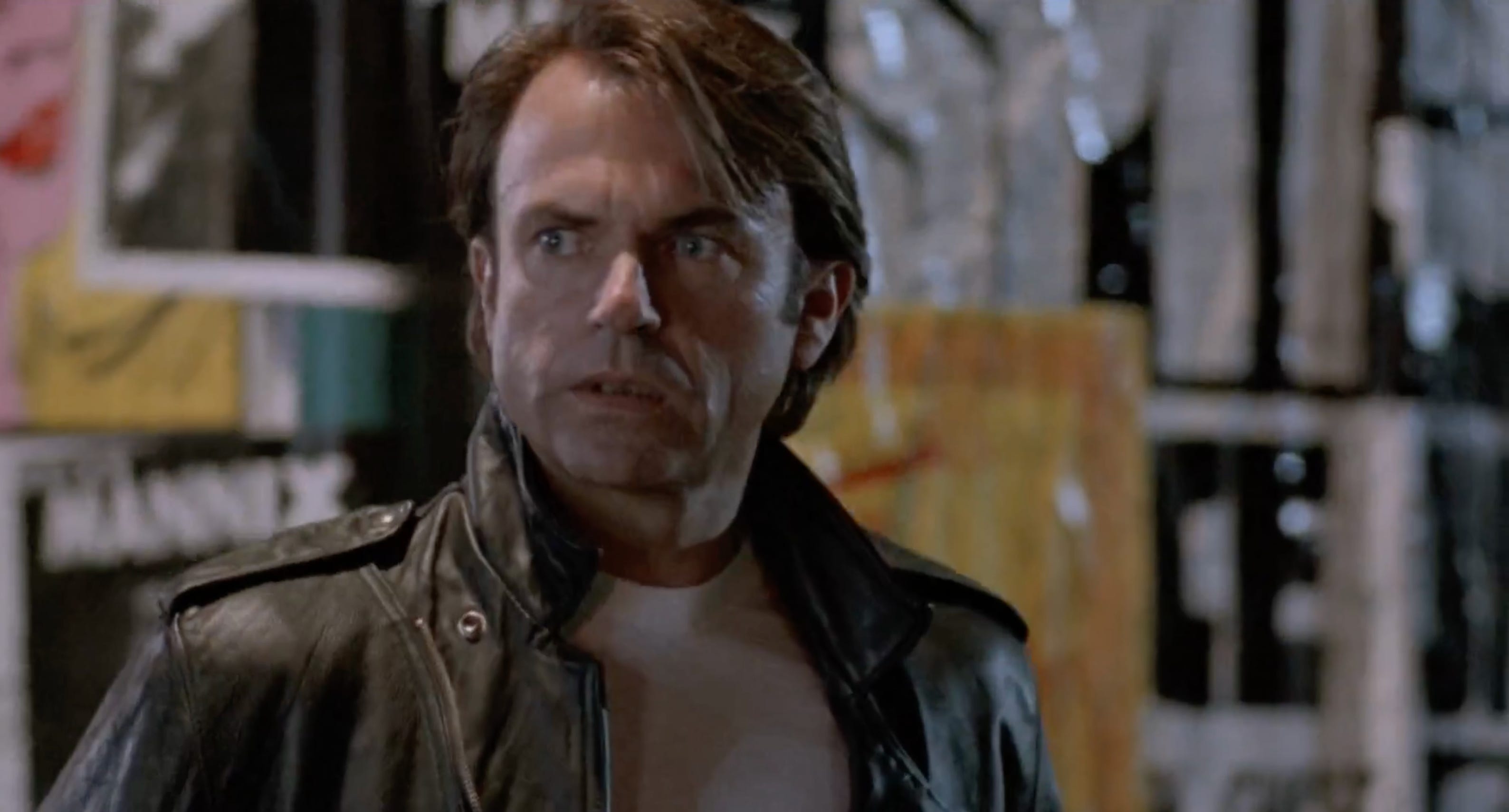
A goon lights a molotov cocktail, then — after a quick cut back to Carl as he tries to figure out exactly what is happening — the goon throws the lit bottle at the building.


A Moment of Suspense
We get just one use of the angle from behind the goon as he throws the molotov cocktail — this shot gives us the distance between the goon and the building — then the scene cuts back to Carl watching the bottle arc toward the bar door.
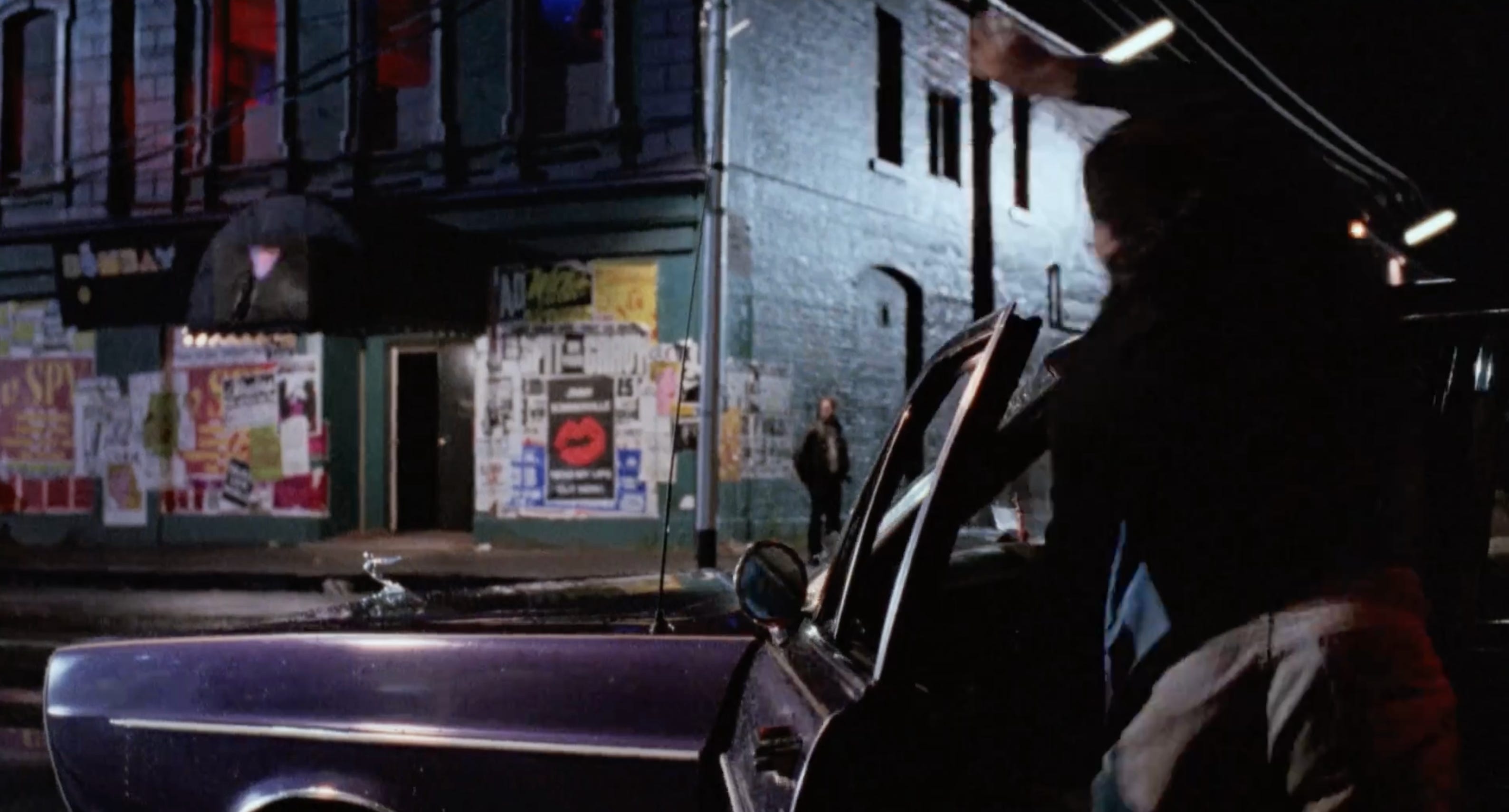
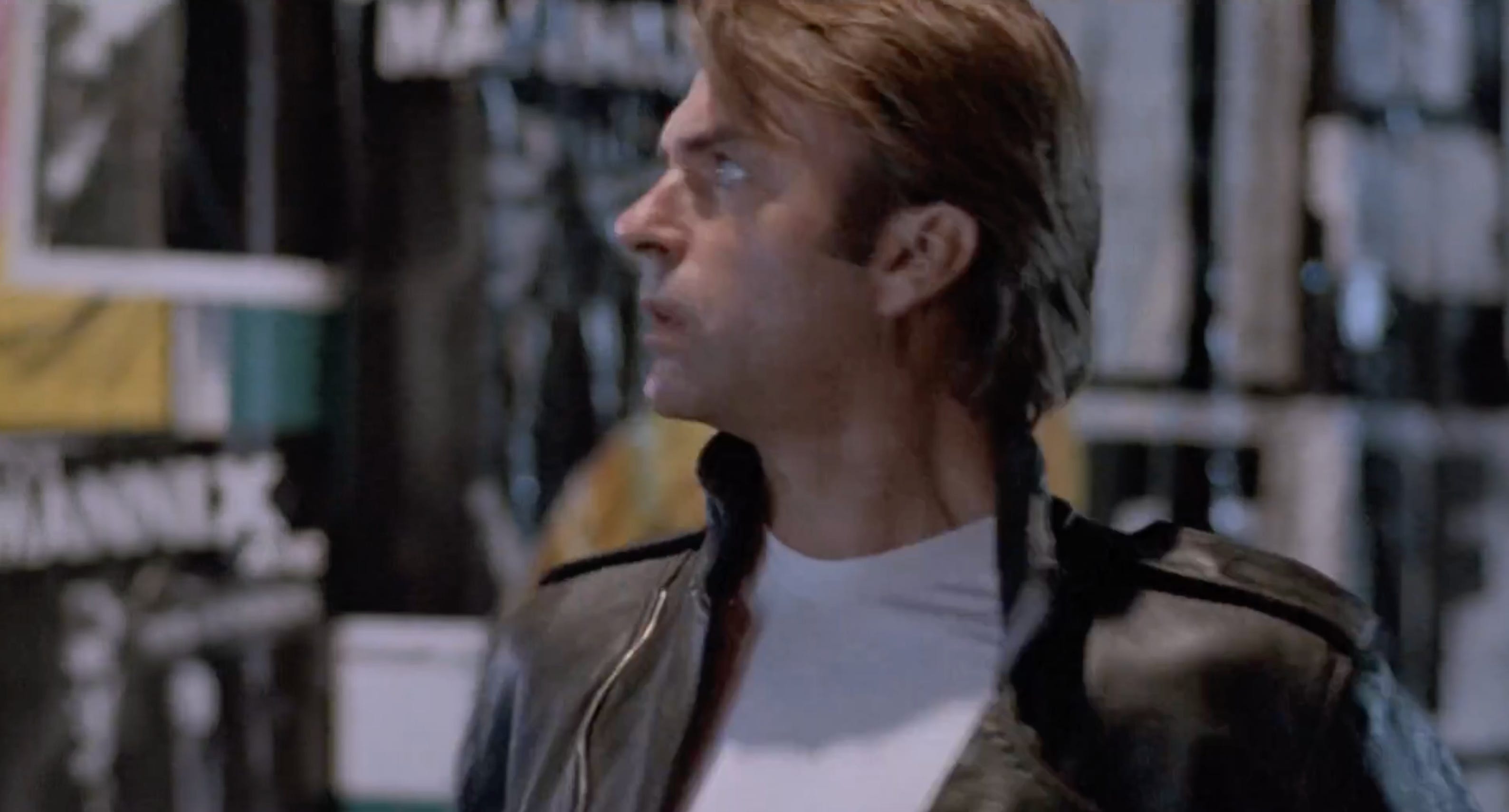
So many of the scene’s actions will rely on Carl’s reactions: when and where he’s looking drives the edit.
This shot of Carl’s head turning also allows the scene to cut from “everything in context” shot showing the goons + car + bar + Carl as a [harmless prop-glass] bottle flies through the air, to the actual shot of the BOOM! explosion.
Multiple Angles
The big bang itself is covered in two angles, so we get to see the ‘money shot’ twice (it’s possible, but unlikely, they actually set off two explosions).
The edit also extends the sparks and fireballs by cutting between these two angles.
The way they angle the stuntie’s fall — jumping away from the explosion, then sprawling on the cement — is very intentional, because it enables the next angle, where Sam Neill’s face is up front and brightly in focus.
Show the Aftermath — but only the cheap stuff!
When we pick back up with Carl lifting his face and the car behind him . . .
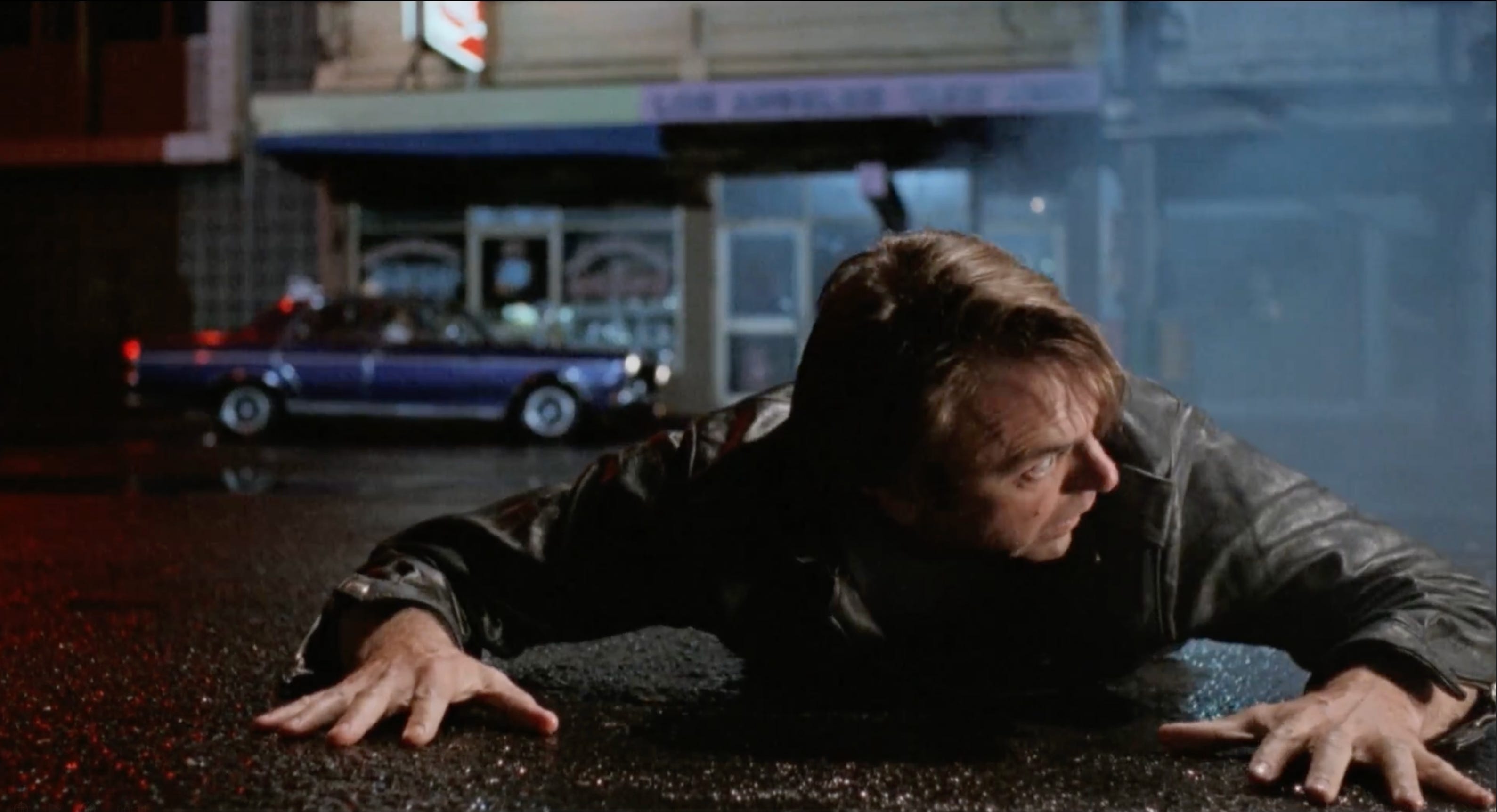
From this moment we never see a lick of fire or burnt posters or a supposedly-ruined front of a building again.
What we do see is lots of ‘smoke’ in every shot, which you can make with a decent haze machine; that’s working with a budget.
In terms of maximizing your star, the car and its bright shining lights are the scary focal point of the chase, meaning other than the first shot where Neill runs out of frame long before the car gets close, and then him peeking out of the doorway, it’s his stunt double’s body and legs which are scrambling through frame.


Get Out
Now the BOOM and excitement are over, Carl pokes his recognizeable face out of the doorway, serving a moment of relief and bleak comedy.
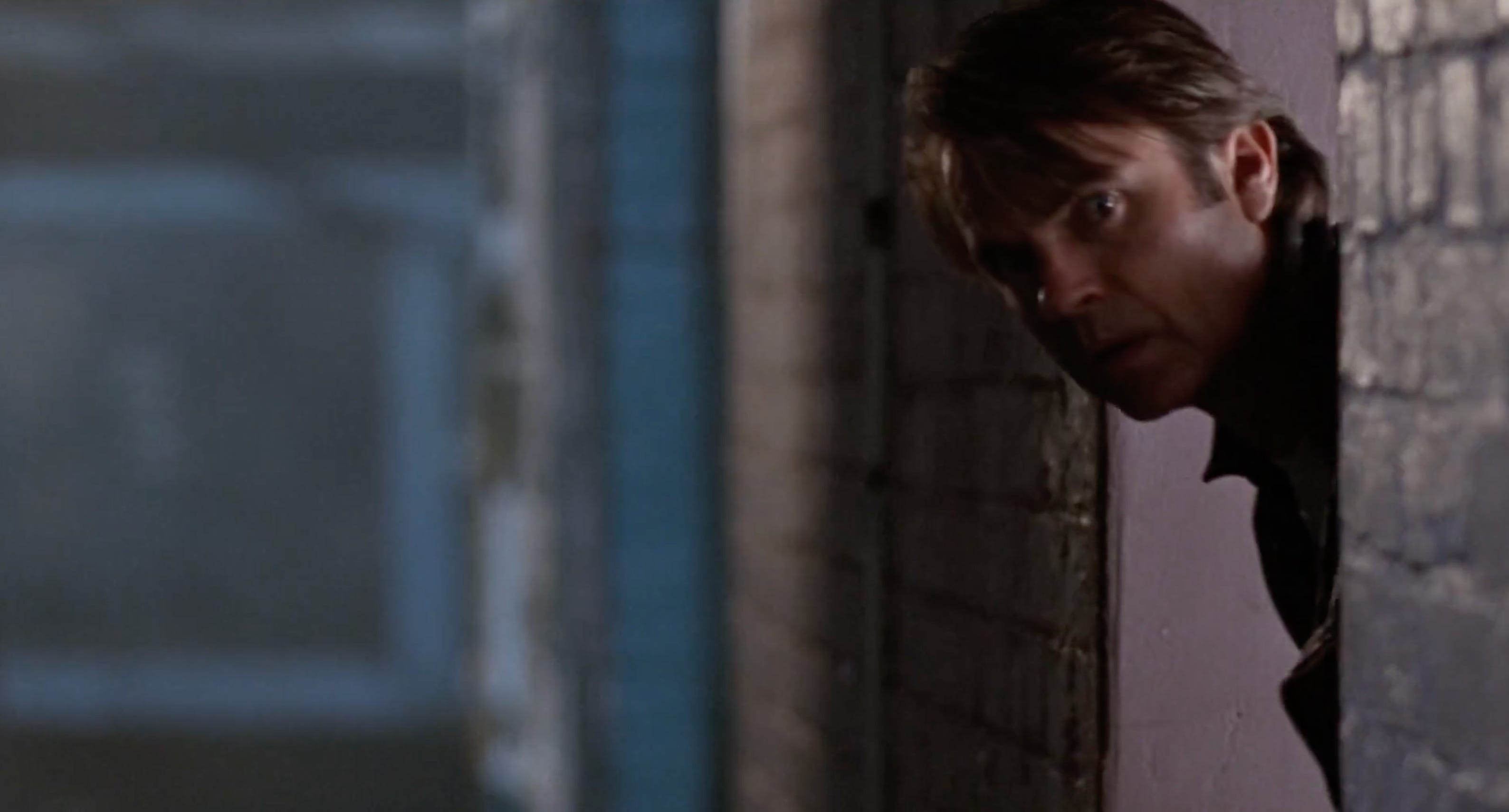
Then the scene transitions out with a J-cut and an audio gag, and the movie moves on with aplomb.
Takeaways
If you don’t have enough money to do more than one shot of an explosion and fire, consider well your setup, and how you can use your actor’s face to guide the buildup to the big boom.
If you’ve got another smaller stunt, don’t forget to bring your actor’s face back in — and in closeup if you can! — before kicking that off.
Finally, if you can get Sam Neill, always get Sam Neill.
Film Details & Further Reading
Death in Brunswick (1990)
Director: John Ruane
Cinematographer: Ellery Ryan