
Racking Through a Scene: INTERVIEW WITH THE VAMPIRE
how pulling focus can convey everything from thoughts to symbolism
Rack focusing looks cool, draws attention from one place / object / character to another, and can put us into a characters’ point of view; we explore all these this week through our daily socials shot analyses.
But what effect can it have when a single scene uses rack focuses over and over and over?
In this scene from Interview with the Vampire 1.06 “Like Angels Put in Hell by God,” a conversation between Louis, Lestat, and Claudia (Jacob Anderson, Sam Reid, and Bailey Bass) demonstrates just that.
[the scene runs longer; we’ve taken the first 90 seconds as a representative sample]
Setup
The scene opens on a shot moving R-L to Louis. As the camera moves, the focus racks from the radio to Louis, then past Louis to where Lestat and Claudia play chess.
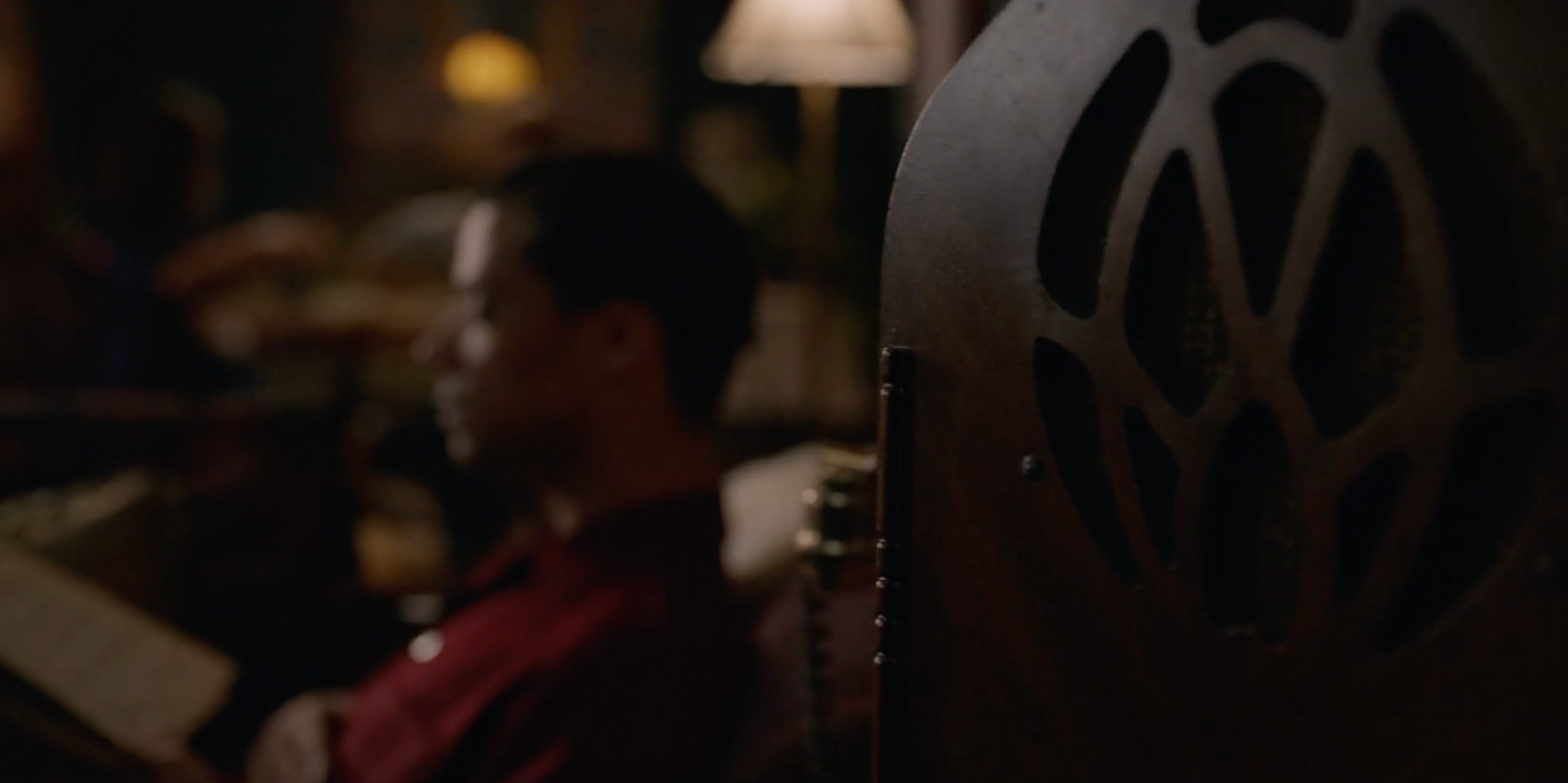
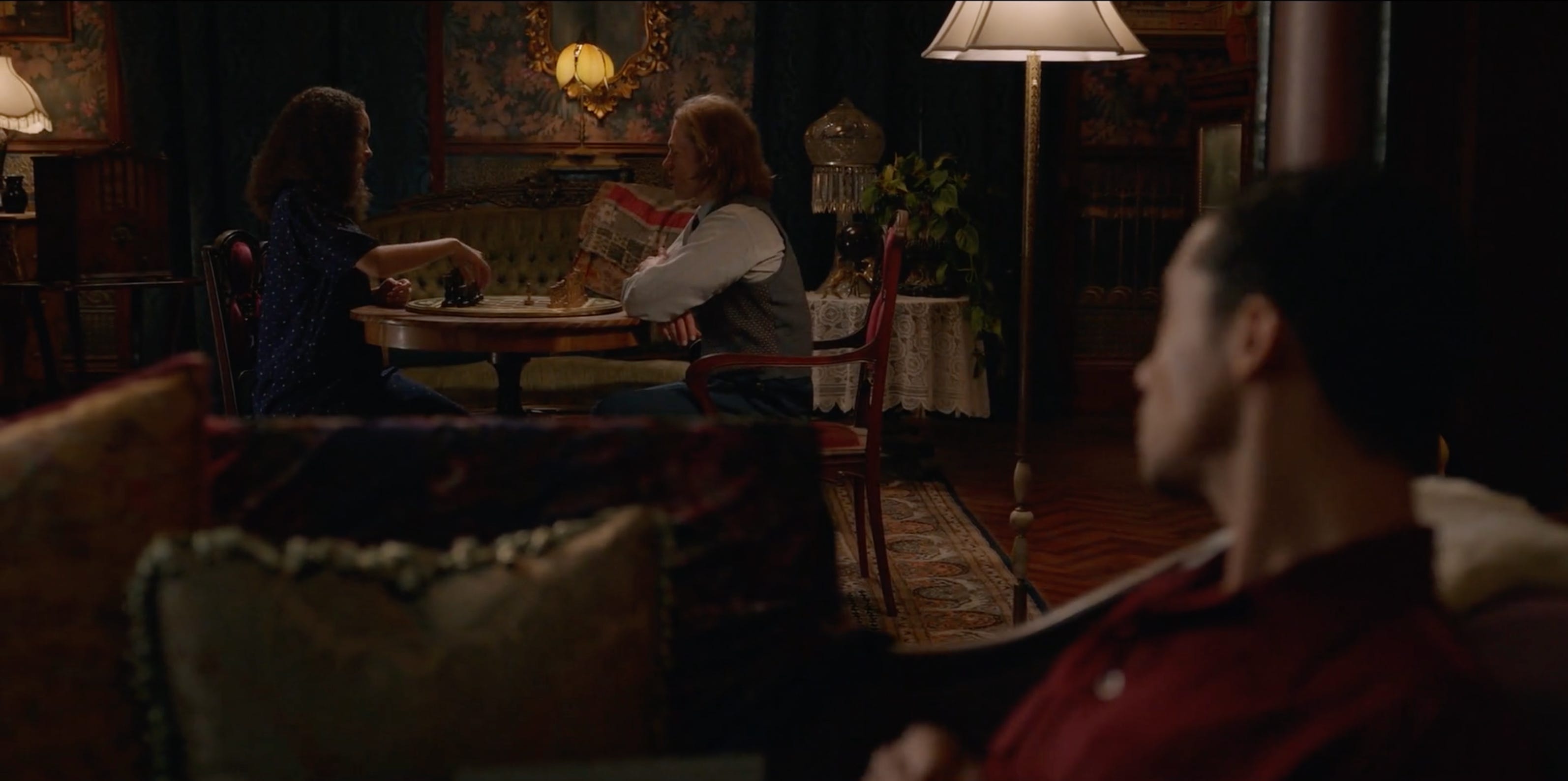
It’s not strictly necessary to open the scene this way, but the progressive focus racking does prepare the audience for what’s coming through the scene.
Drawing Our Attention
The Basics
The most literal and obvious use of a rack focus is telling the audience HEY, YOU, LOOK HERE, NOW.
Pulling our focus is important in this scene especially because there’s a lot of ‘inaudible’ communication, as Claudia and Louis are talking telepathically.


Cueing the Audience
Without the usual cues of eye contact or moving mouths, the scene uses other techniques to demonstrate who is talking to whom; in this case, a rack focus.
The way focus moves tells us ‘these characters are talking to, and can hear, and are listening to, each other in this moment.’
When the camera racks to Louis, his mouth is close to the camera, and completely still, so we can be quite sure Lestat is unaware of him ‘talking’ to Claudia.
Character POV
This is a rather unique use of rack focus; characters communicating telepathically is not exactly common!
But pulling from the ‘speaking’ character to the character they are ‘speaking to’ puts us within the intensity of the speaker’s thoughts and feelings. Even as they’re trying to play it cool so Lestat doesn’t notice anything amiss, the rack makes us feel how hard they are concentrating on their conversation partner.
rack focuses can also set up for a scene transition, like this one from The Pitt
Making Pretty Symbolism
Claudia tells Louis [some] of how she’s planning to use him to lure Lestat into the right place so she can strike . . . but even a knowing pawn is a pawn.
A few shots clearly visualize that dynamic.
First, racking from a literal pawn to Louis (above).
Soon after, as Claudia makes her move, Louis is in focus as her hand comes down ‘over’ him, before the focus racks from Louis to that piece (below), demonstrating how they are the same.
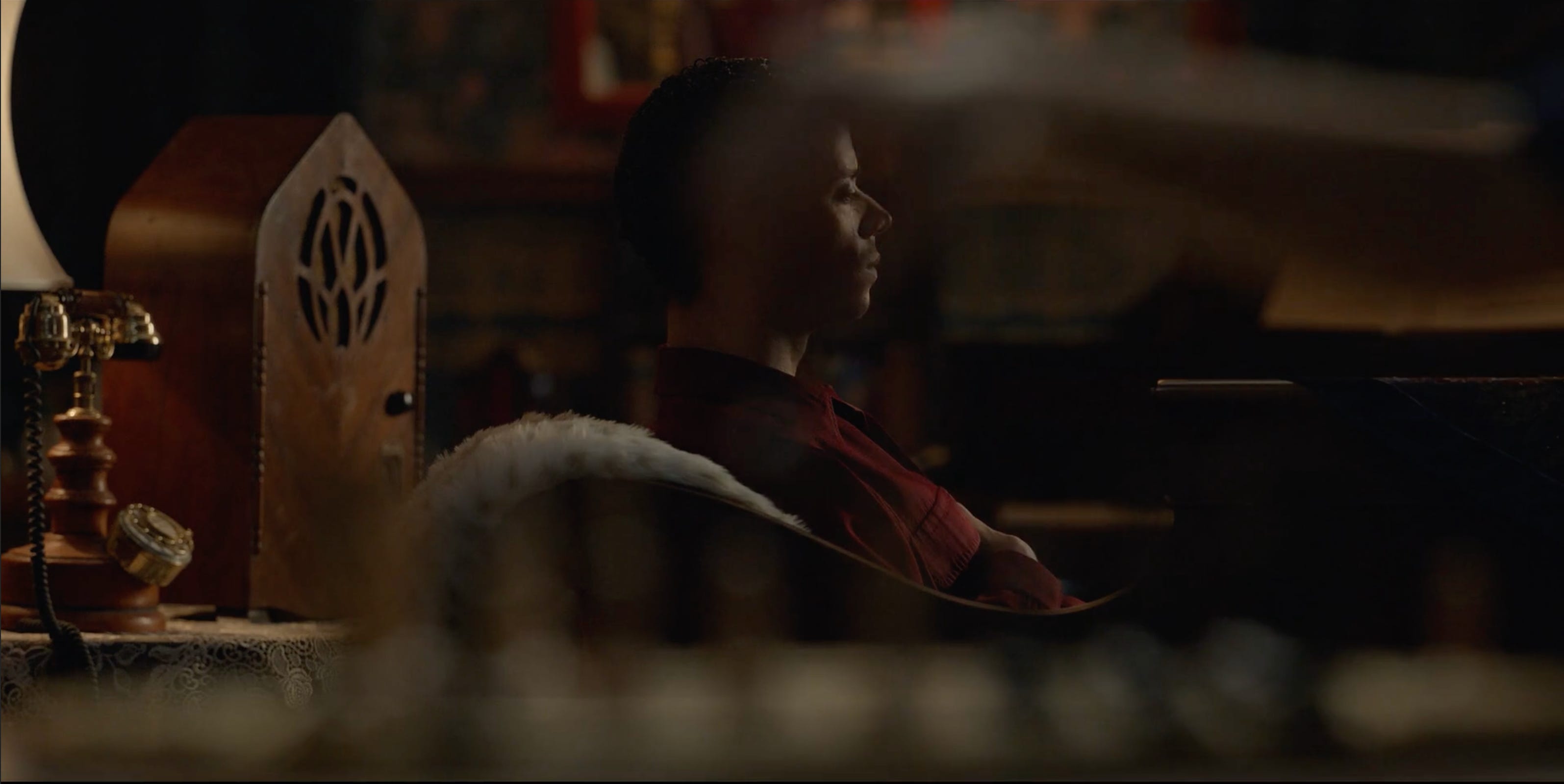
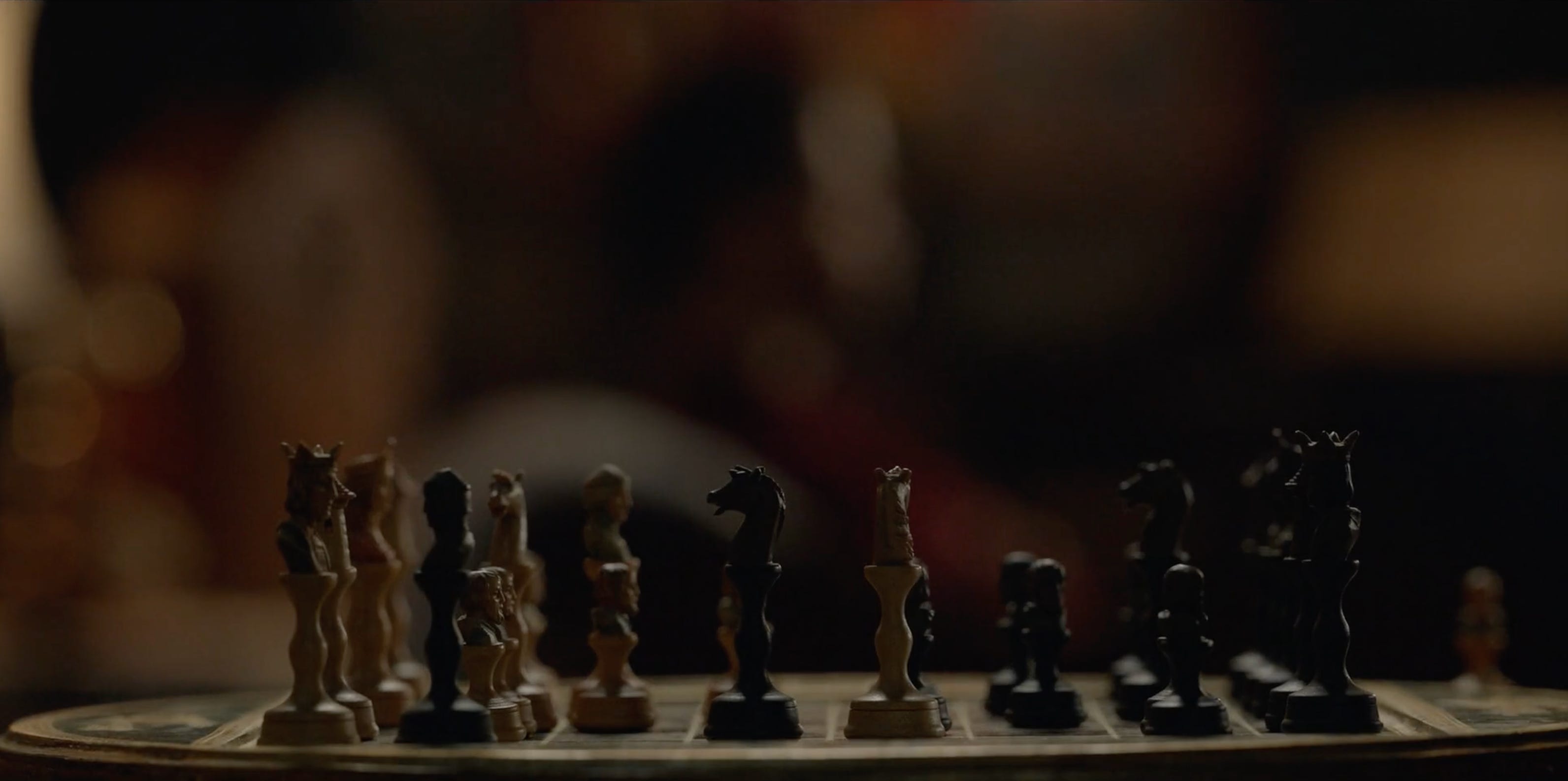
The shots make it crystal clear, Louis is being moved around in a dangerous game between Lestat and Claudia.
Takeaways
If you plan to make a specific technique — eg. a rack focus — a crucial and repeated part of your scene, consider how the opening shot of that scene could potentially help established that technique, and set the audience up for its use.
Also, chess has so much visual symbolism potential you can make use of! It doesn’t have to be about the physical pieces, either. Just look at how Person of Interest uses various board setups.