
Getting Into a Scene: CROSSING DELANCEY
now THAT'S how you open a conversation!
This 1988 romcom is a fairly low-stakes affair, wherein Isabelle (Amy Irving) is pursued by a semi-famous writer and a pickle salesman . . . and if you know romcoms, you already know where we’re going with this.
The key to success is how Crossing Delancey goes about it, especially casting Peter Riegert as pickle salesman Sam, and designing shots like this.
What makes this shot, like this pickle salesman, so special?
Glad you asked.
Establishing Shot
We’ve all heard ‘make the city a character’ but if you’re exploring the 80’s New York literary scene, and also one of your two main suitors is — and I cannot stress this enough — a pickle salesman, the flavor of the city is clear, so: make your city a character, and make that character look good!
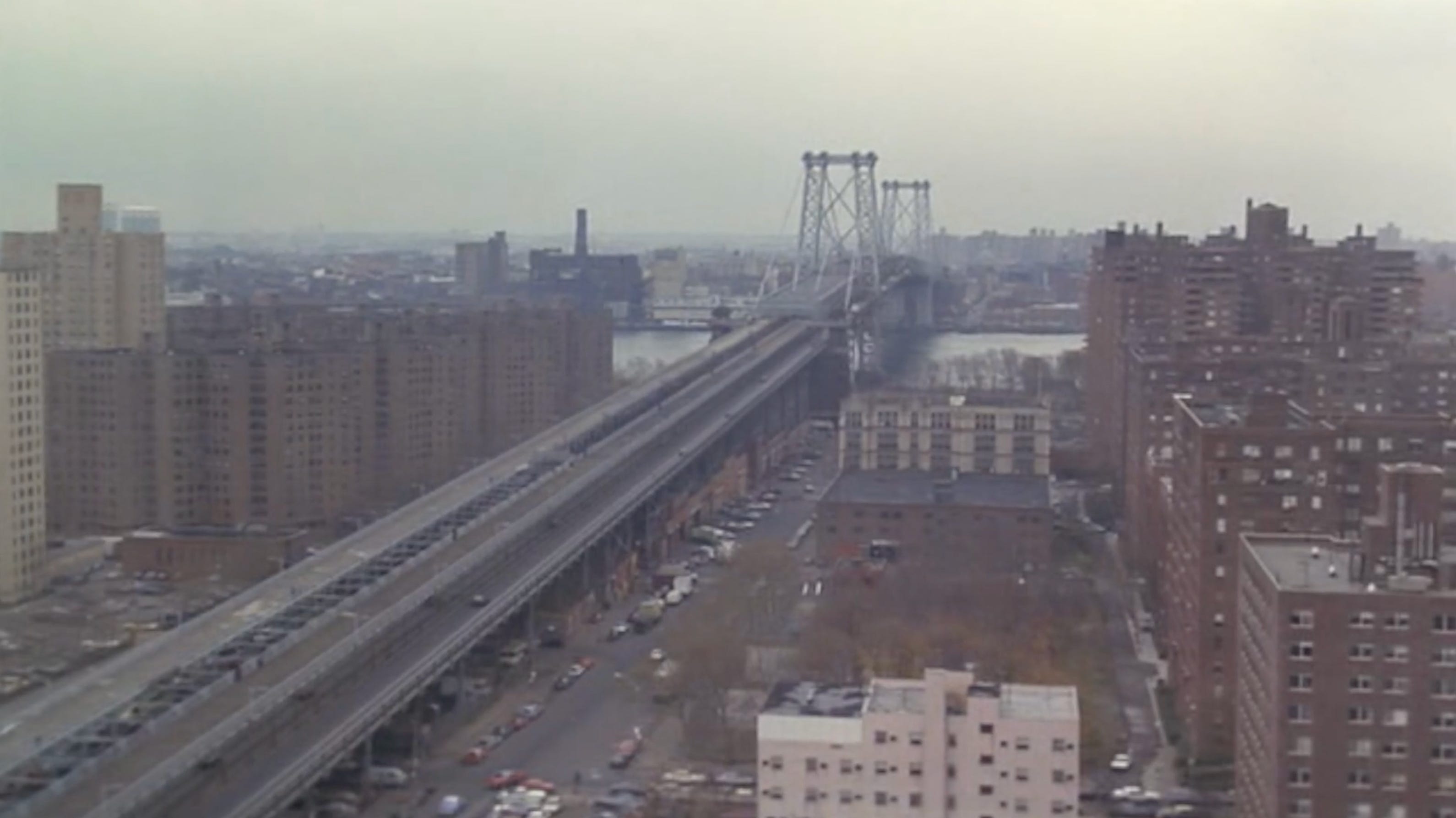
When this scene-opener pops up, you may think it’s merely a generic establishing shot, something Second Unit caught . . . then it starts moving.
Movement
Sure, that movement takes the camera past a brick wall, which for a moment takes up most of frame. But by then Izzy is well into her sentence, meaning we’re anticipating where the shot is going to take us.
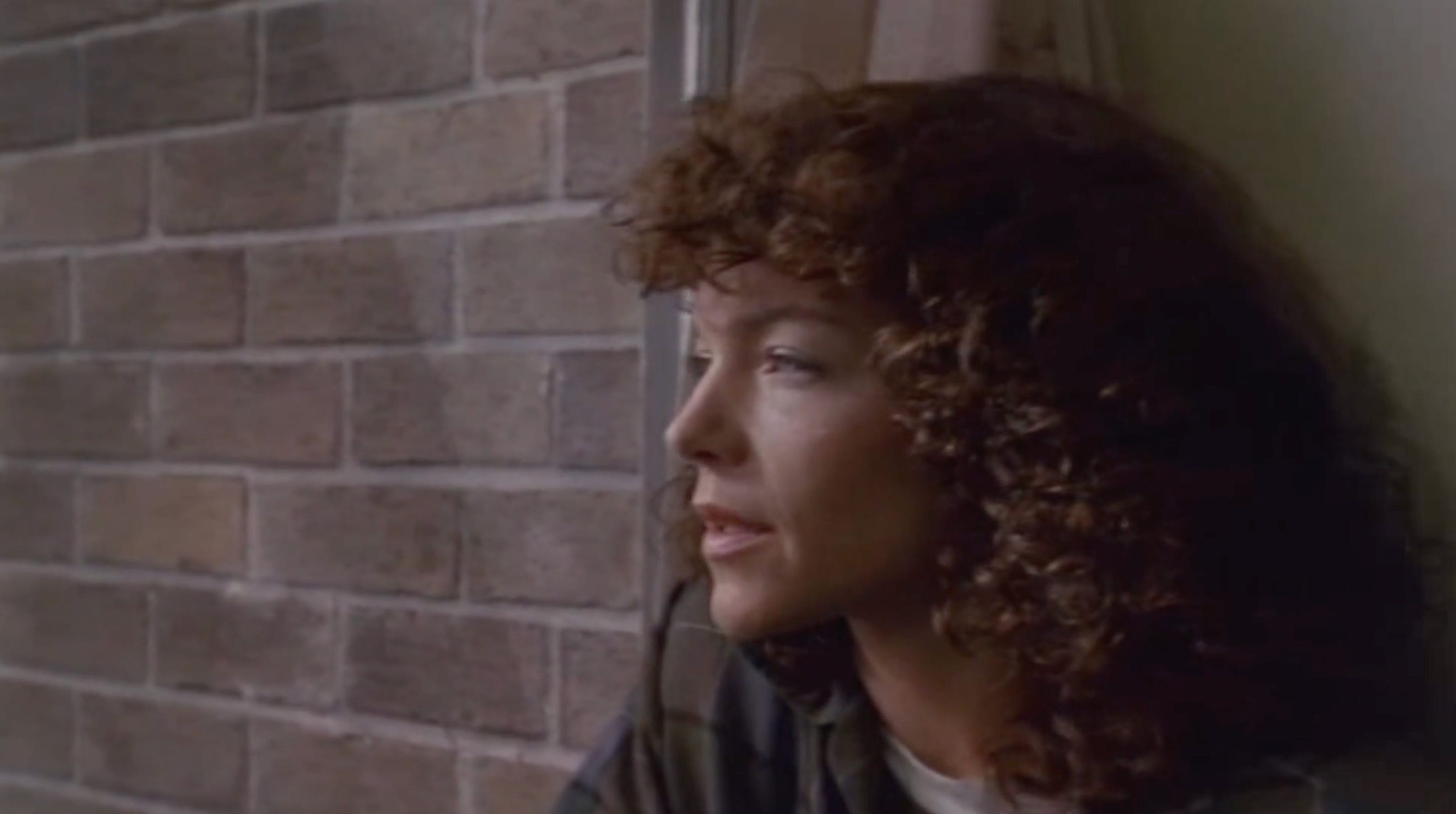
When the shot comes around to see Izzy mid-sentence, it does two things: point out this is not merely a voiceover, it’s in real time; demonstrate the opening shot is what Izzy is looking out at.
Of course, you can insinuate “this is what a character is looking at” with a simple establishing shot, and then cutting to a shot of a character looking out of a window.
But there’s something about the continuity of doing it in one shot which makes it more intimate, which says “this is exactly what the character was looking at when saying these words.”


The camera doesn’t just stop, though, continues past Izzy . . .
Two-Shot (with mirror assist)
The camera ends its move with Izzy to the left of frame, and a mirror on the right side of frame; in that mirror we see Izzy’s bubbe, Ida (Reizl Bozyk).
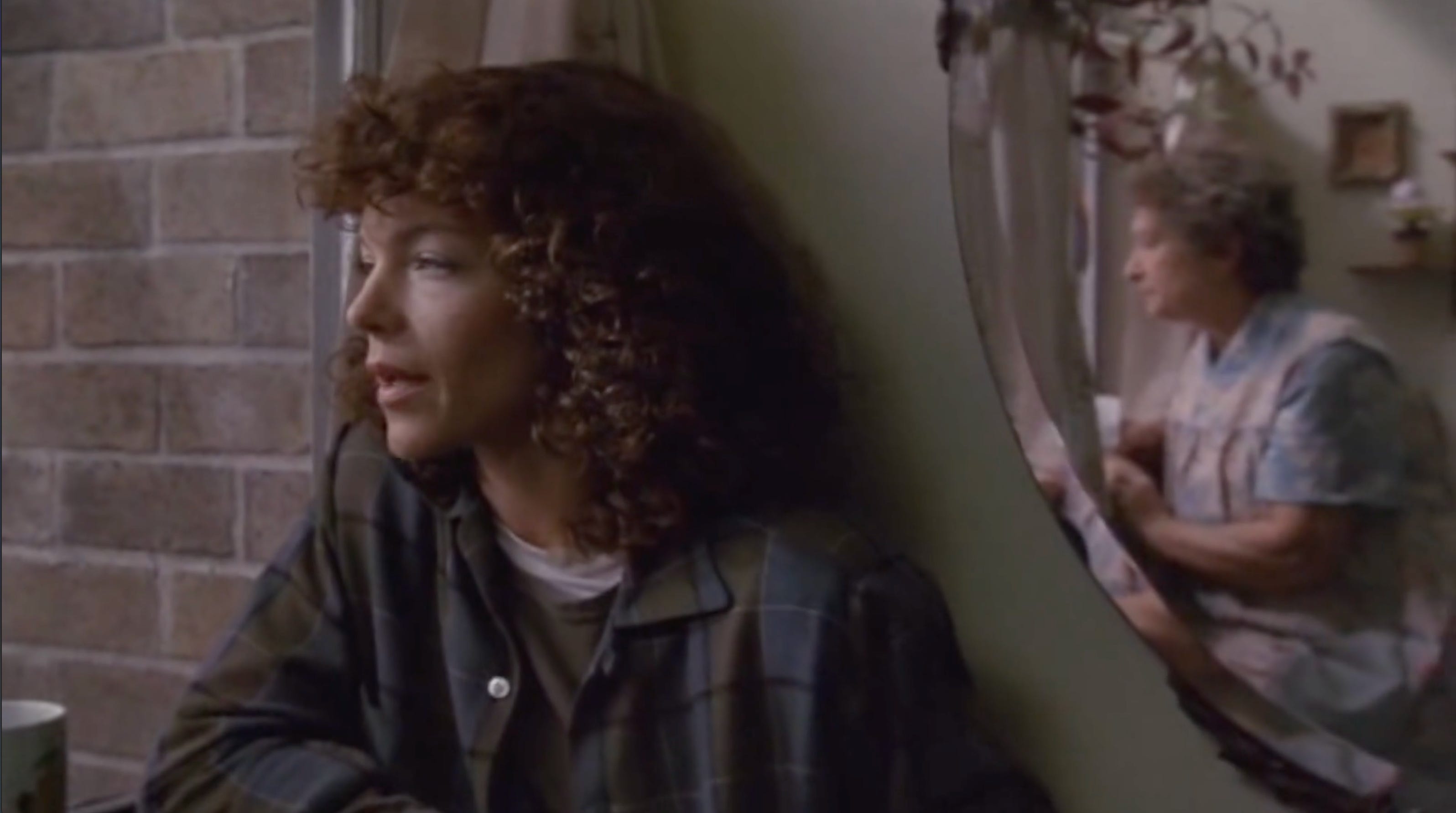
The mirror enables this unusual two-shot, but it also enables the long, slow-panning opener to end with both Izzy and Ida in frame, and the scene to continue by cutting to a wider two-shot of the room with Izzy and Ida both in frame again.
Cutting Out
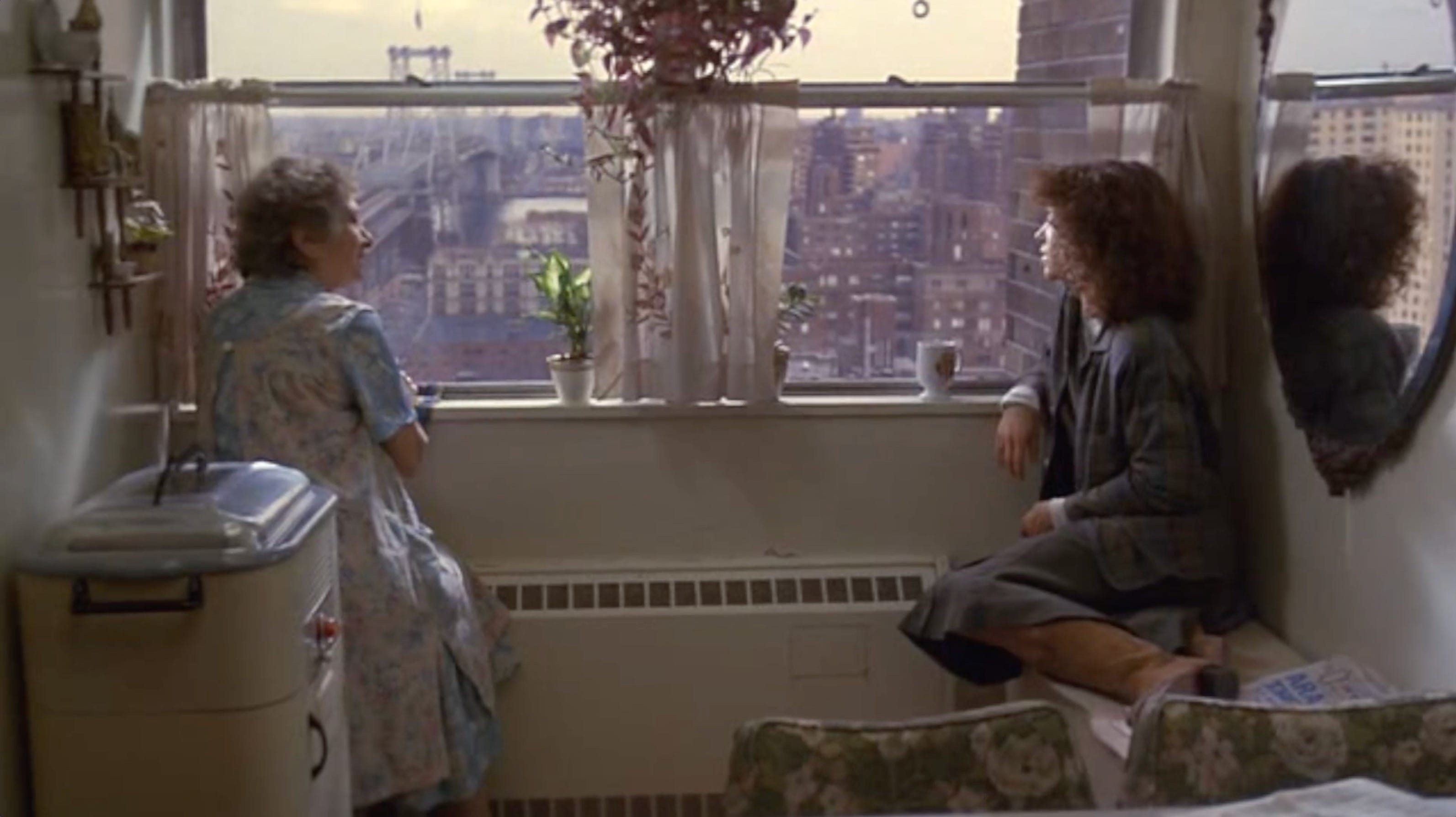
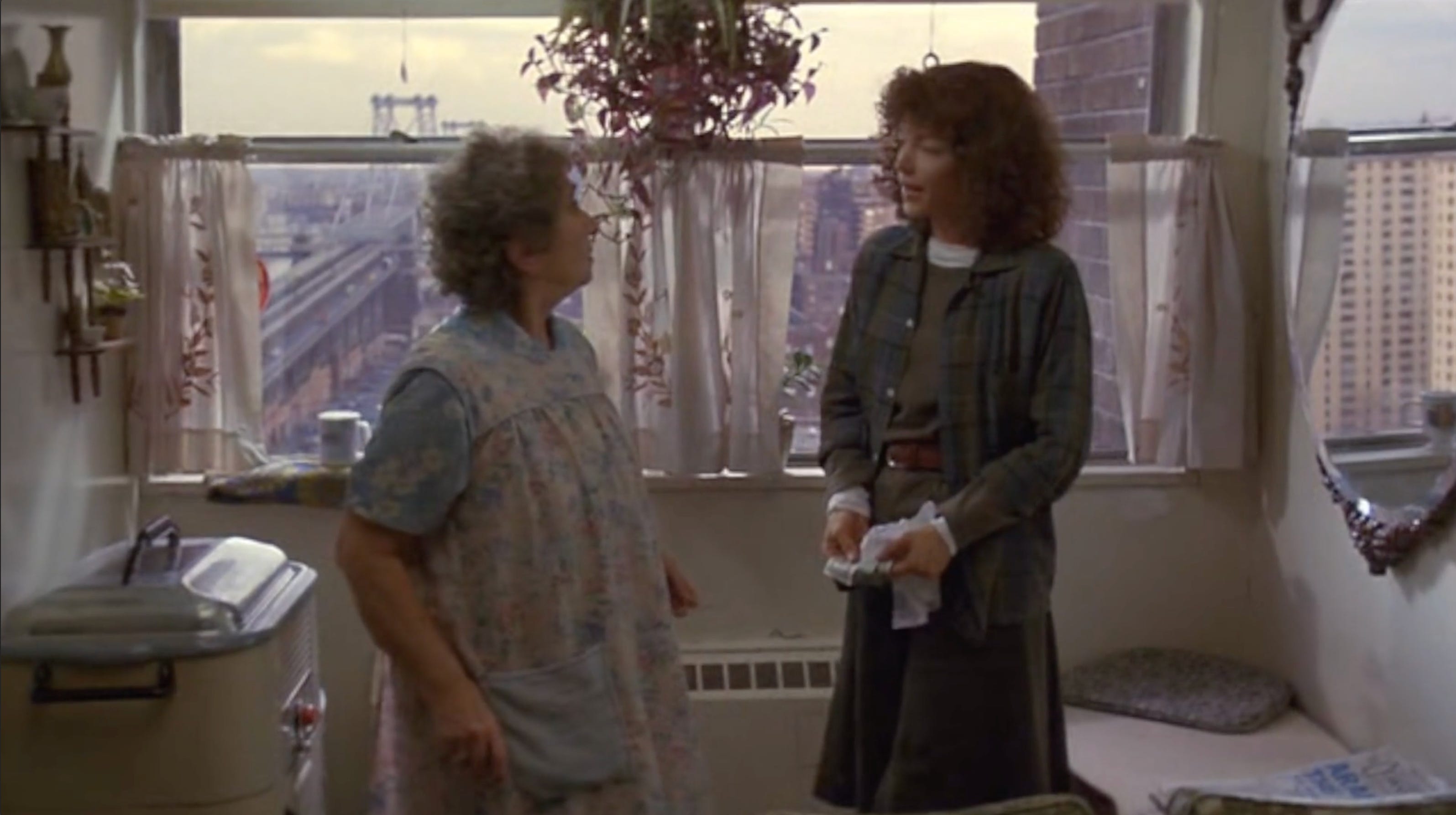
Though the mirror two-shot tells us approximately where Izzy and Ida are in relation to each other, this wide confirms how close / far apart they are, as well as putting us in the context of the room, and giving us another beautiful view out the window as they continue chatting.
This scene goes on quite a bit further in this wide two-shot, allowing for some physical comedy and the actresses just playing off each other, before they move into other shots in the same room.
But it’s a great minute of movement to get us there; a ‘simple’ shot comprised of just one 25-second slow-and-steady pan, but doing a lot within that one movement to compel the audience and set up the characters for the next part of their conversation.
Takeaways
Scene-opening shots like this take time and patience to set up, money and creativity and vision to design, camera department and props and set departments working together to make complete . . . and you’ve also got to pray it’s not pouring cats and dogs the day you have it planned.
You’ve got to consider how the shot coming out of the moving shot will work.
But when you have the time and ability and good luck and talented performers to pull it all off, you can really elevate any story.