
Frames within Frames: THE STRAIGHT STORY
David Lynch’s The Straight Story makes use of frames as aesthetics, but also as an emotional guide of its main character’s journey.
Relative Feeling
After Alvin (Richard Farnsworth) takes a fall, his doctor insists he use a walker. “No.” “Okay, then two canes,” the doctor concedes.
The first time we see Alvin using the canes, he’s framed in a doorway which ‘boxes him in’ and shrinks the frame considerably.
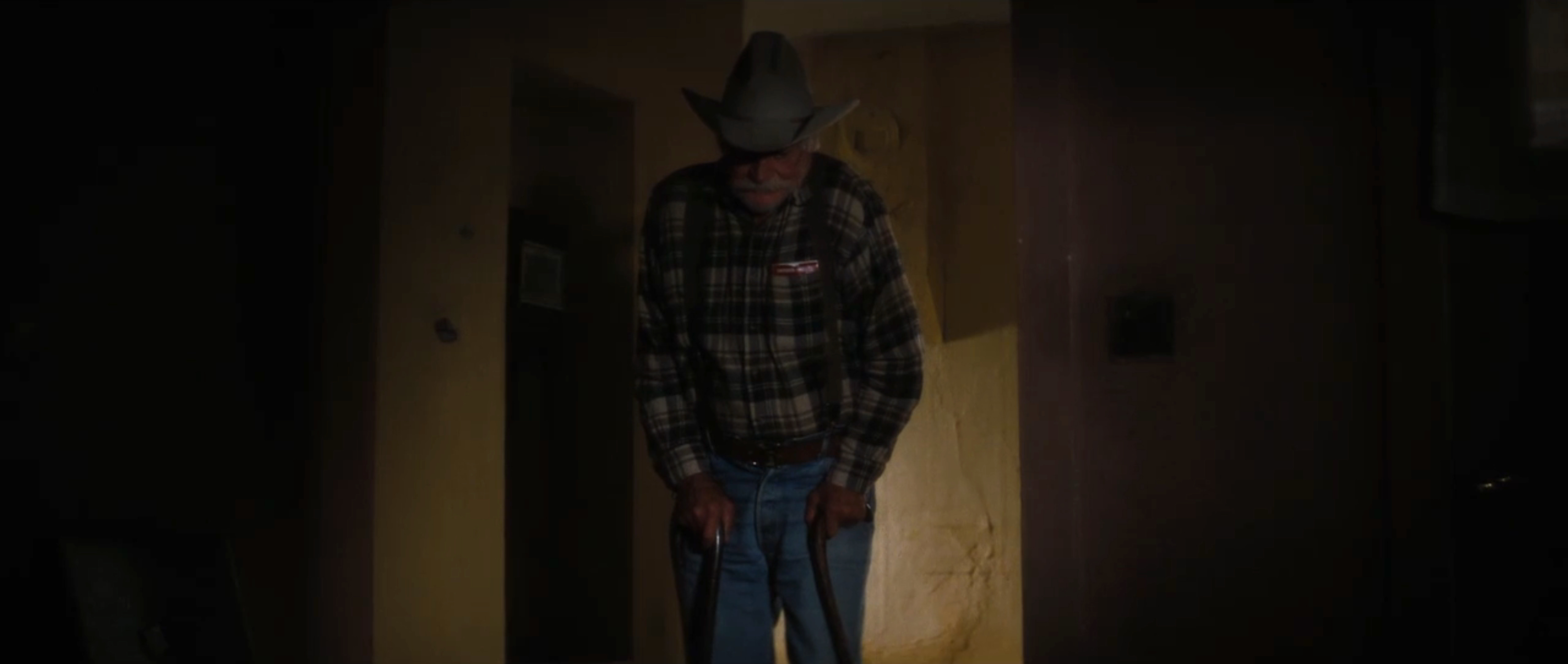
Lynch isn’t suggesting using a walking aid makes Alvin actually smaller, but the shot demonstrates how Alvin feels about having to make this concession.
Same Same but Different
As Rose (Sissy Spacek) chats on the phone and lights a cigarette, Alvin drives into the yard behind her, framed by the widow.
As he lights up his cigar, Rose moves to look out the window; the cut goes to a shot roughly in her Point of View, Alvin still ‘framed’ by the weathered wood and drapes.
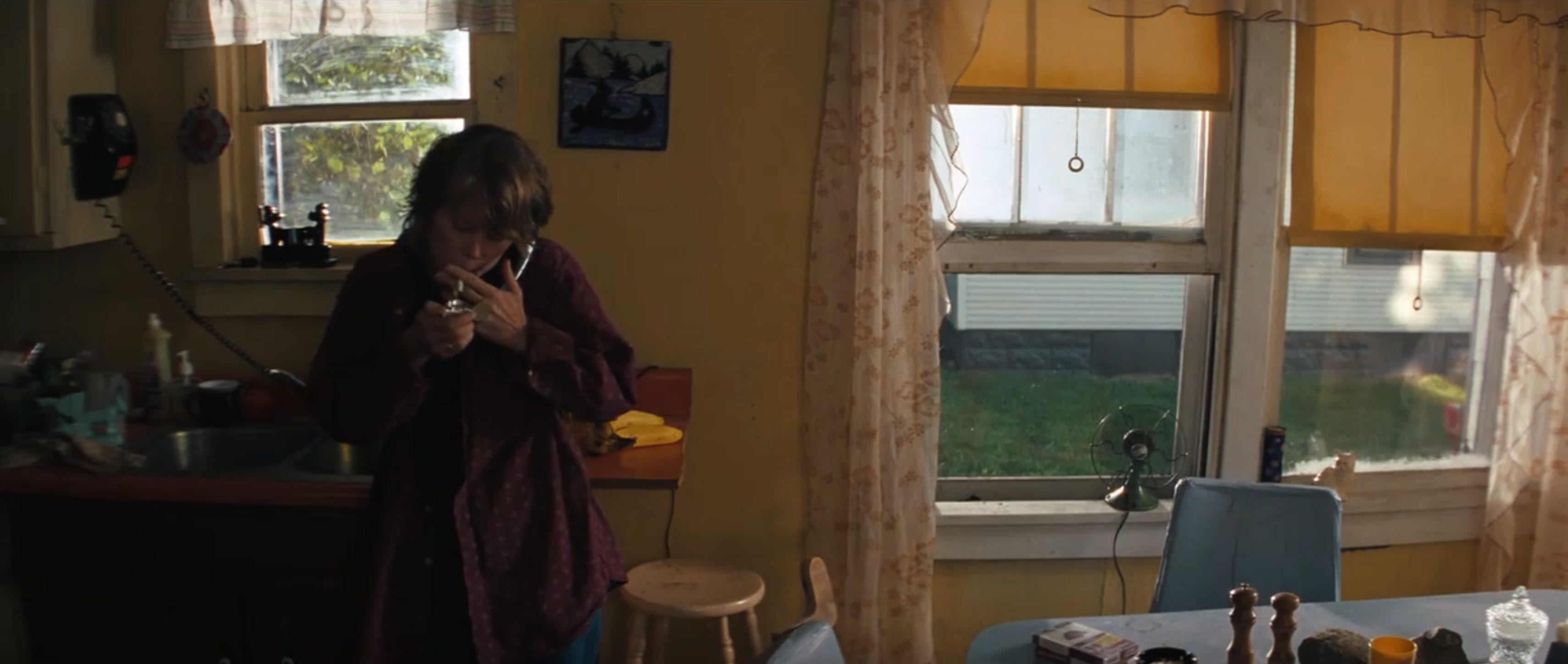
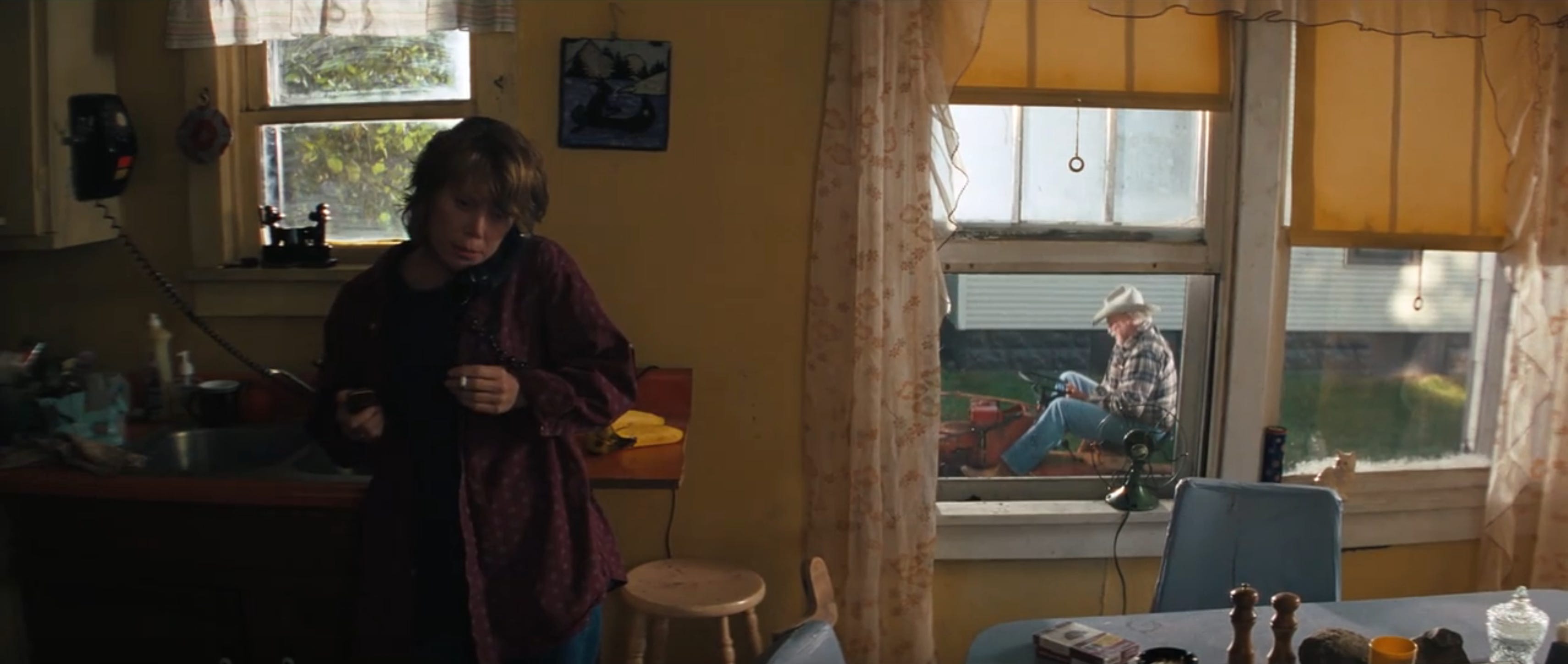
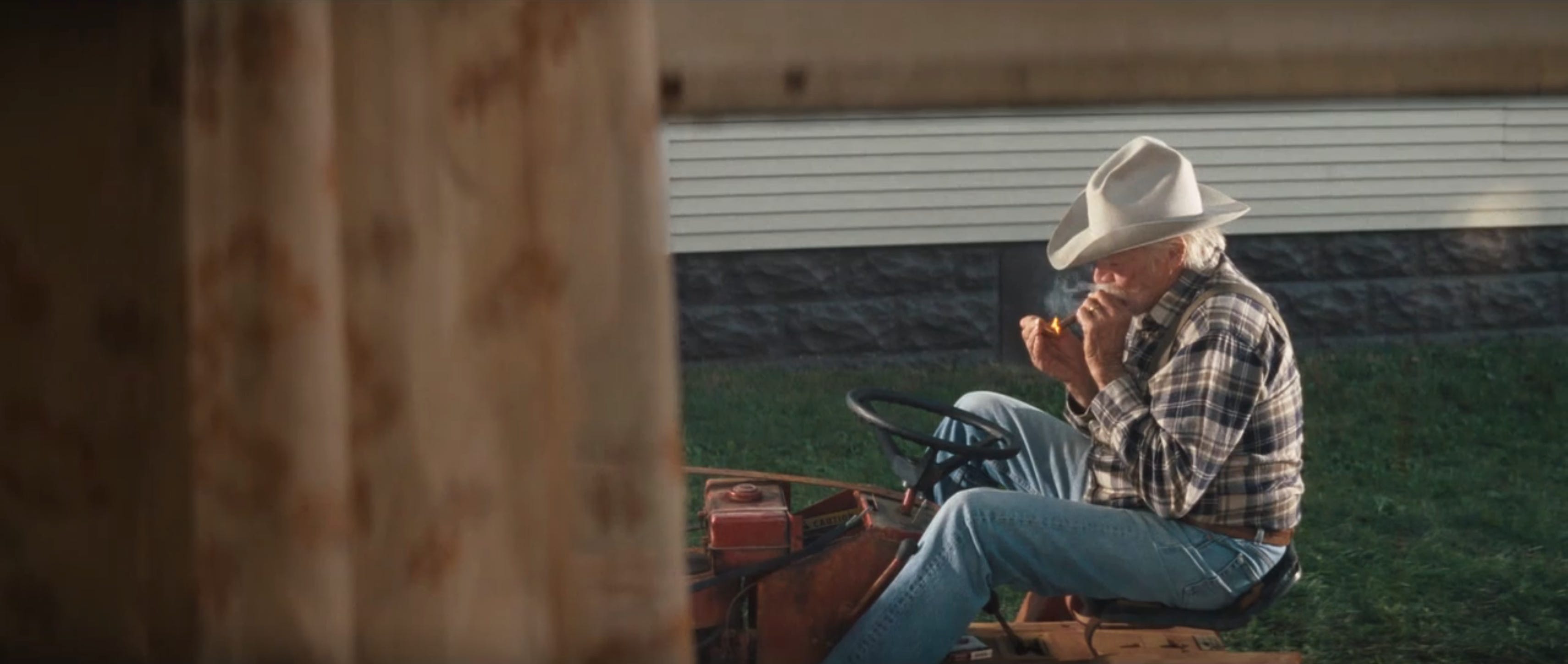
Both of them the same, though smoking their different drug of choice, separated by glass, and in their own, distinct frames.
Perceived by Others
There are several more shots framed within windows and doors as Rose looks out at Alvin trying — and often, succeeding — to assert his independence.
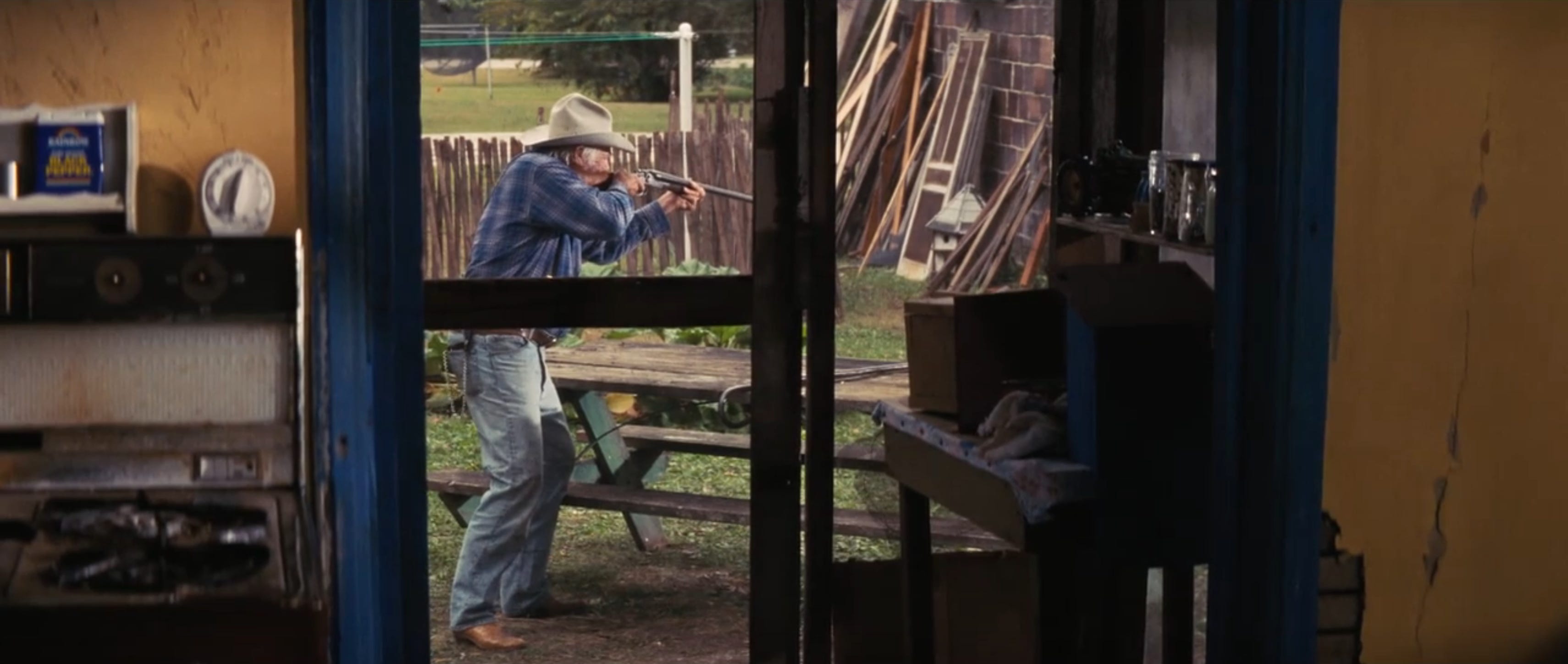
We’ve seen several shots like this by the time we get a similar shot from the tractor salesman’s POV, looking through the showroom windows as Alvin drives away.
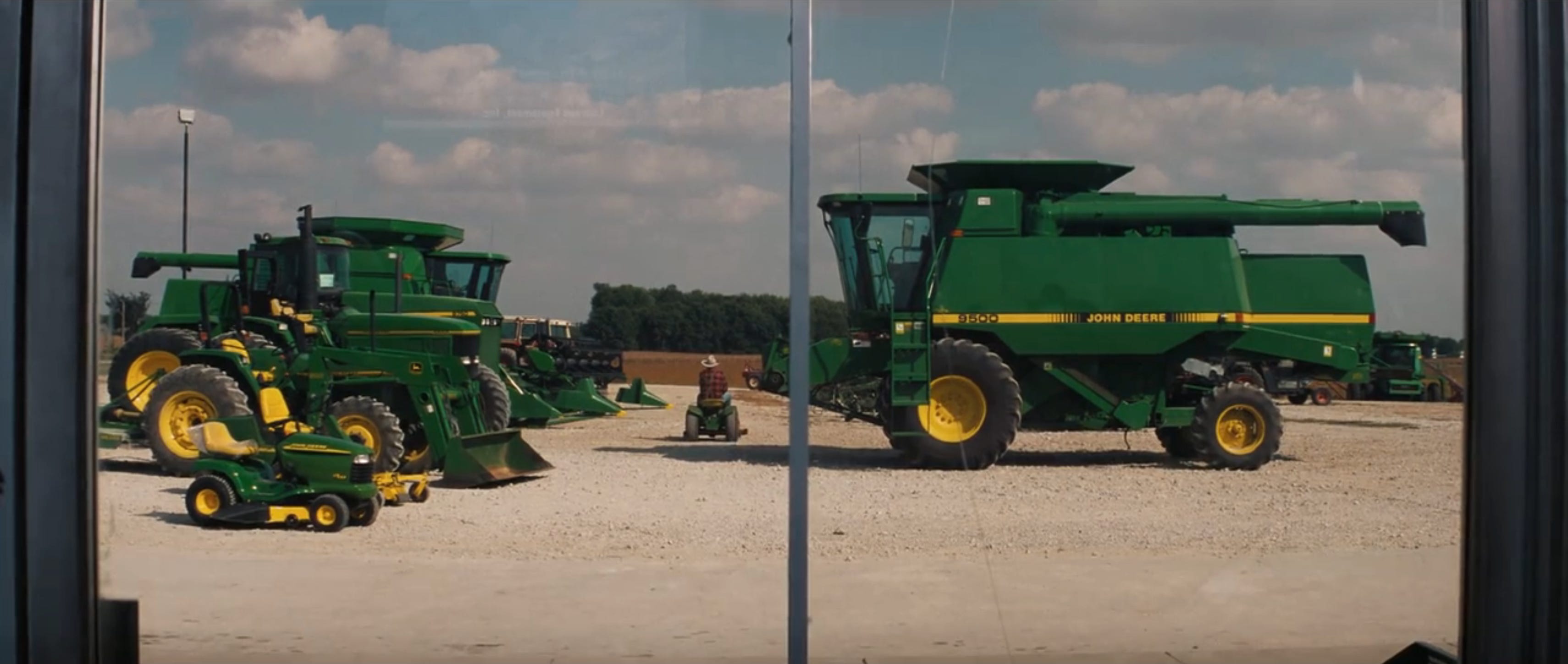
Put together, these shots give us a picture of how different people literally see Alvin, quite a distinct character.
Exterior, Unframed
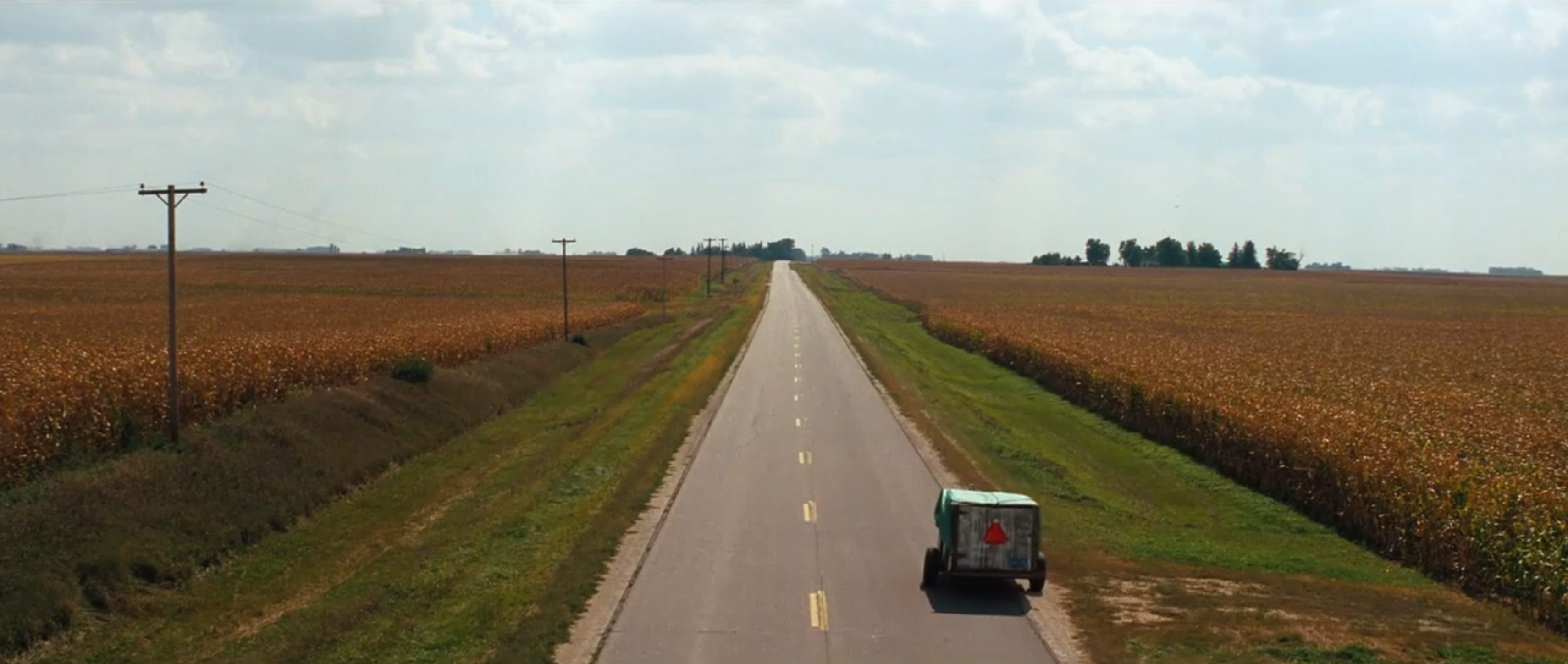
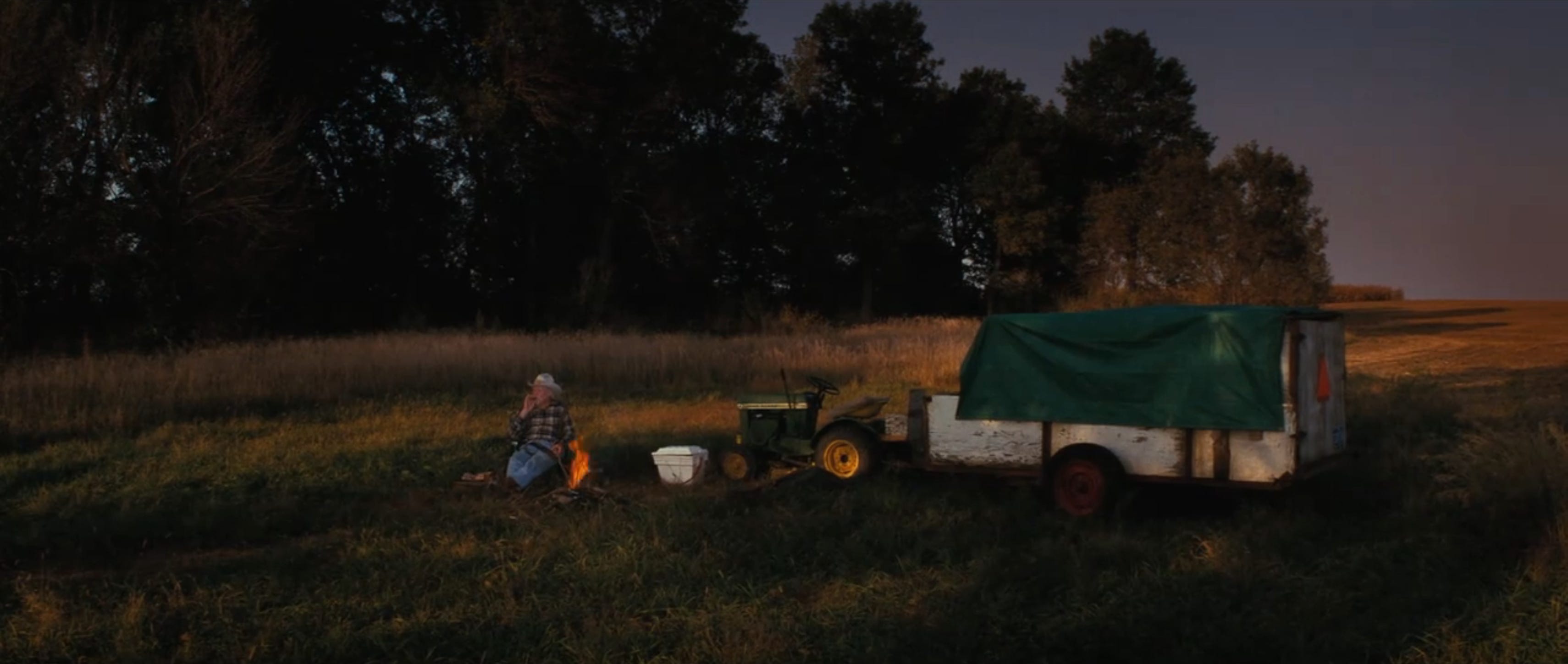
Many of the shots where Alvin drives his tractor down highways and byways are wide open and wholly unframed; the contrast to the above shots is the point, and beautifully serves the emotions of the story.
Exterior, Framed
Look at those shots above as opposed to three instances where Alvin is outside, but still closed in within various frames.
He is framed within tree trunks as he has to use his cane and grabber when setting up camp (shot 1, below); he’s wholly set within the frame of the bus door as the bus driver calls down after the riding mower breaks down and Alvin has to ask for help (shot 2, below); he’s framed within shed walls after a storm forces him to pull over and wait (shot 3, below).
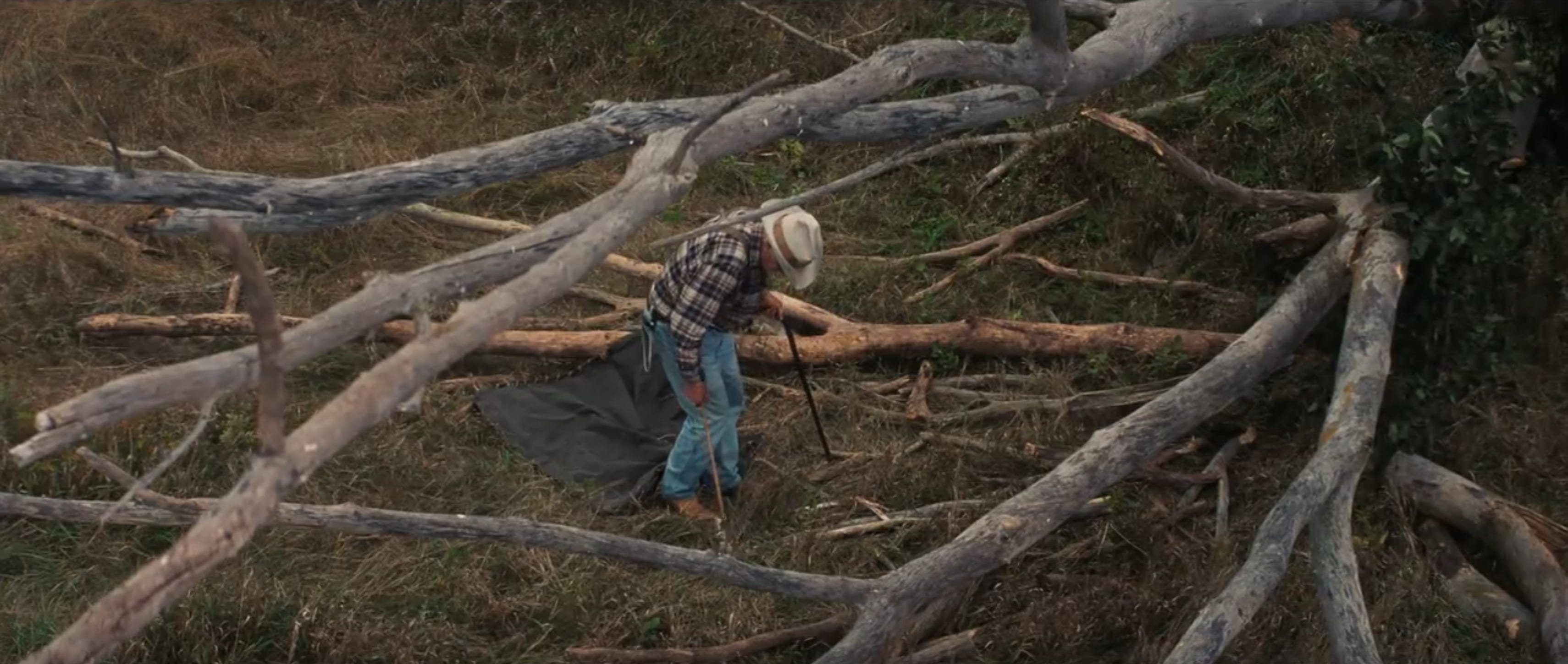
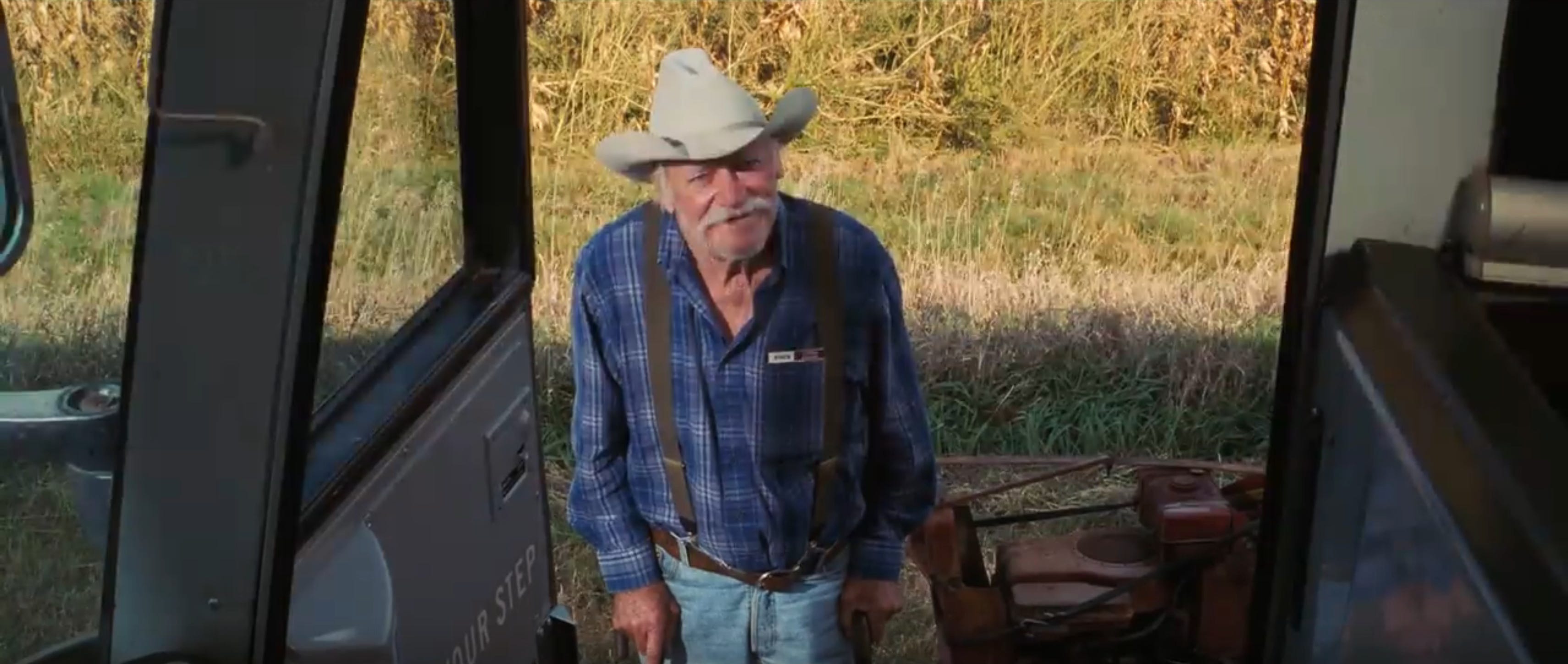
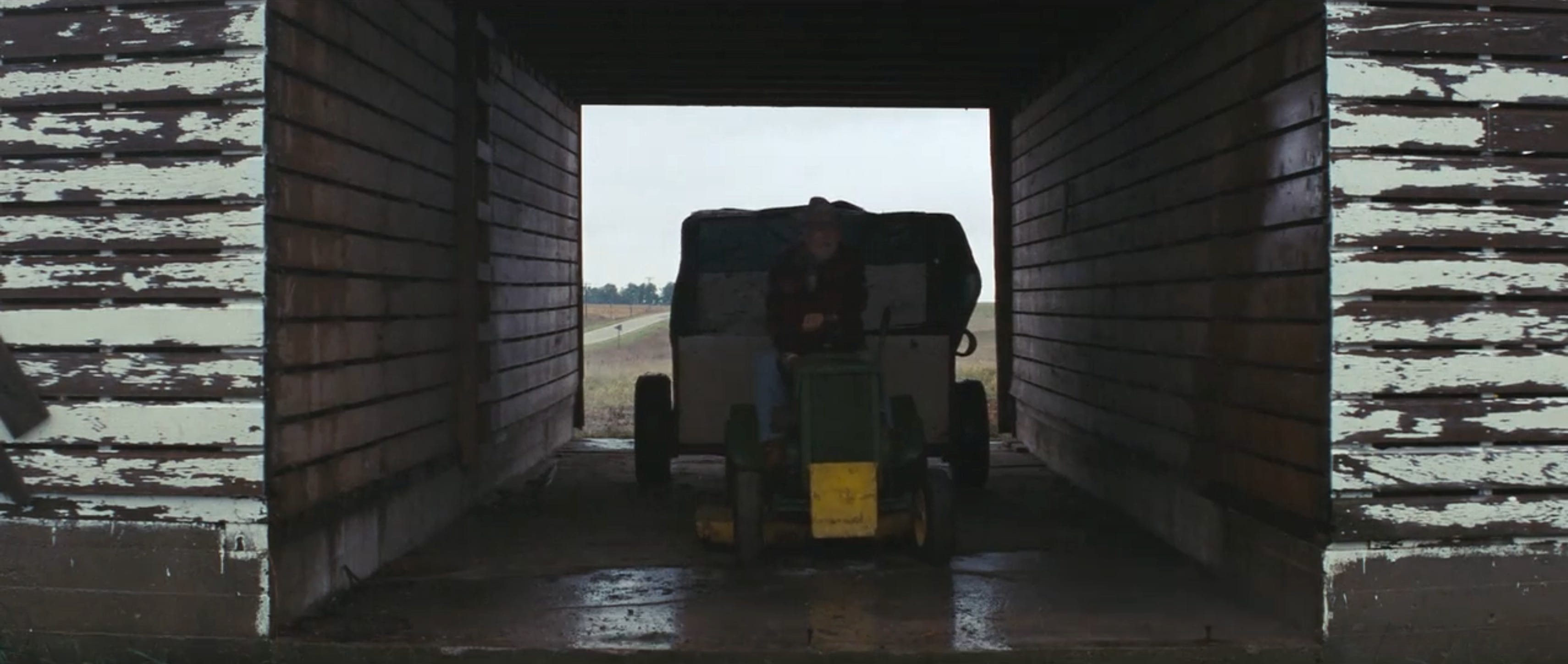
All these makeshift frames used similarly to how Alvin is framed in his bedroom’s doorway in that first shot — showing he feels small when he’s unable to be as wholly independent as he wants to be.
See our post about Time Without Pity for more frames-as-symbolism
Or for something mostly completely different, how frames-within-frames are used in zombie classic Dawn of the Dead.
Takeaway
Framing characters within windows, tree branches, and other physical structures can be beautiful, but used thoughtfully throughout a film can also track a characters’ undulating emotional journey.
I love this film so damn much