
Five Shots: HATED IN THE NATION
just what the swarm of bees form a bunch of letters to say
Five of our favourite shots from Black Mirror 3.06 “Hated in the Nation”.
Small in Frame pt1
The opening shots of the episode show DCI Karin Parke (Kelly Macdonald) being called into her deposition hearing.
Parke is shown as small, often with her face ‘cut off’ by a table, the edge of frame, or in one case the body of the clerk who summons her.
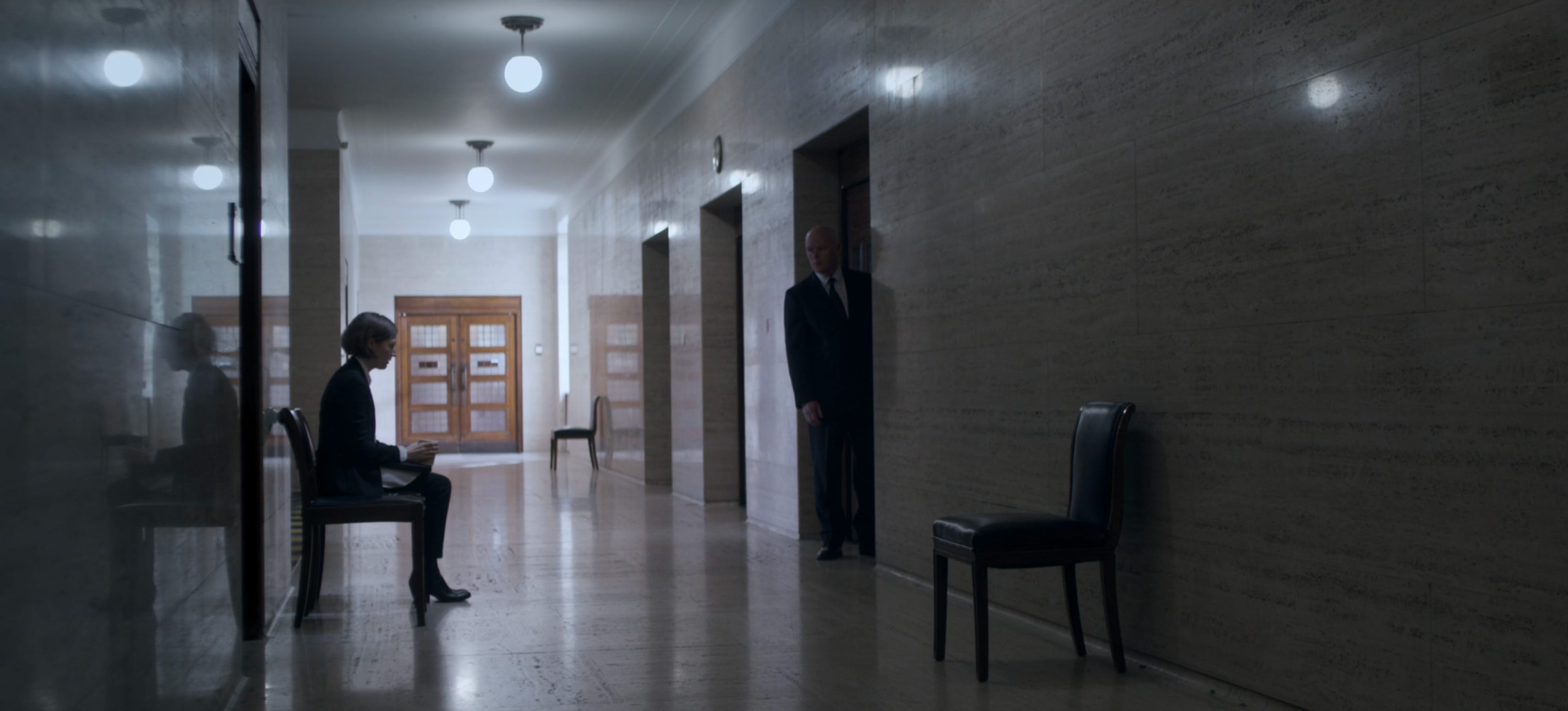
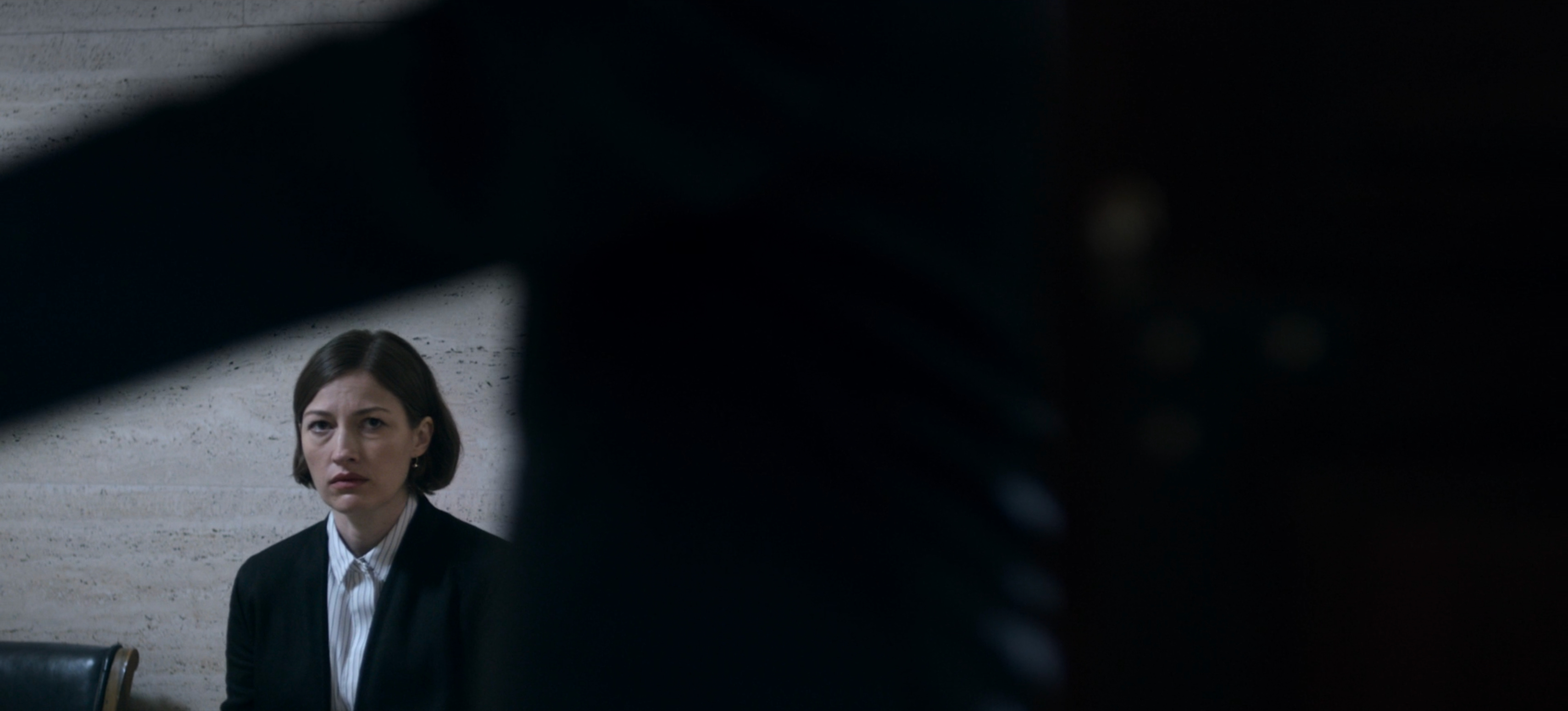


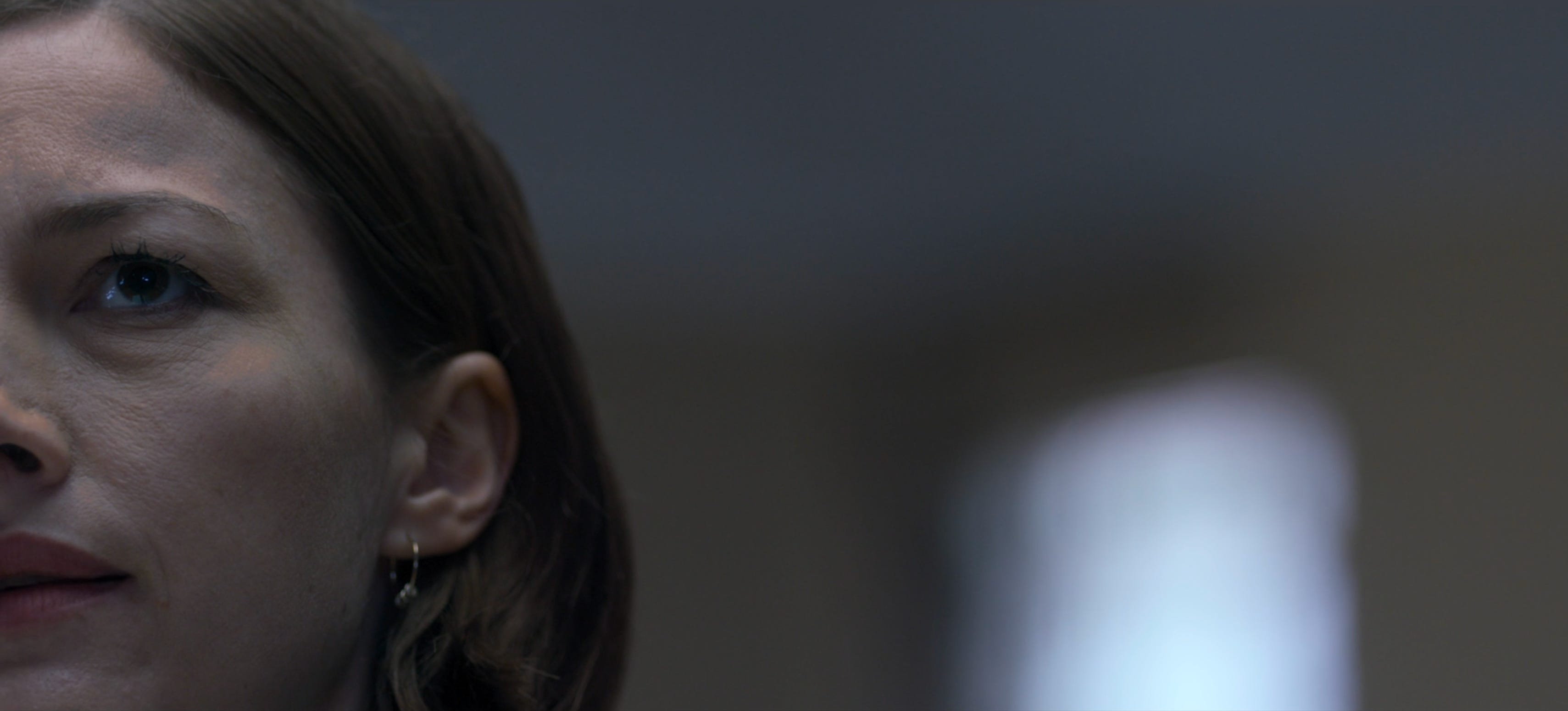
It’s a stylistic choice, it’s meant to show us how she feels, but it’s also much more that just that . . . hang onto this thought, we’ll come back to it.
Frames within Frames
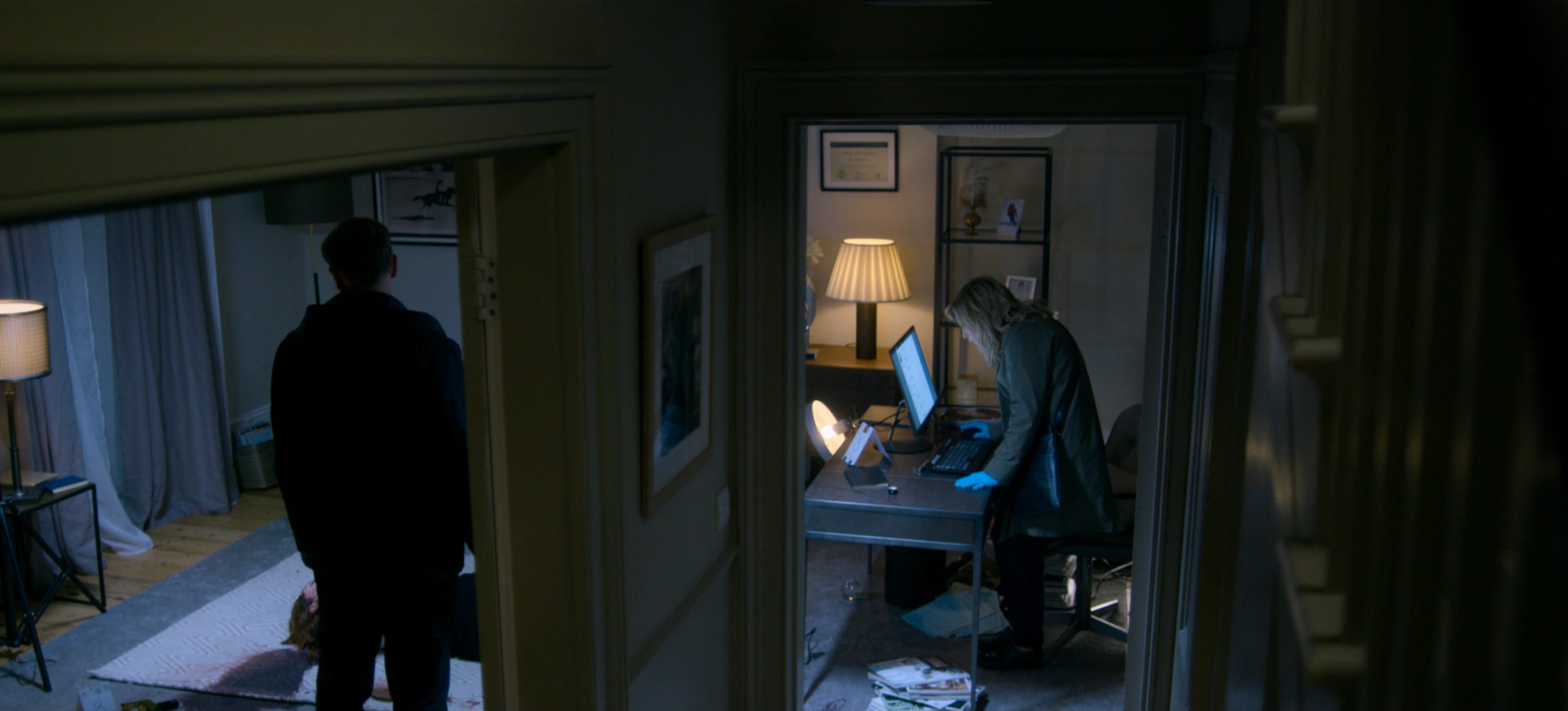
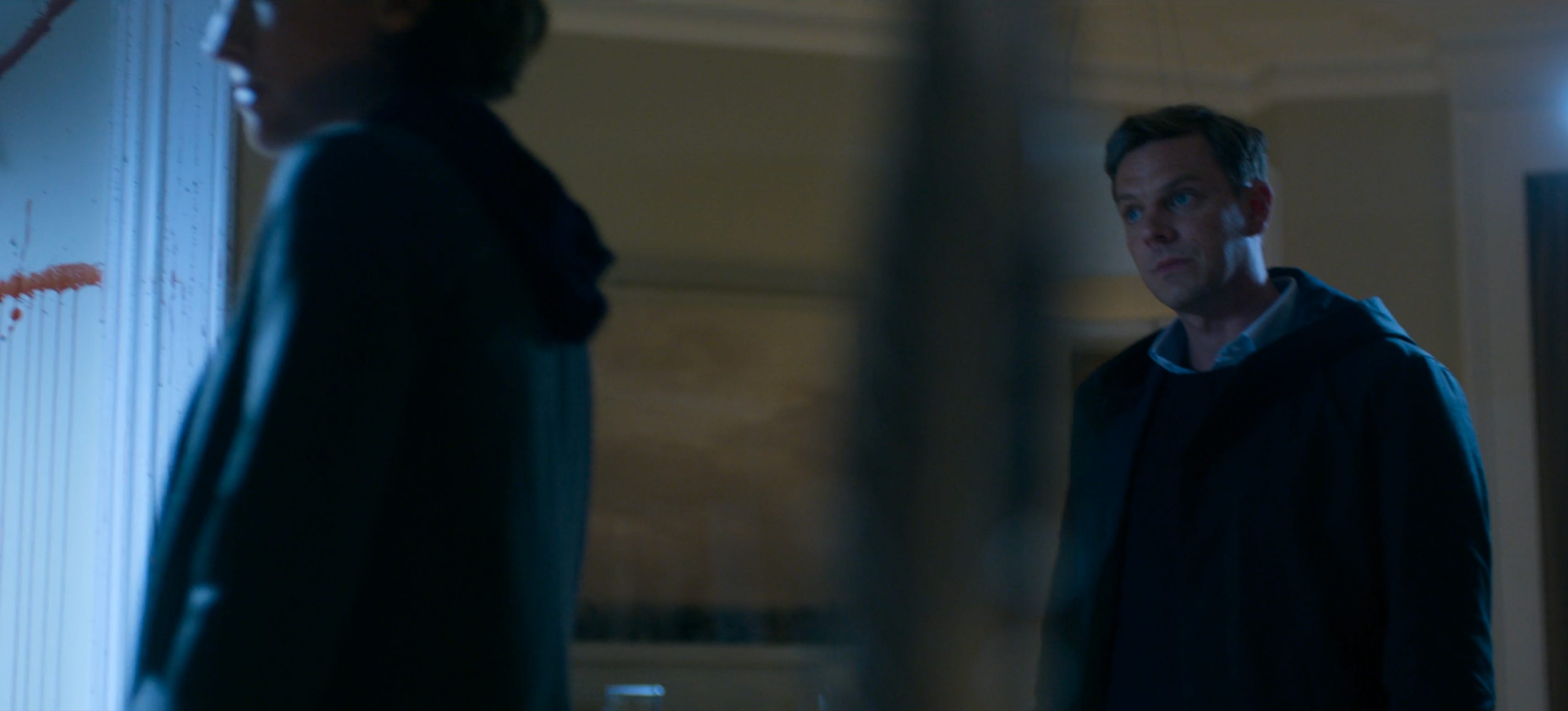
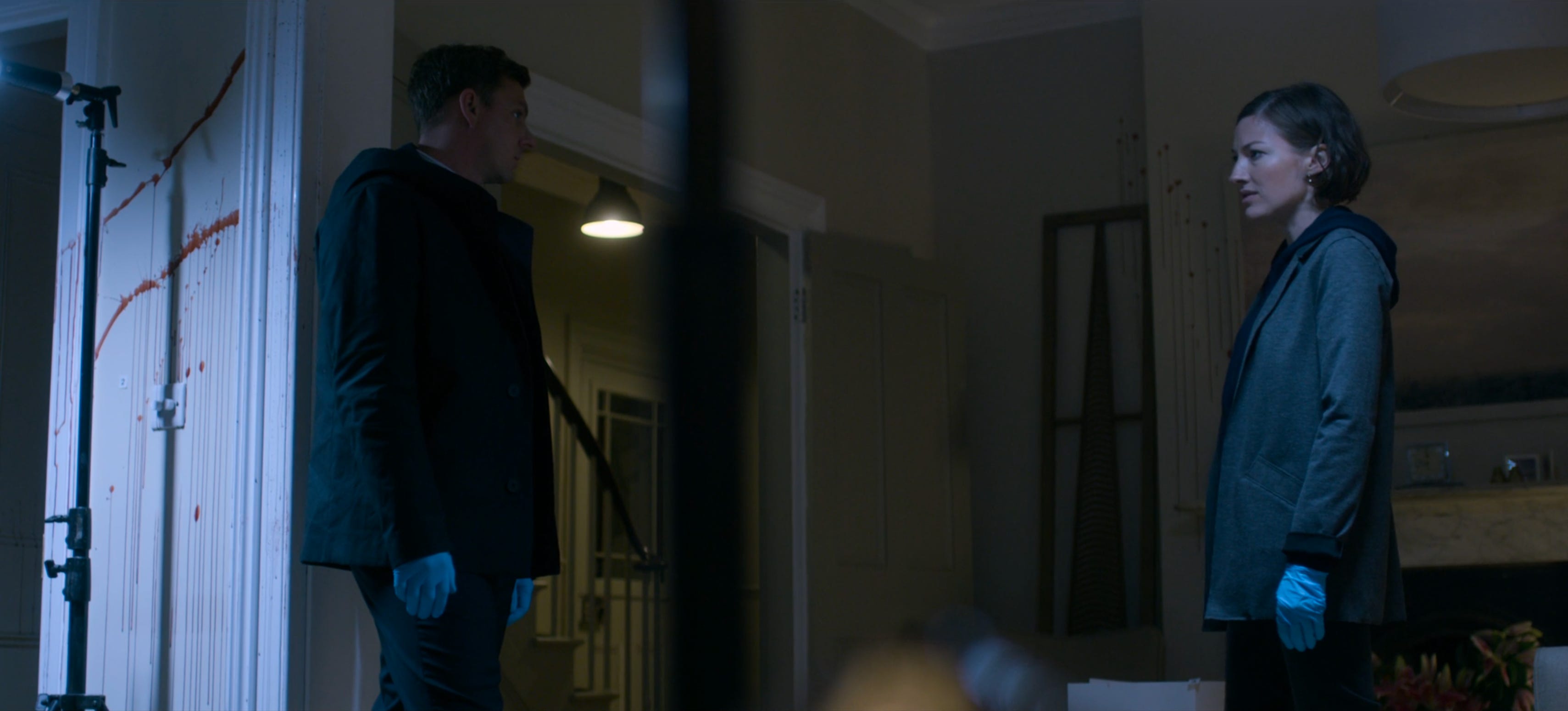
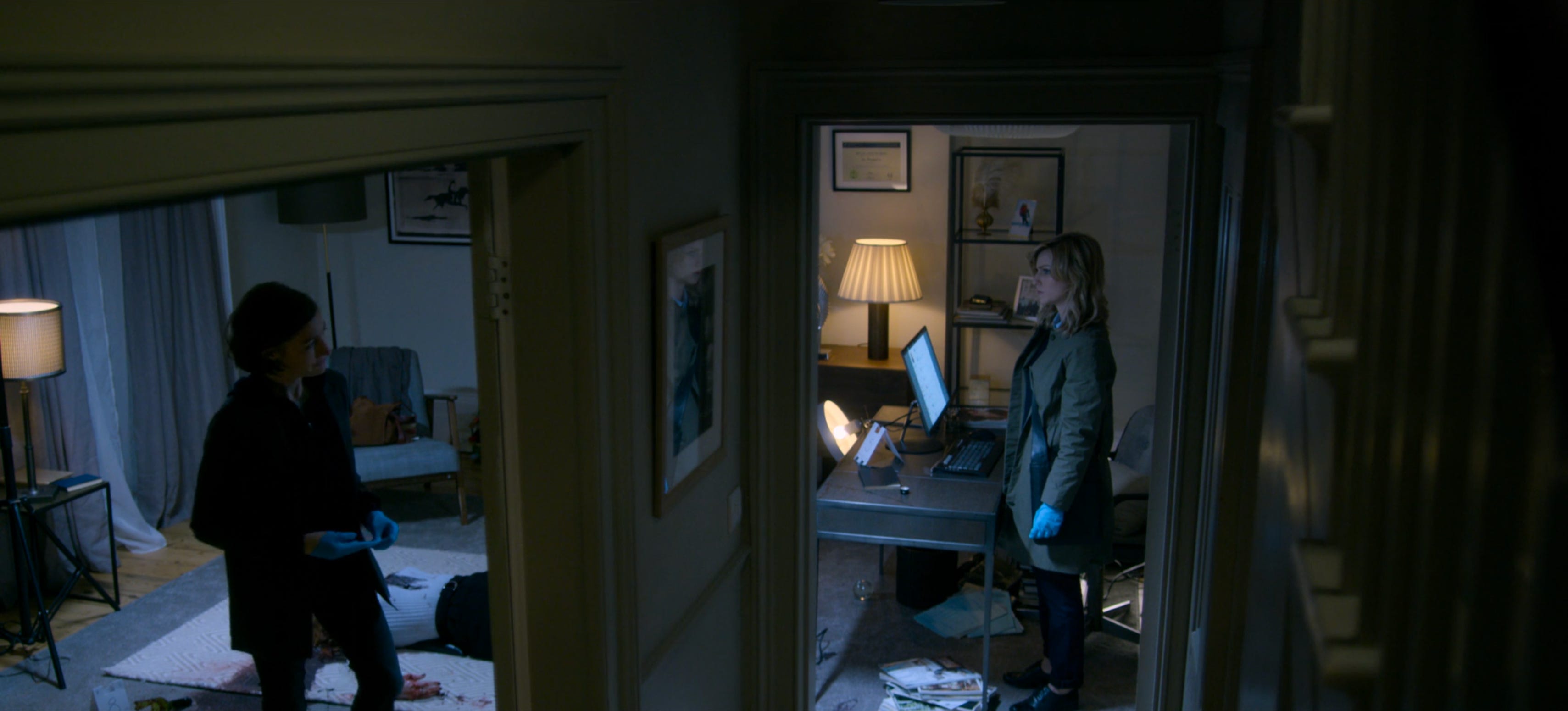
Many shots in this episode use architecture or items to separate characters, but this scene makes a real point of showing Parke, new trainee Blue Coulson (Faye Marsay), and Detective Nick Shelton (Joe Armstrong) divided by doorways, stark light/darkness, and other household objects in the frame.
This scene occurs immediately after Blue has met Parke and Shelton, and they all disagree on what certain clues in the crime scene may mean, so showing them literally, physically divided makes sense.
When Together, When Separate
As Parke and Blue listen to a hospitalized witness, they’re all in frame together.
As the witness tells some of the more unbelievable aspects of his story, the scene begins showing them all in their own separate, distinct frames.
As his story becomes more and more incredible, Parke and Blue are literally no longer ‘with him’, and they’re each trying to decide whether or not to believe him; they’re looking between him and each other, unable to communicate to each other what they think, alone in frame with their thoughts.
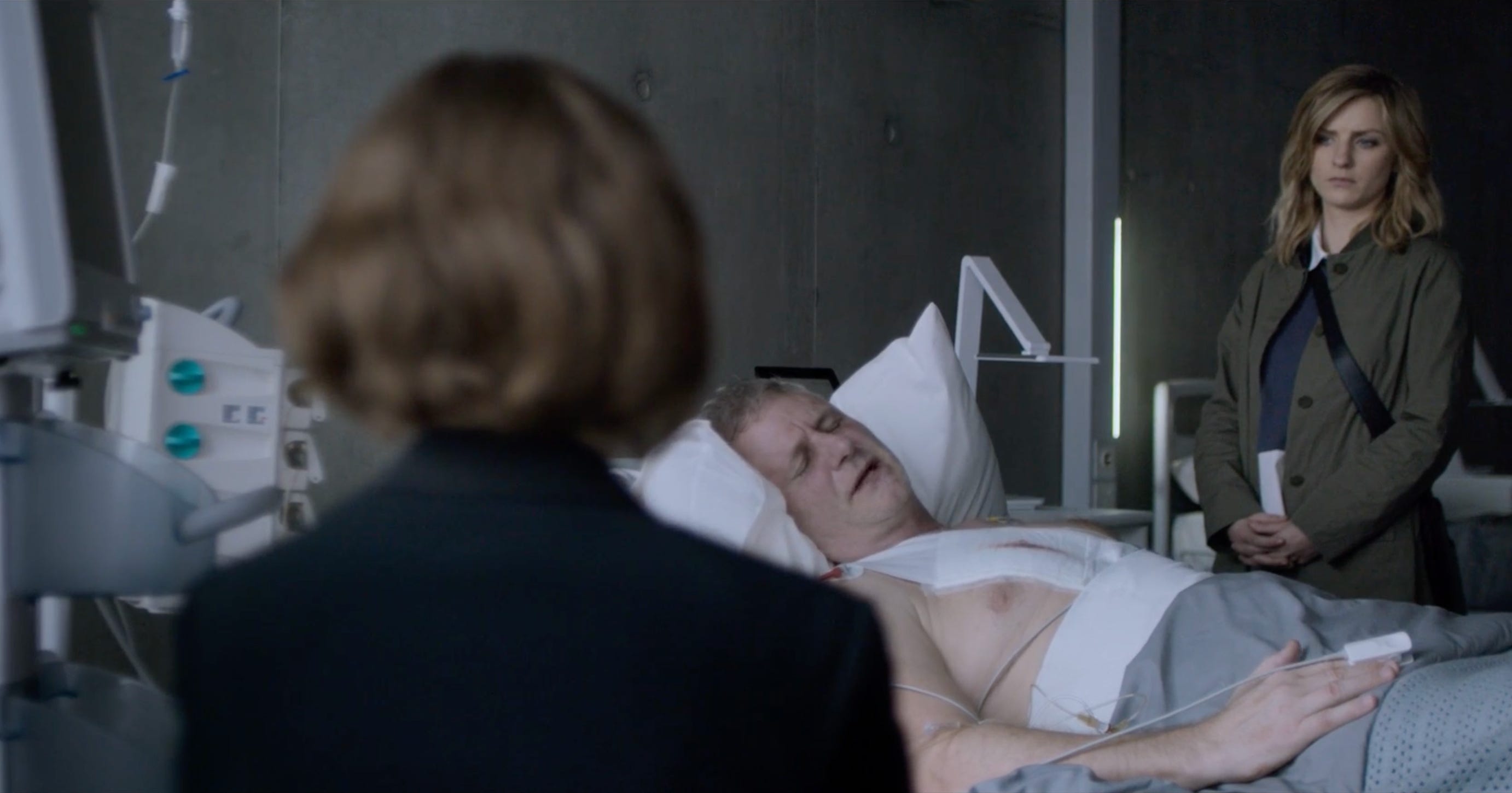
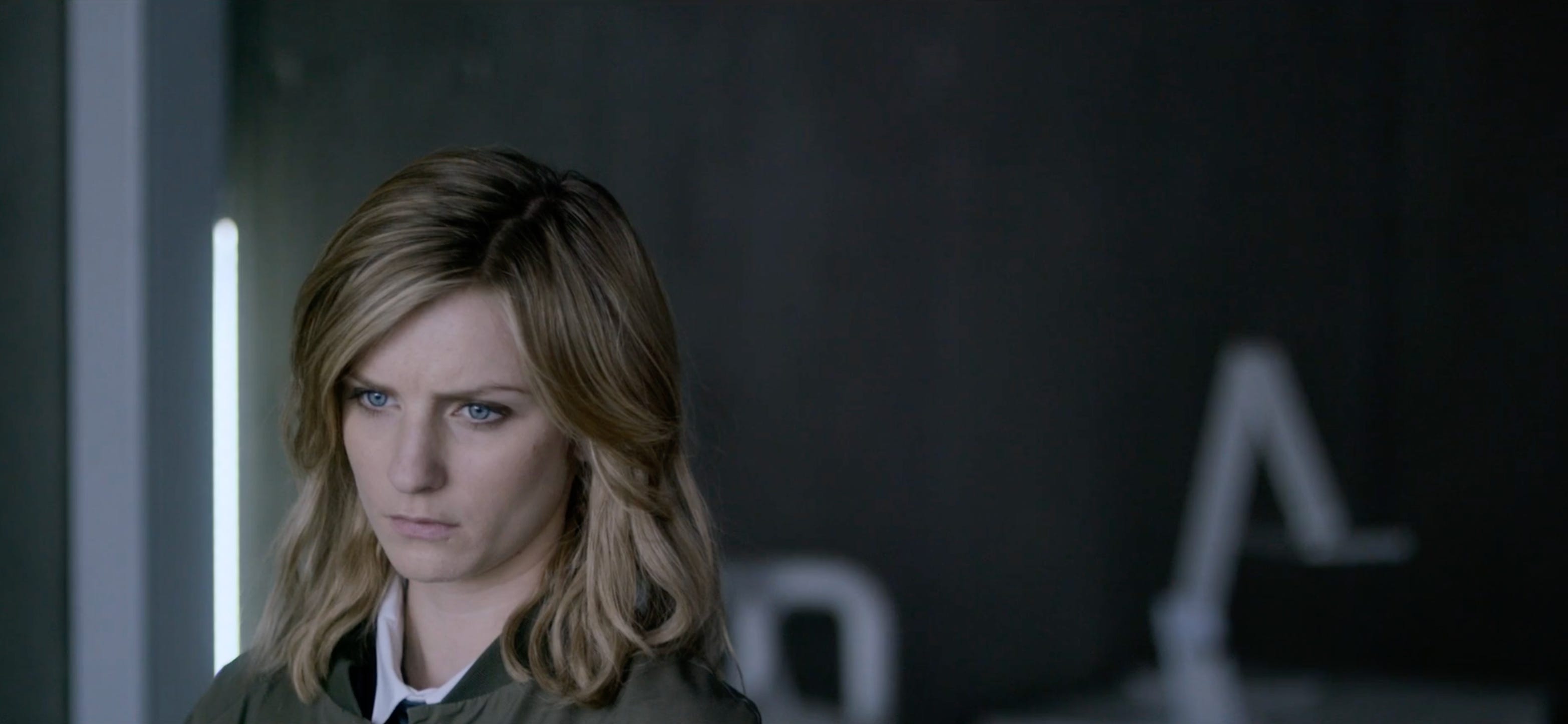
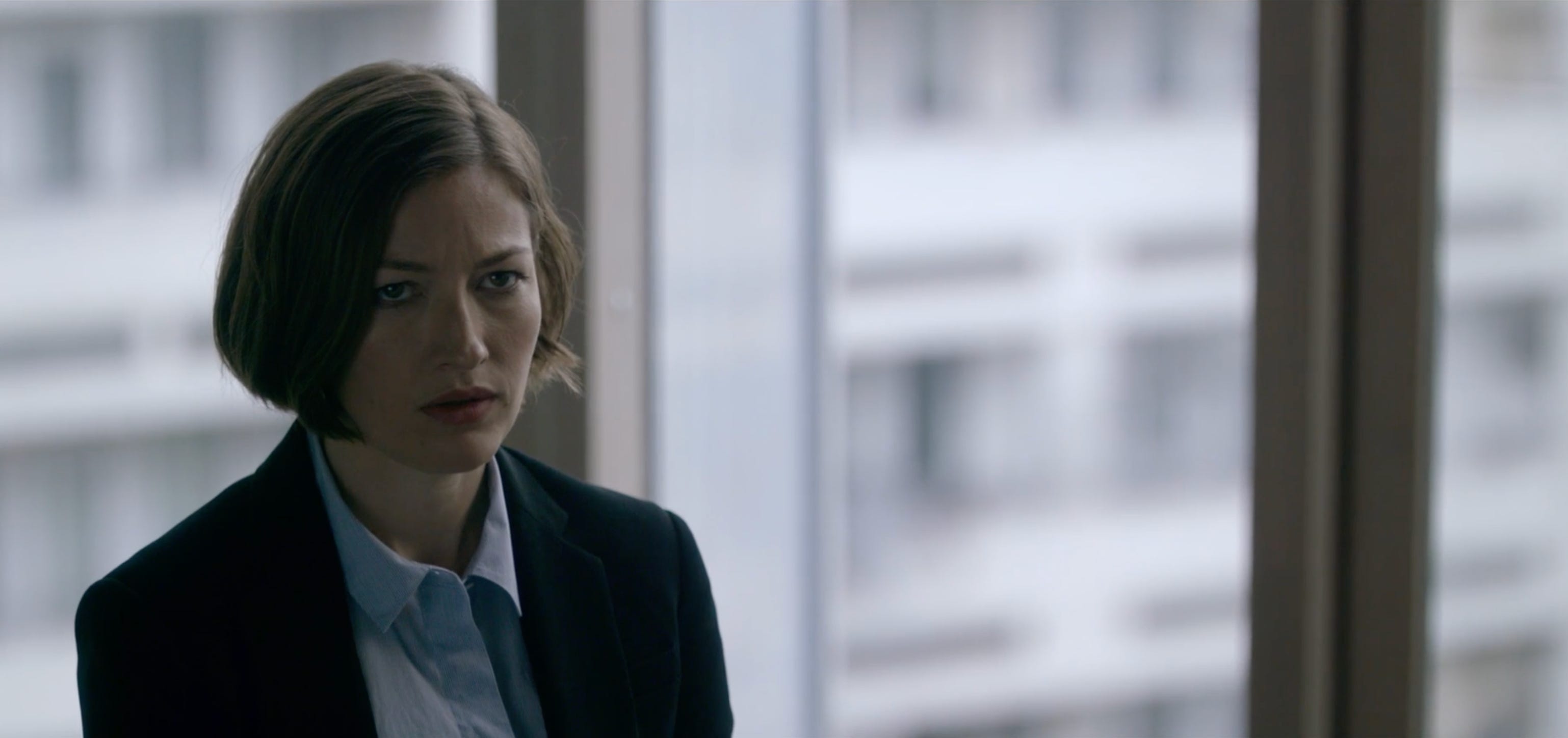
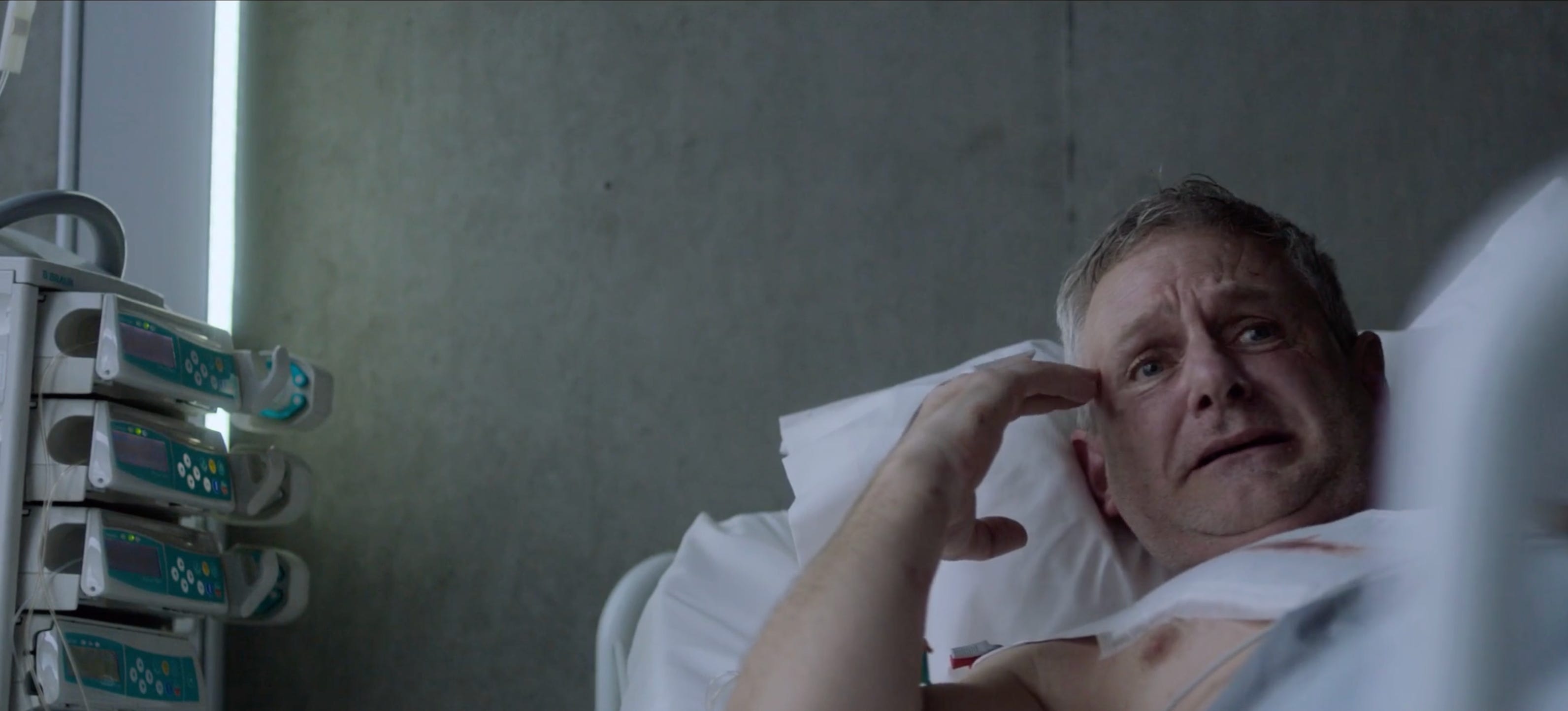
The cut to Blue’s solo shot (photo 2, above) when she’s positioned far left is intentionally jarring, as it doesn’t fit with where she’s framed in either of the group shots (middle in the video thumbnail, far right in photo 1, above).
Also note how in the singles, Park and Blue are on the same side of frame as each other (photo 2 and 3), while the witness is on the opposite (photo 4), signifying a ‘them against him’ situation.
Rack Focus to Bees
Well, not really bees, they’re “autonomous drone insects” or “ADIs.”
We see a rack shot to an ADI three times within a few minutes of each other; each time the technique repeats, the ADI is closer, and closer, and closer, to its target.
The first a big wide shot, the second a medium shot, the third a medium-close where the bee is on a mirror so actually superimposed over its target.
The camera and/or character movement is always left-to-right, the rack goes far-to-close, and the ADIs are always on the right of frame. This is because when shots are separated by time, keeping certain elements the same helps tie them together.
Which is exactly what our last shots are about . . .
Small in Frame pt2
At the end of the climactic murder-by-ADI scene, the shots begin to echo the far-side-framing and small-in-frame shots from Parke’s opening scene . . . and then transition us directly back to her deposition.
Every shot makes Parke seem small in frame, and shots directly before transitioning into the deposition are direct echos of the opening scene shots from that deposition.
Here’s a shot from the opening scene (top) and a shot just before transitioning into the deposition scene near the end of the episode (bottom):
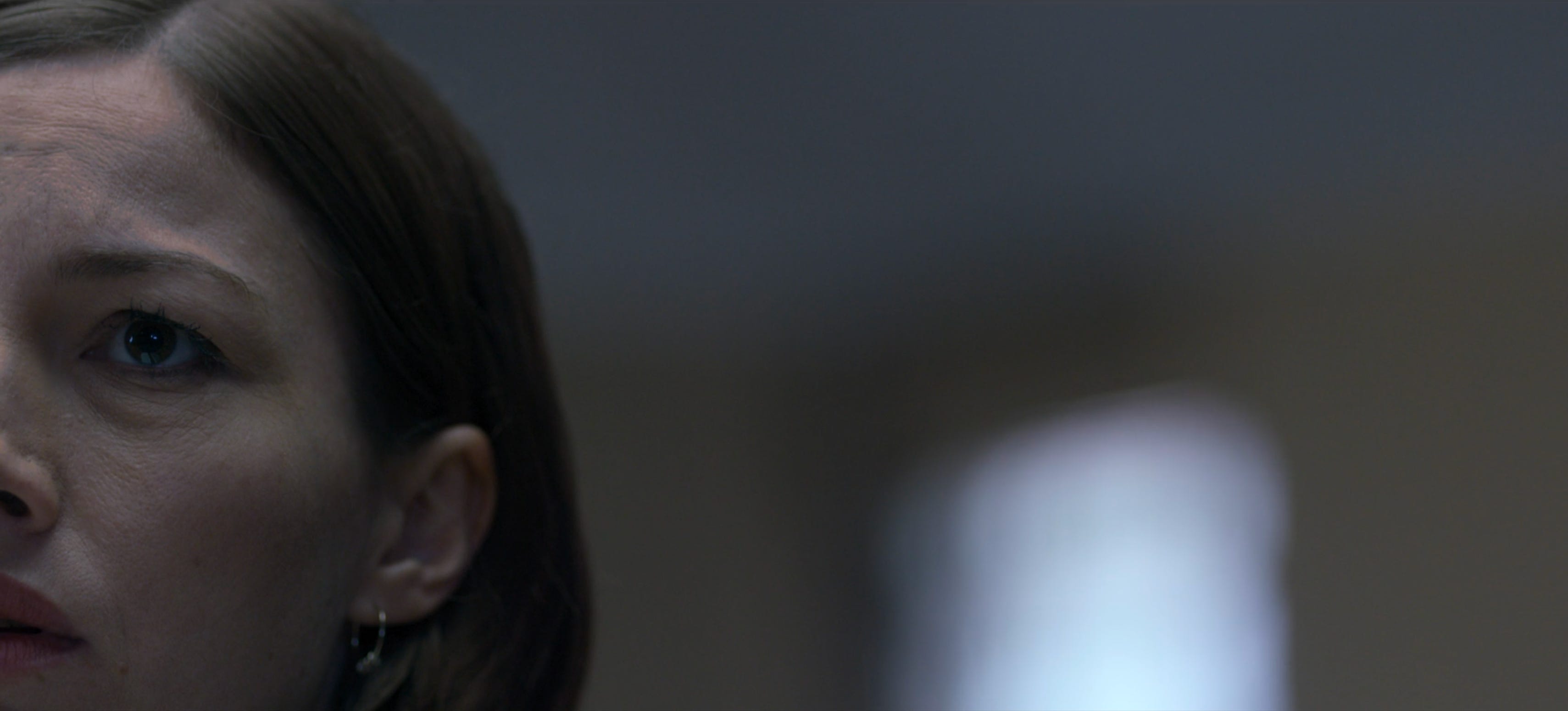
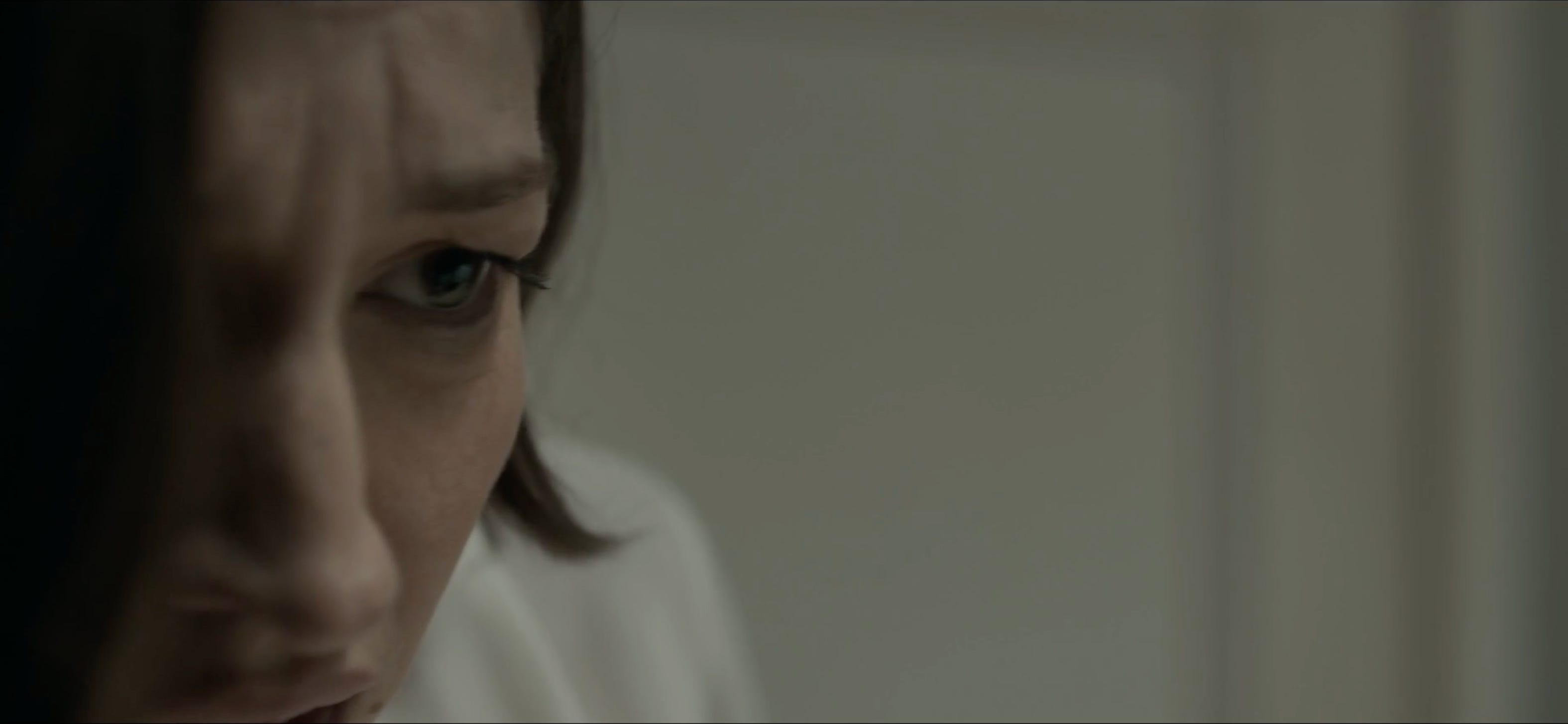
It’s a clever visual cue which — even if only subconsciously — preps the audience we’re going back to where we started with DCI Karin Parke.
Depth of field, size and location of Kelly Macdonald’s face in frame, the way her face is ‘cut off’, are all similar — the colour is somewhat different, as the deposition is much cooler and bluer coloured, but that itself is a way to differentiate ‘when’ we are.
Takeaways
Sometimes when a shot feels ‘off’ or repetitive, it’s a sign a technique didn’t work, or the shots don’t quite edit properly, or the scene has accidentally crossed the line.
But sometimes, the shots intend to make us feel dissonance or disorientation, or repetition is intended to tie two things together. “Hated in the Nation” does both throughout, which adds to the queasiness of its near-future cautionary tale.