
Five Shots: FAST COLOR
just what it says on the road sign
Five of our favourite shots from 2018 supernatural near-future drama Fast Color.
French Overs
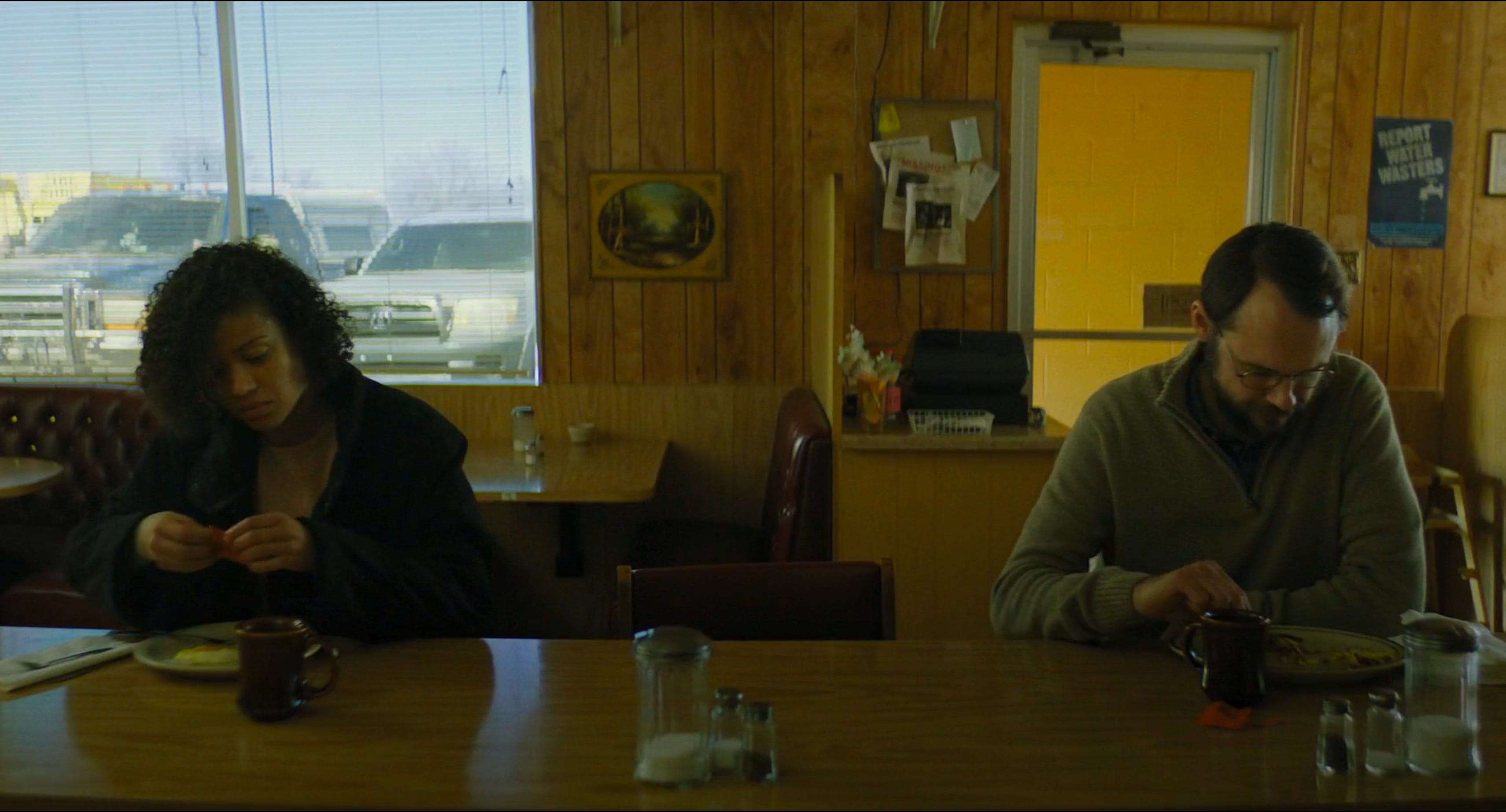
In a pending-apocalyptic future, Ruth (Gugu Mbatha-Raw) is on the run when she meets Bill (Christopher Denham) at a cafe.
The wide is framed with them on either side of the counter, Ruth with an open window and blue sky behind her, Bill with a solid wall and colors behind him.
Their single shots are French overs, which places the camera behind two characters who are facing the same direction — often seen from the backseat of a car, for example.


Ruth and Bill are wary of each other, looking at each other sideways, and the French overs captures this wariness, while keeping their singles ‘clean’ and making it look as though each of them (Ruth even more particularly) is literally looking over their shoulder, is effective.
Crane to Rack Focus
After a high craning shot surveys damage and fire fighters running and police lights whirling, the camera settles, someone steps into frame, and focus racks to their hand.
We aren’t sure yet who the person what it means, but we know this person is important (the focus pull says as much) . . . and likely up to no good (when has a shadowy, backlit figure with a loosely held fist ever meant well!?)
Yellows and Blues
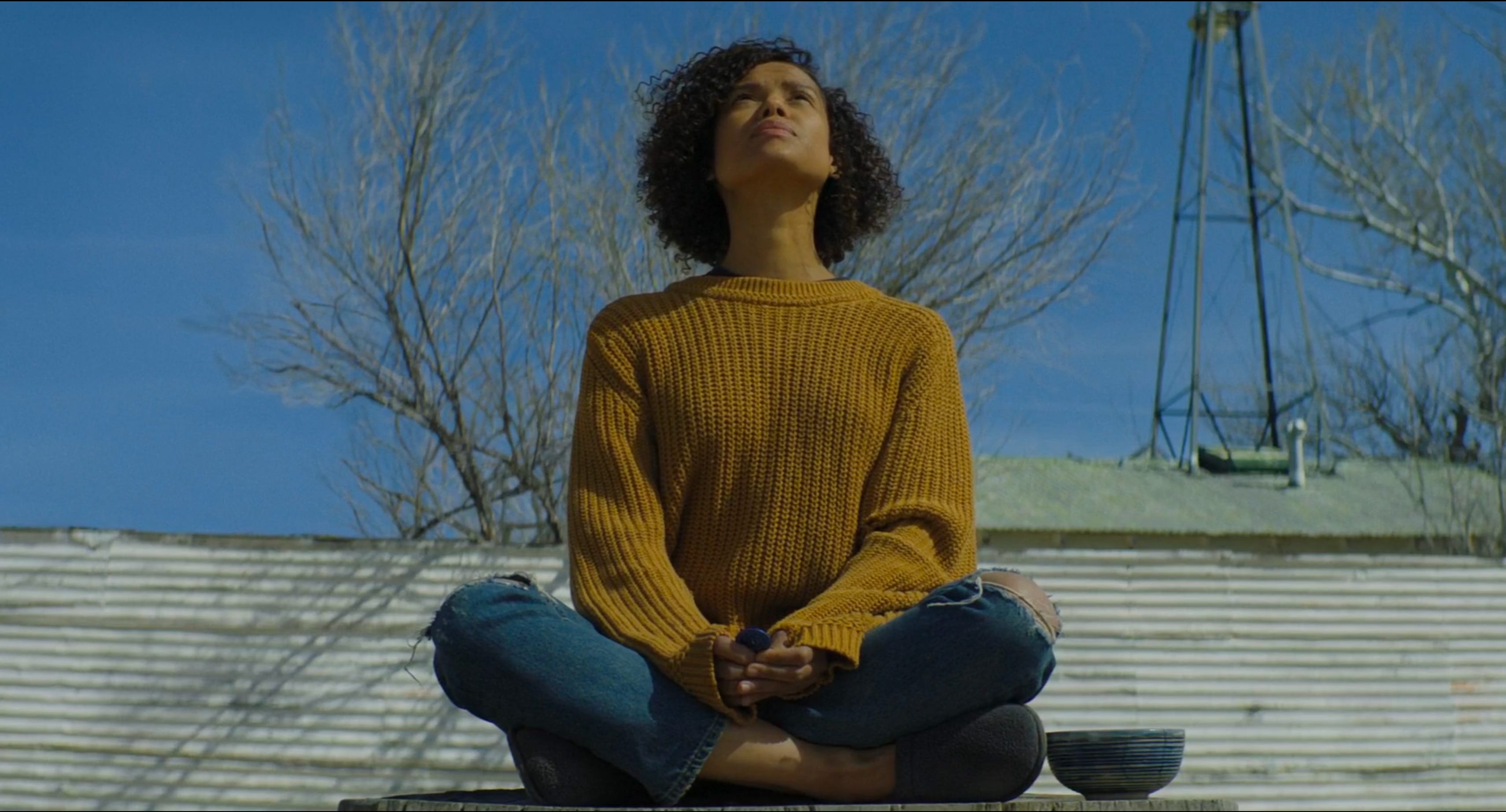
In a near-future world where water is scarce, much of the landscape is dried up and yellow-brown; meanwhile, people constantly think about, talk about, and crave water.
The broader colour palette of the film keeps this constantly front of mind, with blues and yellows the predominant colours even in many indoor scenes.




Show Don’t Tell
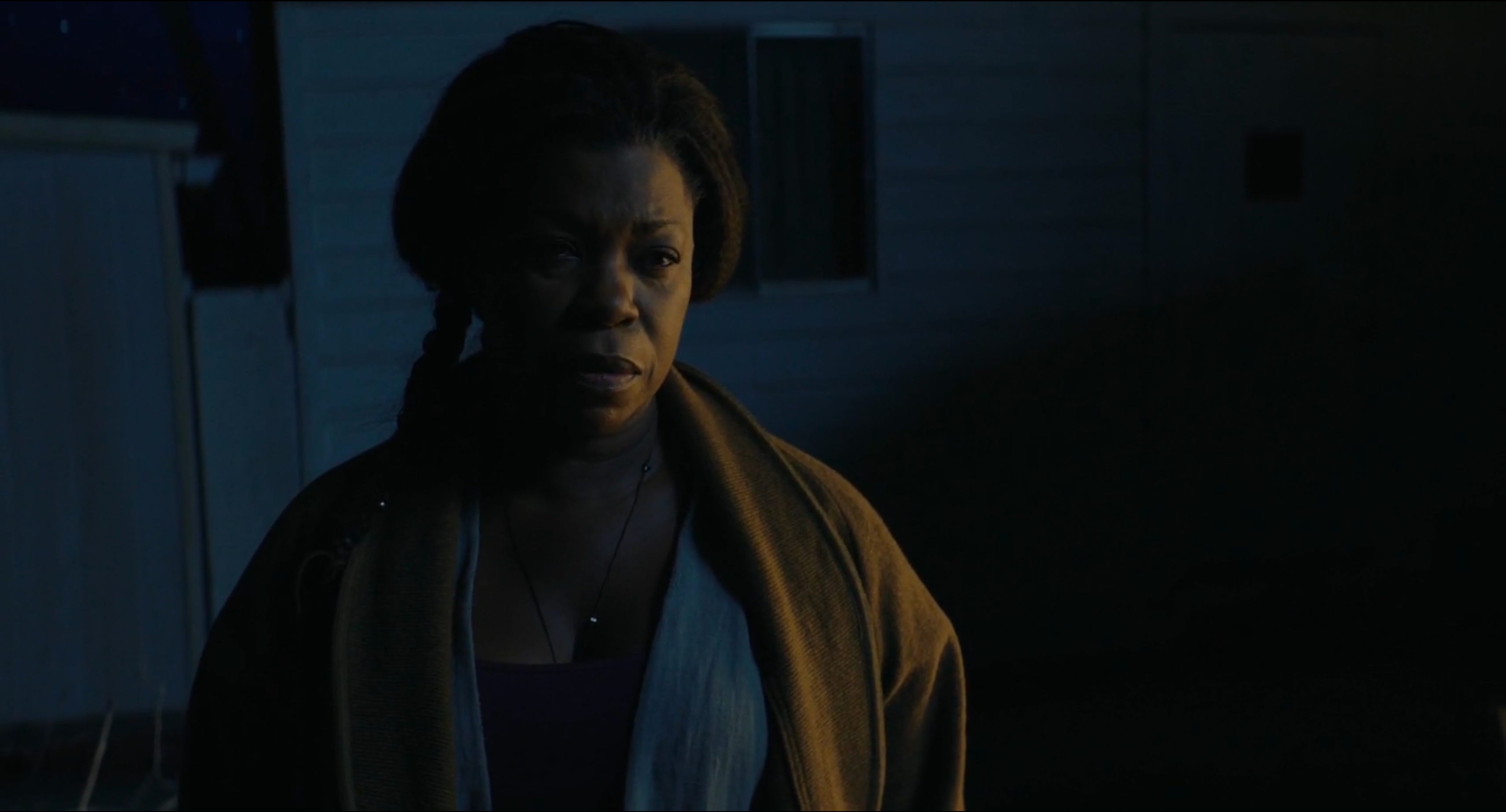
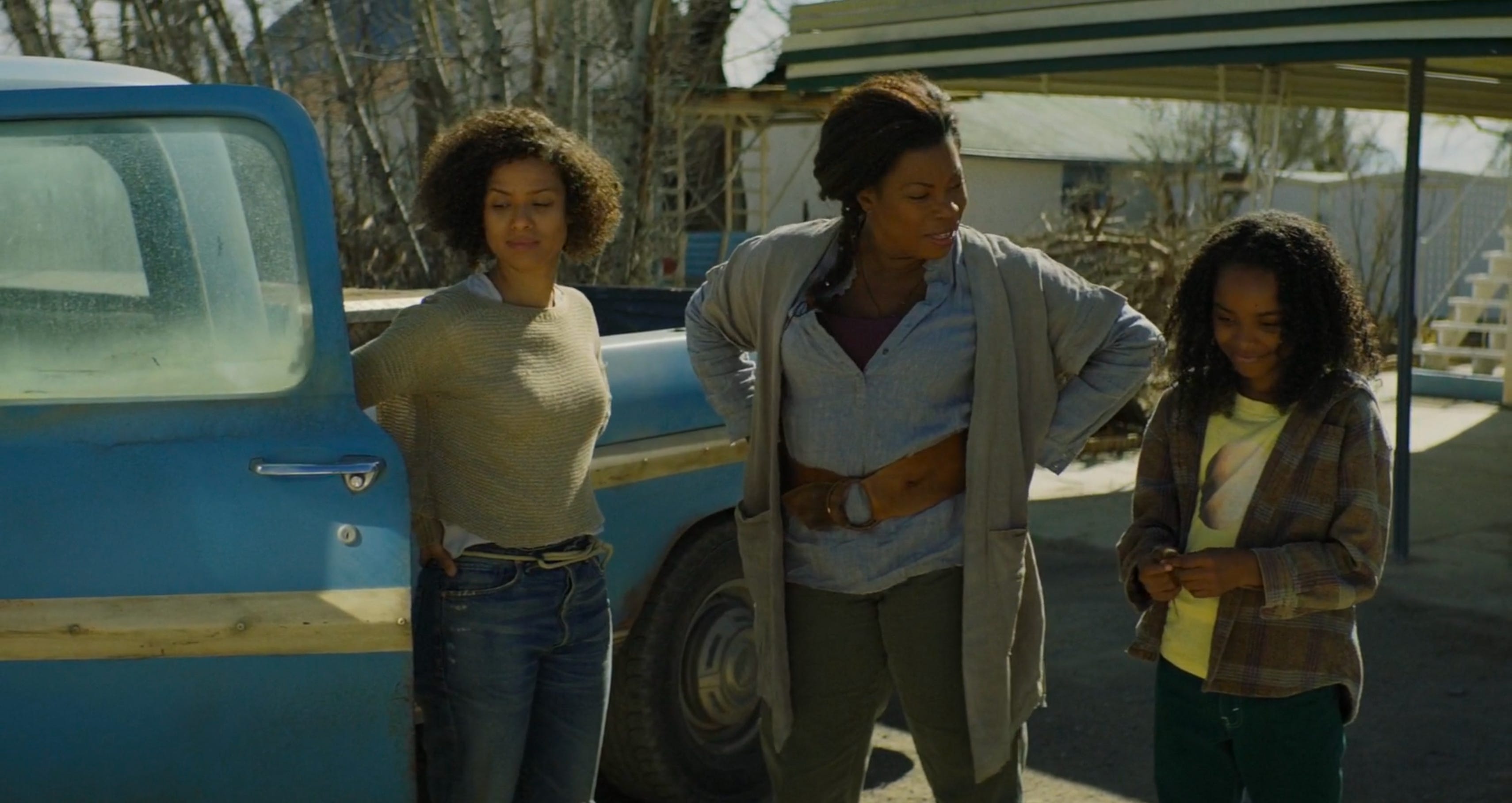
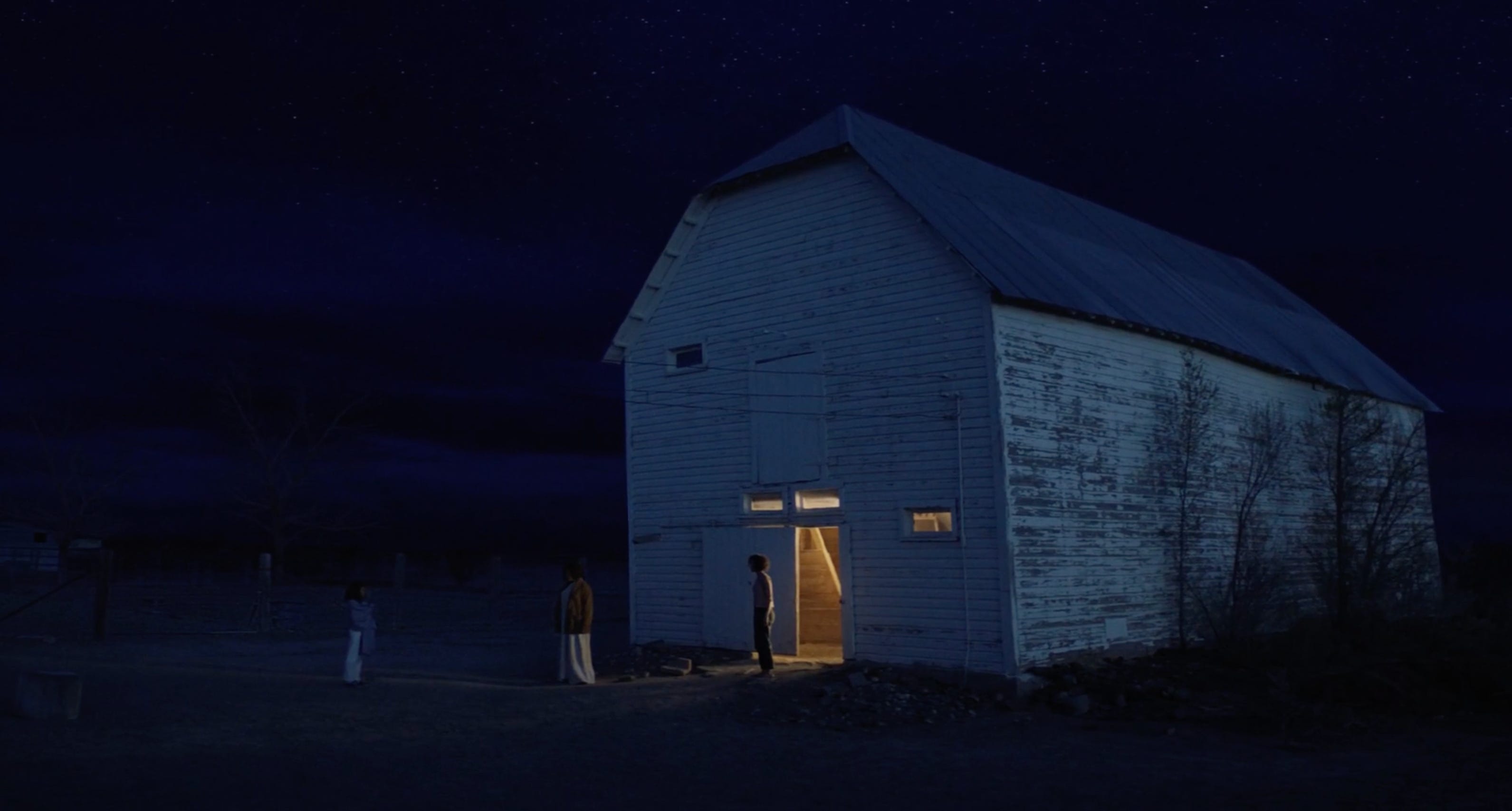
Why would a film spent an entire minute of runtime on one static shot where three people drift into frame and never say a word?
One reason is, they’re demonstrating what a post-water-crisis life looks like, but we’ve already seen how they eat dry cereal, wipe dishes clean, etc.
This is about showing the tension in the house, how these three are coexisting, sharing the space out of necessity, but still frustrated with each other.
Not-Yellow-and-Blue Lights
Flashbacks
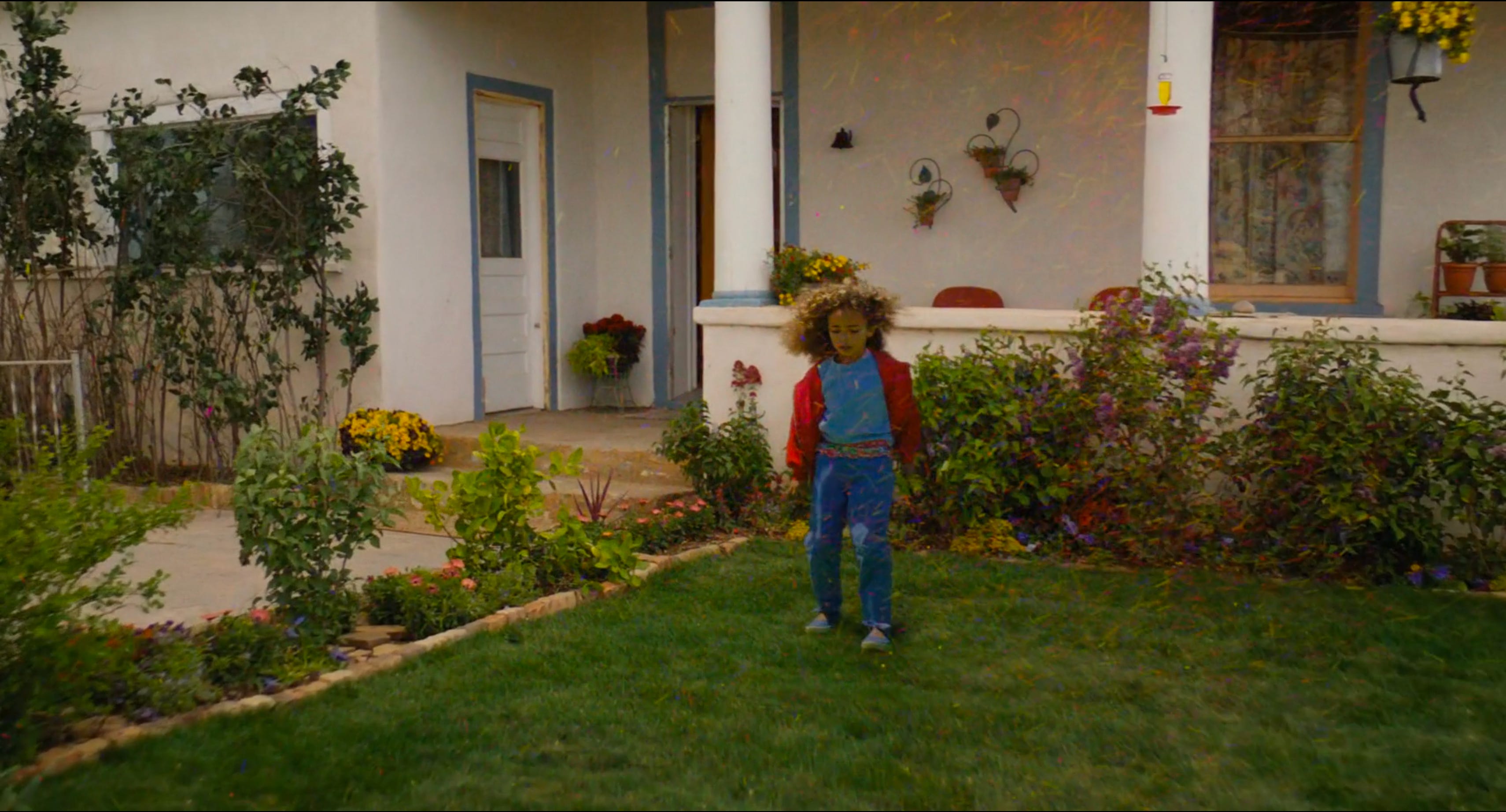
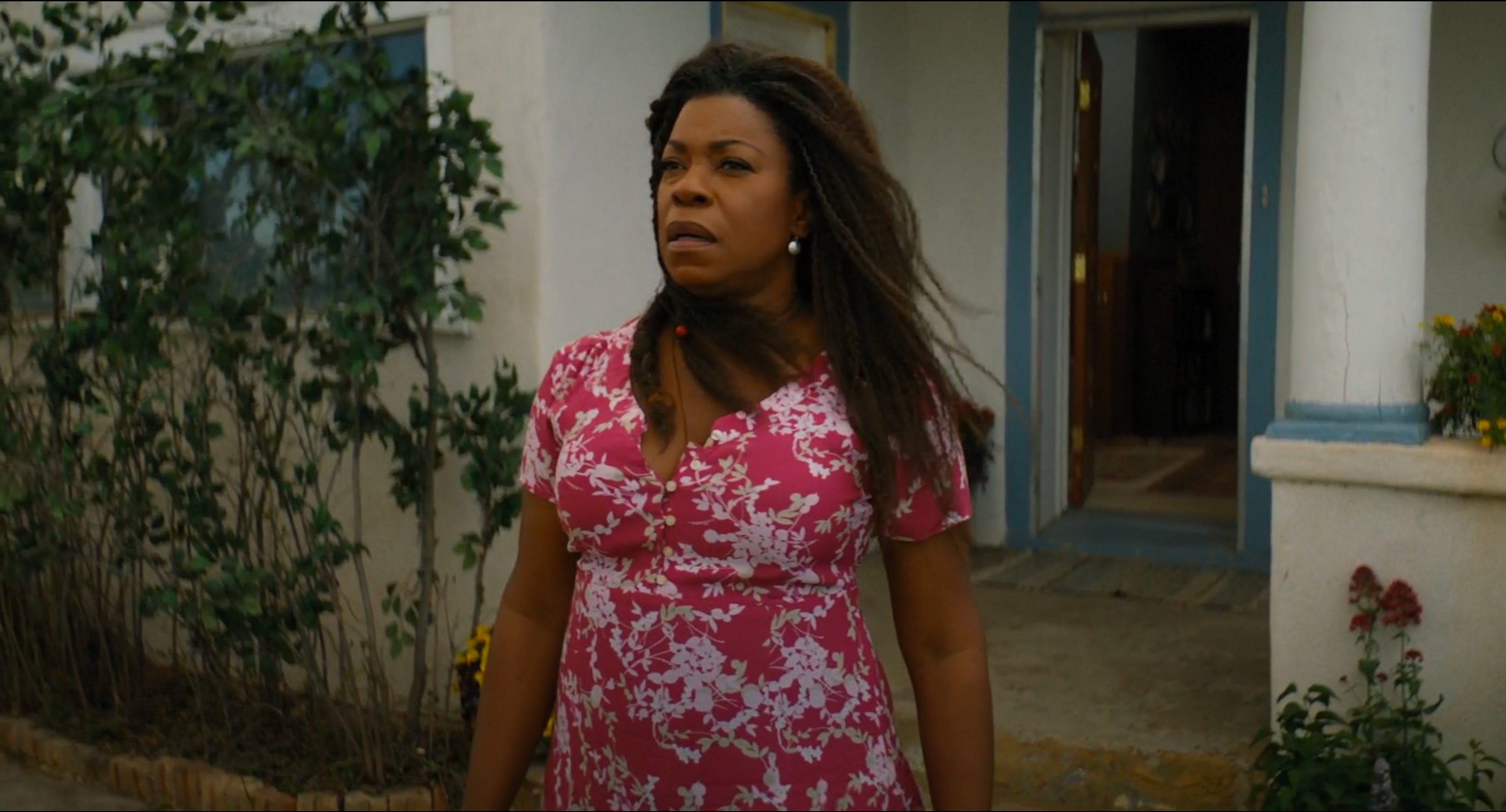
The few flashbacks we get aren’t ‘explained’ as such with dialogue, but it’s immediately visually apparent as they use saturated greens, pinks, and reds, making clear how different the world pre-catastrophic-change was.
Present Day
A few ‘current’ scenes use distinctly not-yellow-or-blue light to make things feel eerie, or threatening; Ruth’s snap-light could have been purple, or white, or nearly anything, but using the color which is made when blue and yellow are combined feels very fitting. In the accompanying shot, there’s blue in the mirror, yellow far behind on the wall, and green in most shadows and some highlights.


Sunset
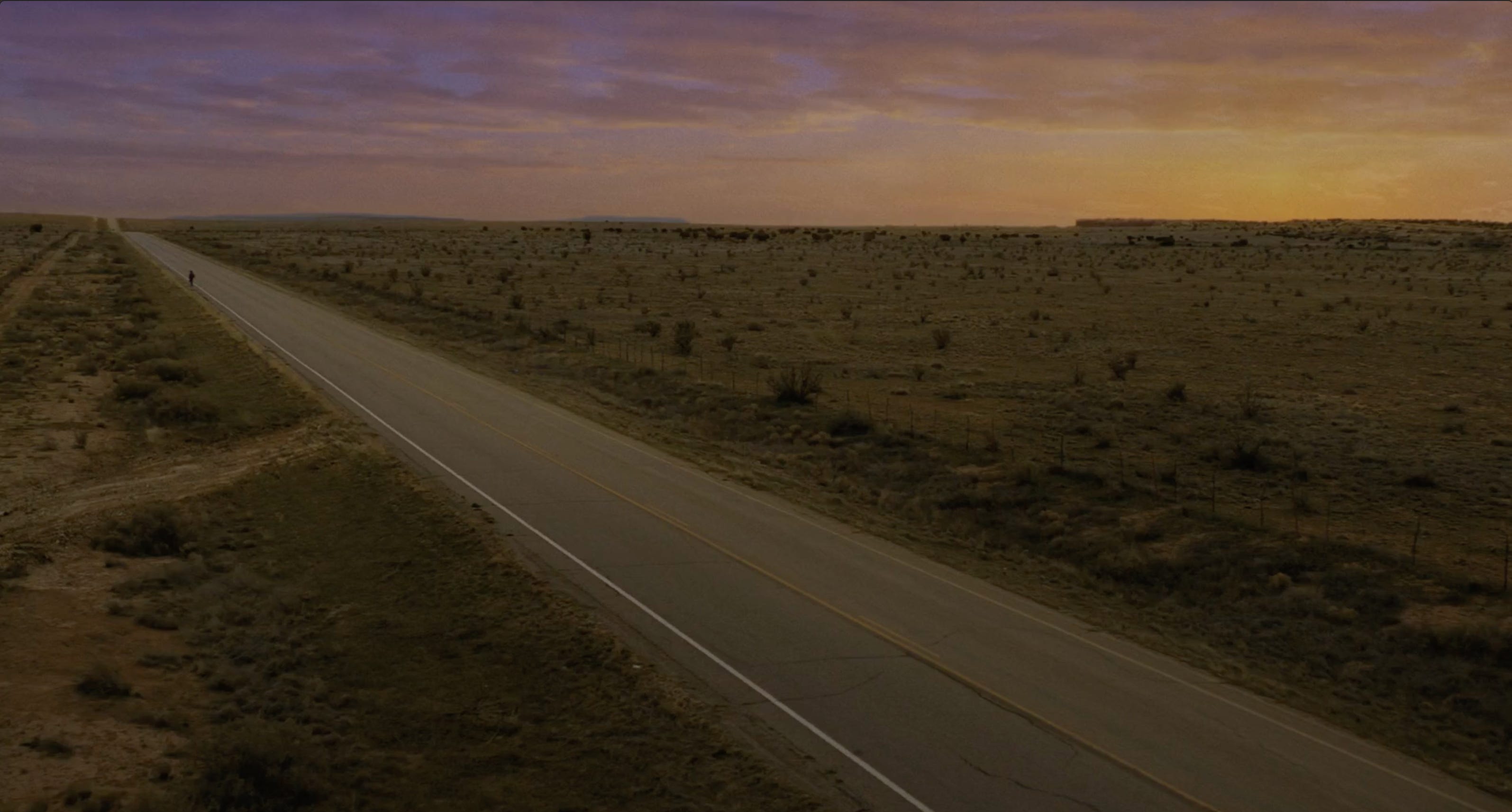
On small indie films with an accompanying small budget, something which gives big bang-for-buck are shots like these. Often you don’t need much gear or crew or cast (the actor is so far off it might not even be Gugu Mbatha-Raw’s stand in, it could theoretically be a crew member). You just need research and planning and a little luck from the weather gods.
Takeaways
Fast Color’s team came in with a strong color theory, a knowledge of where to splurge money, and the willingness to stop and watch characters in silence.
Film Details & Further Reading
Fast Color (2018)
Director: Julia Hart
Cinematographer: Michael Fimognari