
Disorient Your Audience, Clearly: SUMMER OF SAM
In his fictional-film-about-a-real-serial-killer Summer of Sam, Spike often uses shots which are intended to keep the audience uneasy; even simple shots of two people in a car cross the line and are blocked to extremes.
This sequence — depending how you count it, it’s four scenes — makes us feel disoriented and uneasy, but we can always understand what is happening (even if it takes a split-second to catch up).
In other words: one or two of the characters are confused, the audience is off-kilter, but the events are clear: we know what is happening.
Watch, then we break down all the techniques Spike uses.
Setup and Scene Transition
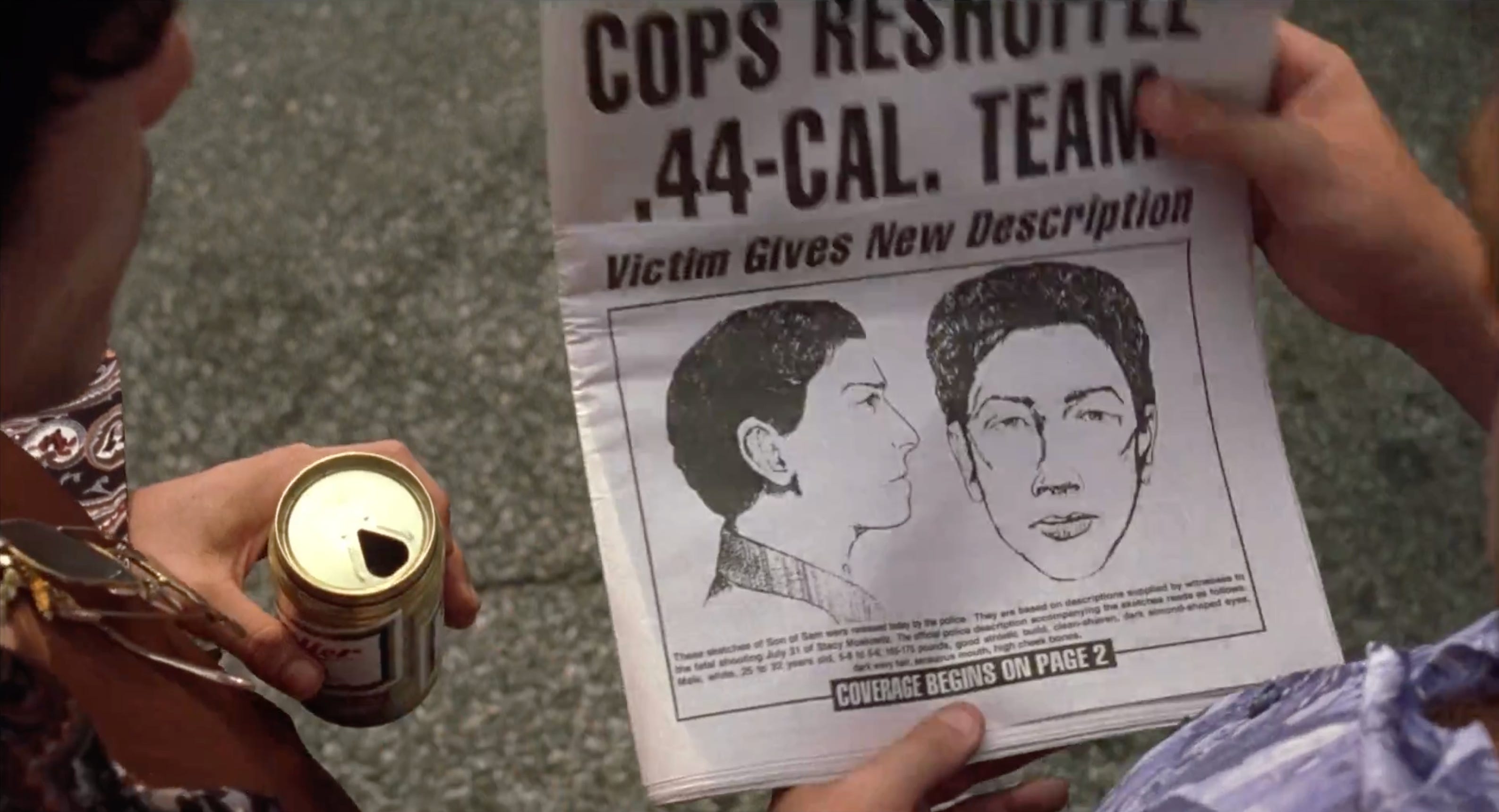
The scene opens on an over-the-shoulder (OTS) shot of a newspaper (#1, below).
The content of the front page is expositional, while the newspaper itself will serve as the ‘anchor’ element between this scene and the next.
As the ‘wise guys’ talk about the photo, we see the newspaper in context of a reverse-two-shot (#2, below) and a wide shot (#3)


The main speaker looks back at the paper, then we cut to another OTS . . .
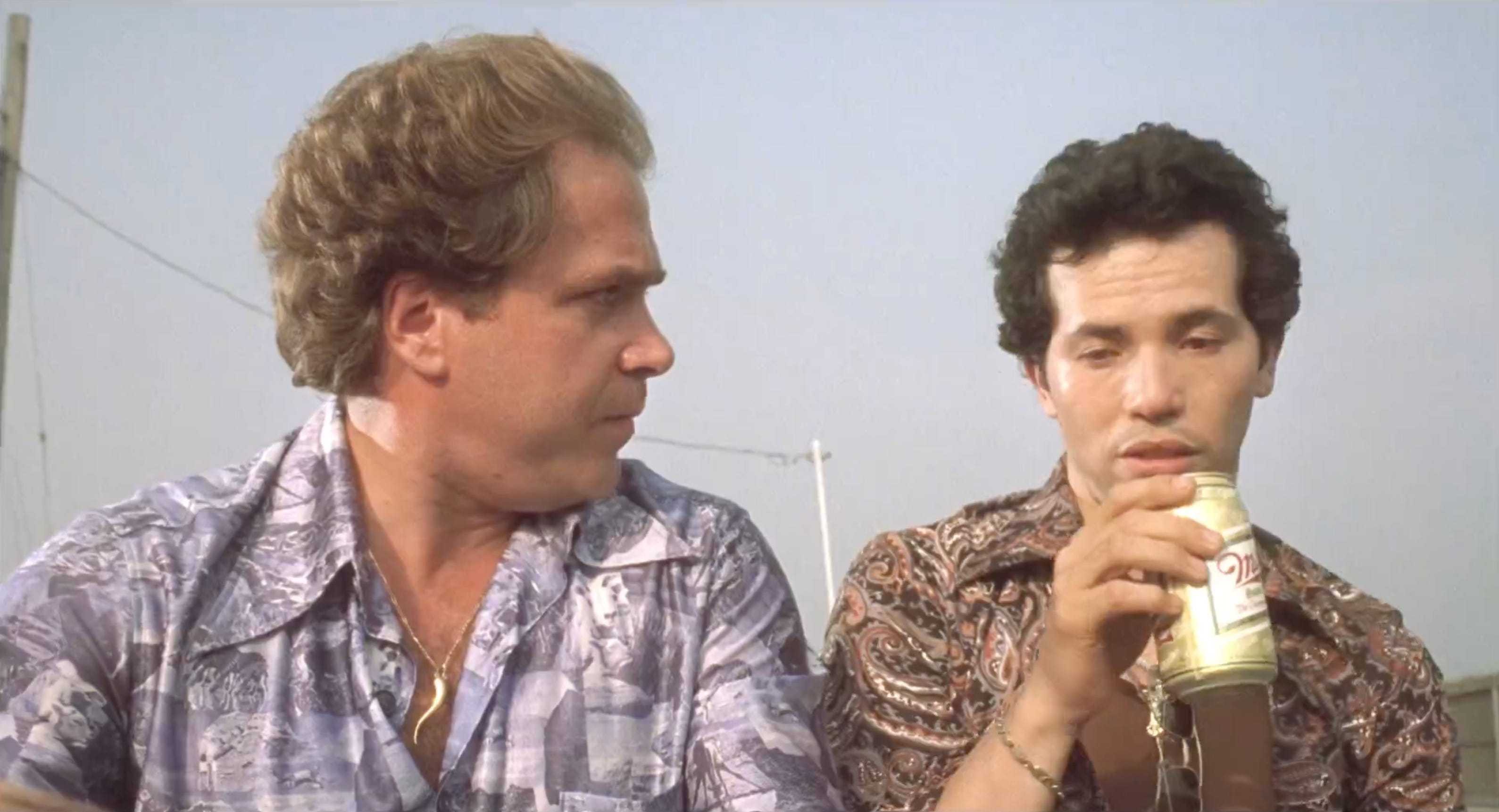
except now, instead of wrinkled hands and khakis, the surroundings are loud shirts and a Miller beer can.
Bam!
We’re in a new scene with Vinny and Joey (John Leguizamo and Michael Rispoli).
The transition on its own is not hugely disorienting; it’s the clever kind of thing movies often do moving from scene to scene.
However, because there is a moment of ‘huh, oh, I see,’ adjustment, and Spike so quickly follows up with multiple other techniques (more on all of which, below), this minor disorientation also acts to set up for larger ones.
Dolly Shot
Just like the first scene, this scene also cuts from an OTS of the newspaper to a two-shot of the guys reading the paper and talking about it.


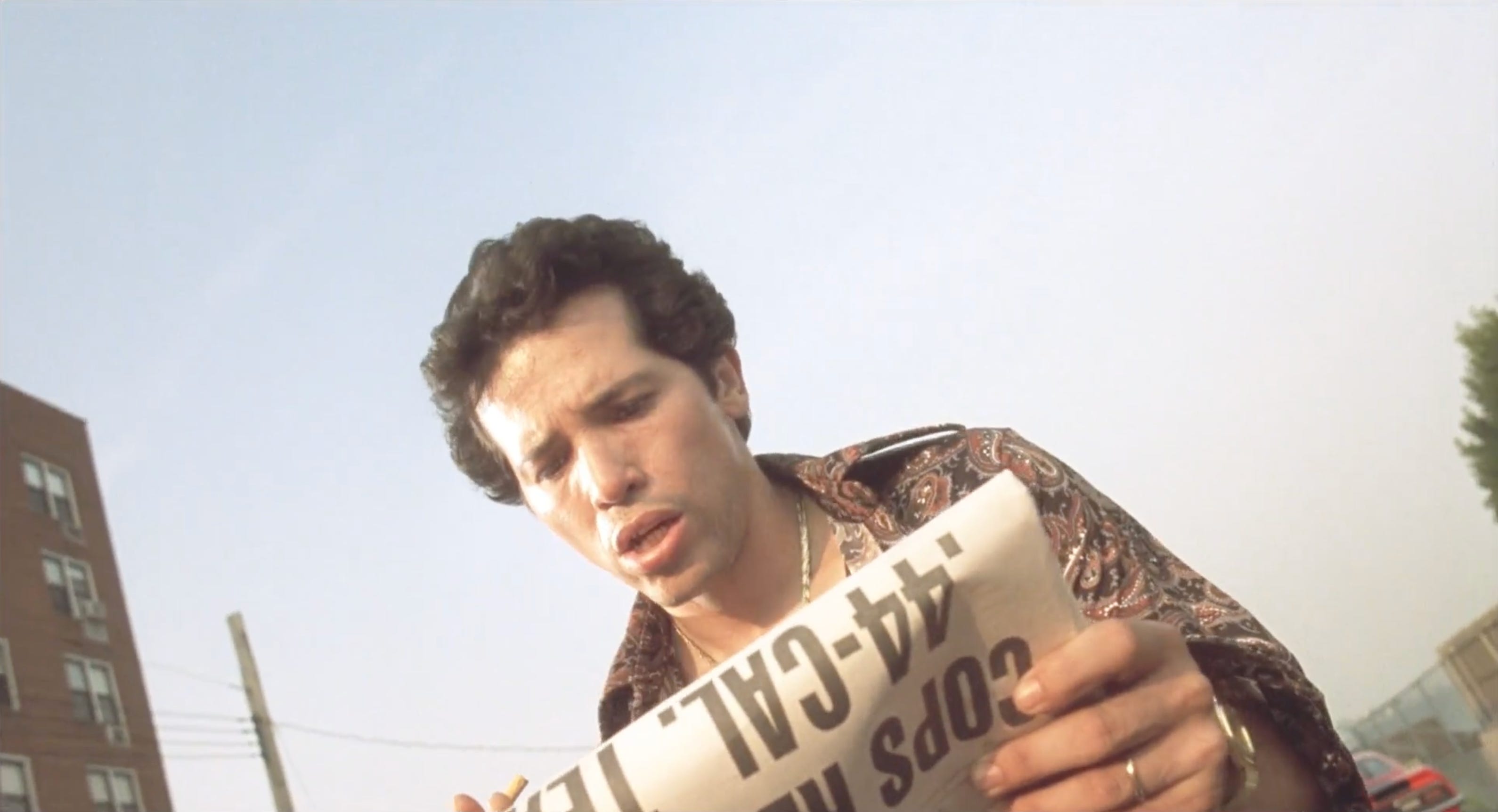
But where the two-shot in the first scene was an eye-level, still shot, this is a low-angle showing lots of blue sky . . . and it’s moving.
The second shot is a double-dolly, a Spike Lee Joint staple, even though we clearly just saw these dudes standing still when looking at the paper.
This is the second bit of disorientation: matching a still shot with a moving one.
The effect is to destabilize the audience, and to begin putting us in Vinny’s headspace.
Assisting the disorienting edit are actions and acting, which immediately make clear how inebriated Vinny is. If he’s not actively drinking or smoking, it’s only because he’s paused to pop some pills, and Leguizamo doesn’t just make Vinny look dizzy — through some actorly wizardry, he makes Vinny look like his sweat reeks of ethanol.
Then, we get a complete non-sequitur.
Imagination Scene
As Joey talks, suddenly, there’s a cut to a movie theatre.
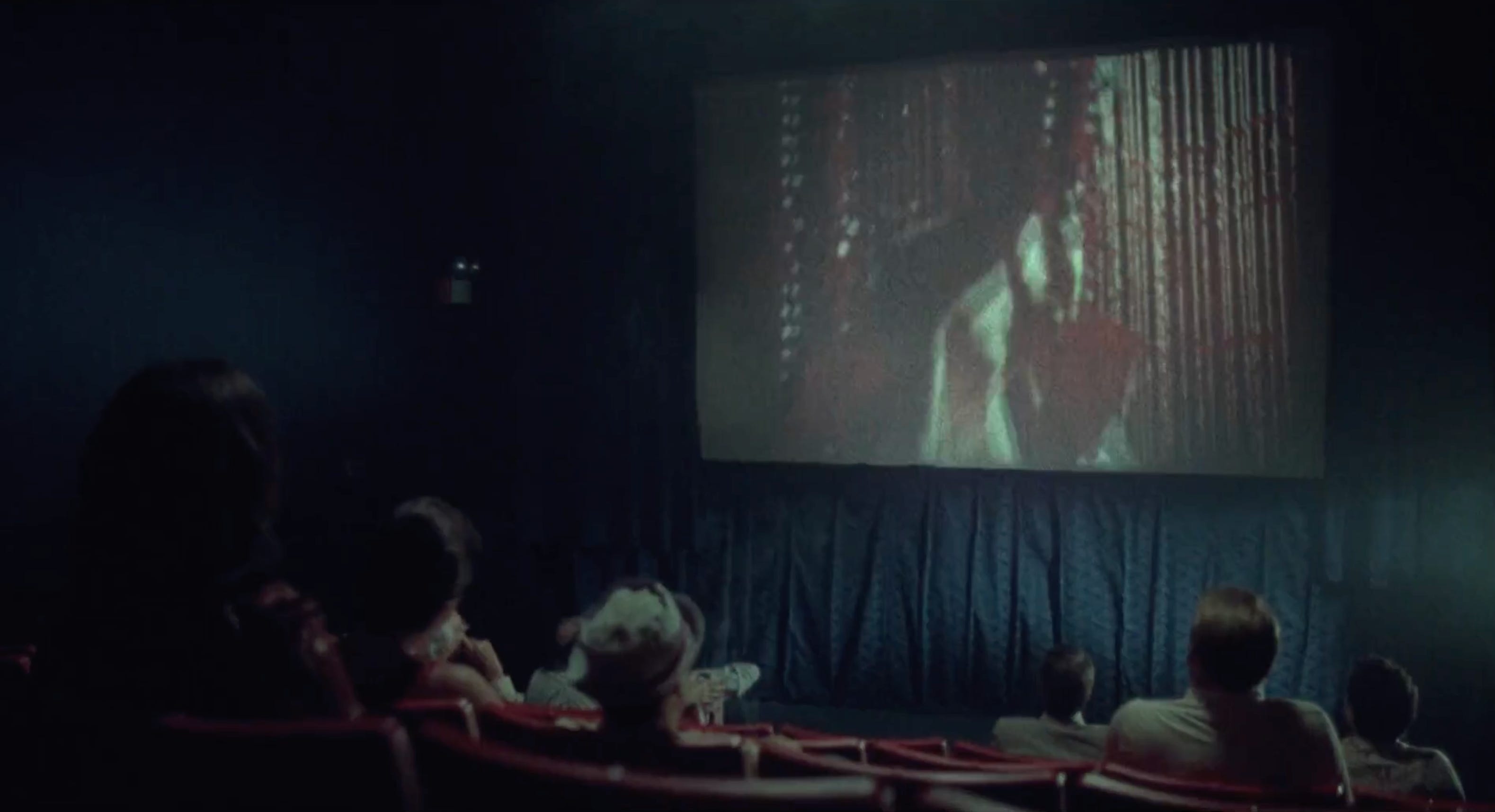
We’ve gone from bright, clear daylight to dark, grainy interior.
Though Joey’s words to Vinny continue underneath the scene, the shot is SO distinct from the dolly shot that we know we’re in a different place.
The combination of hazy atmosphere and film-reel-projector audio underneath Joey’s words help us figure out ‘okay, this is Vinny’s imagination,’ which the following shots confirm.


As some neighborhood tough guys watch, Vinny’s friend Richie (Adrien Brody) appears on the big screen, having sex in a highly stylized porn video.
The scene clearly steps us through realizing “this is Vinny’s imagination of Joey’s description of Richie’s actions” . . .
before returning to the dolly shot and the now-even-queasier-looking Vinny.
for something completely different, from the same guy:
how Spike Lee makes clear who is where in a sneaking scene.
Reminder / Re-establisher
Before taking the fourth and final escalation of disorientation, the Joey / Vinny scene cuts back to the OTS of the newspaper.
It comes back to this shot in order to show Joey drawing Richie’s signature mohawk over the police artist sketch, but it also does it to remind us: Joey and Vinny are not actually moving, they’re on still, solid ground!
This is a handy reminder before the scene goes into the next shot.
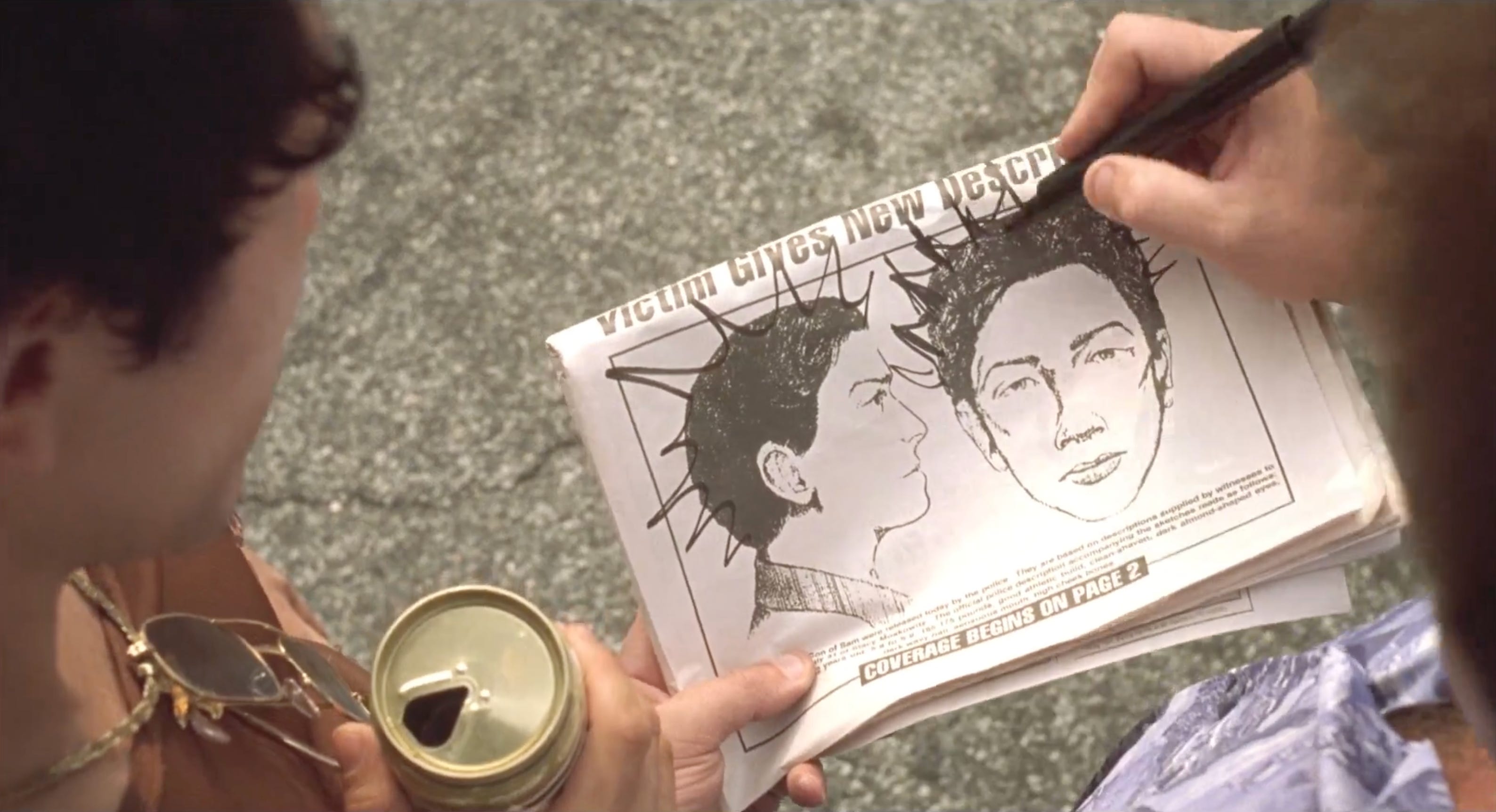
Notice when the scene cuts back to the next shot (01:14), the dolly is at a stop.
Practically, breaking up the long dolly two-shot and the following spinning shots makes it safer and easier to accomplish both at a high artistic level.
Spin Shot
Joey hands Vinny the paper, and walks out of frame.
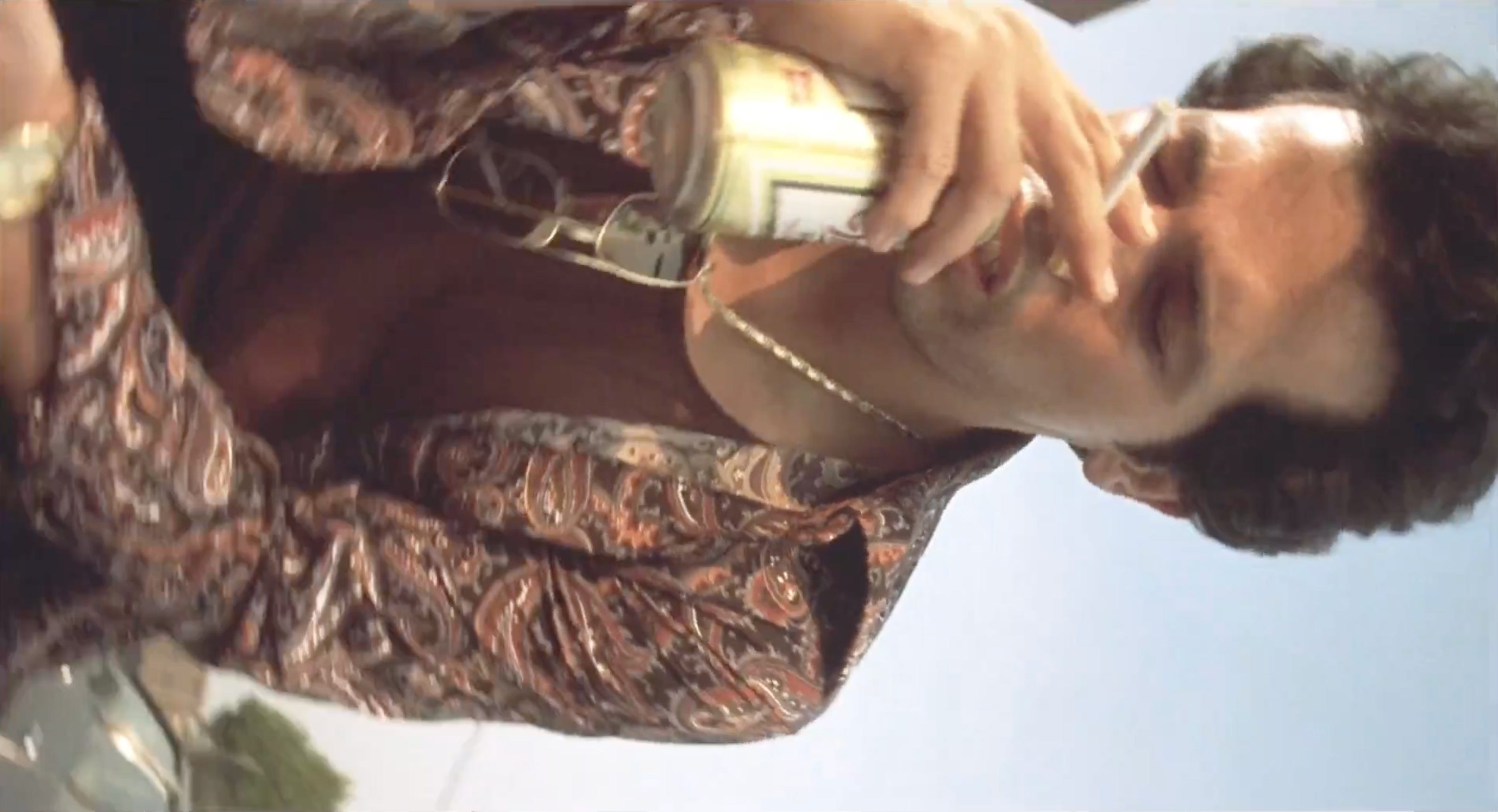
As Vinny processes, the camera begins to spin, move in and out, pause, tilt, spin the other direction . . .
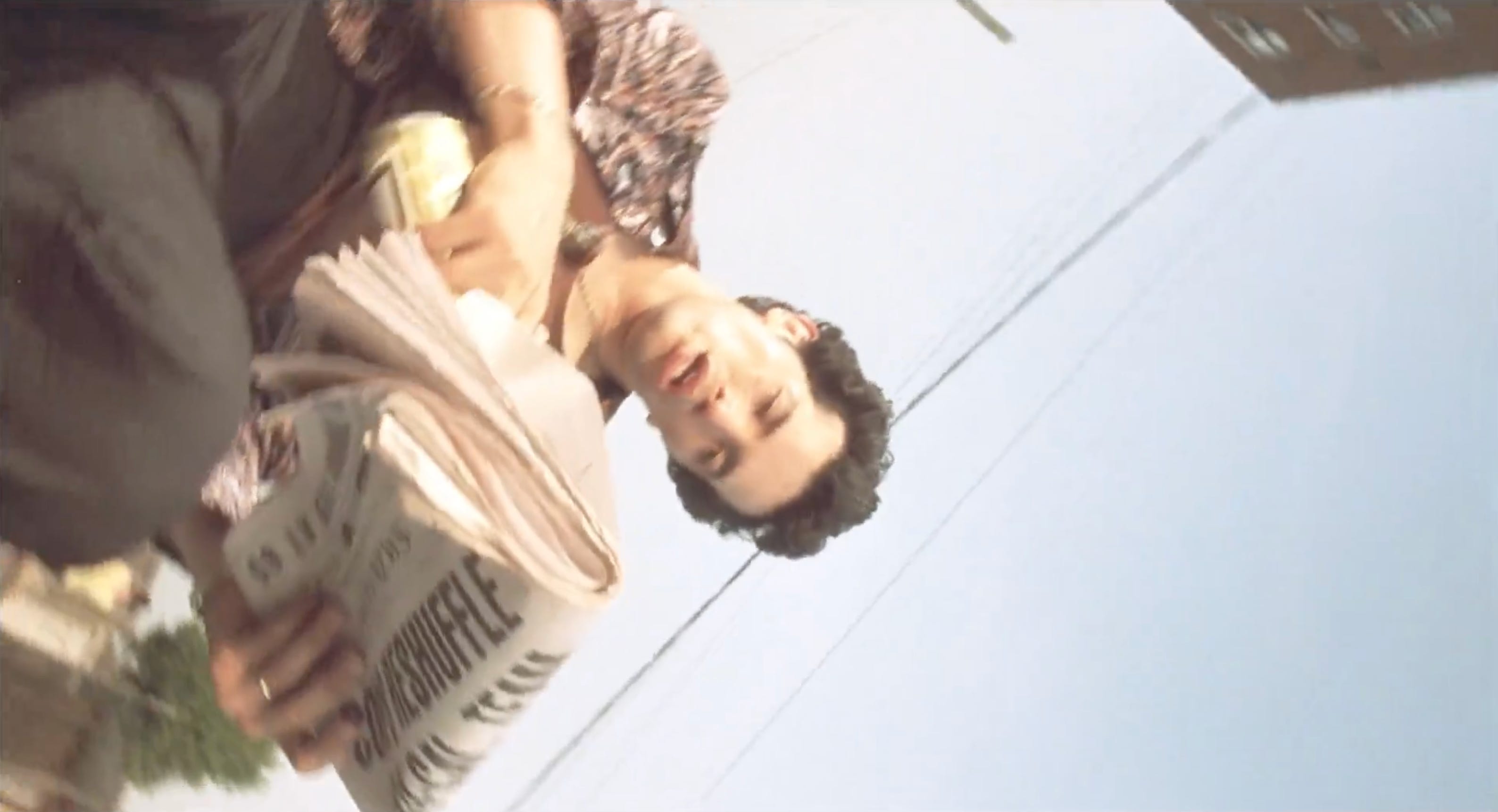
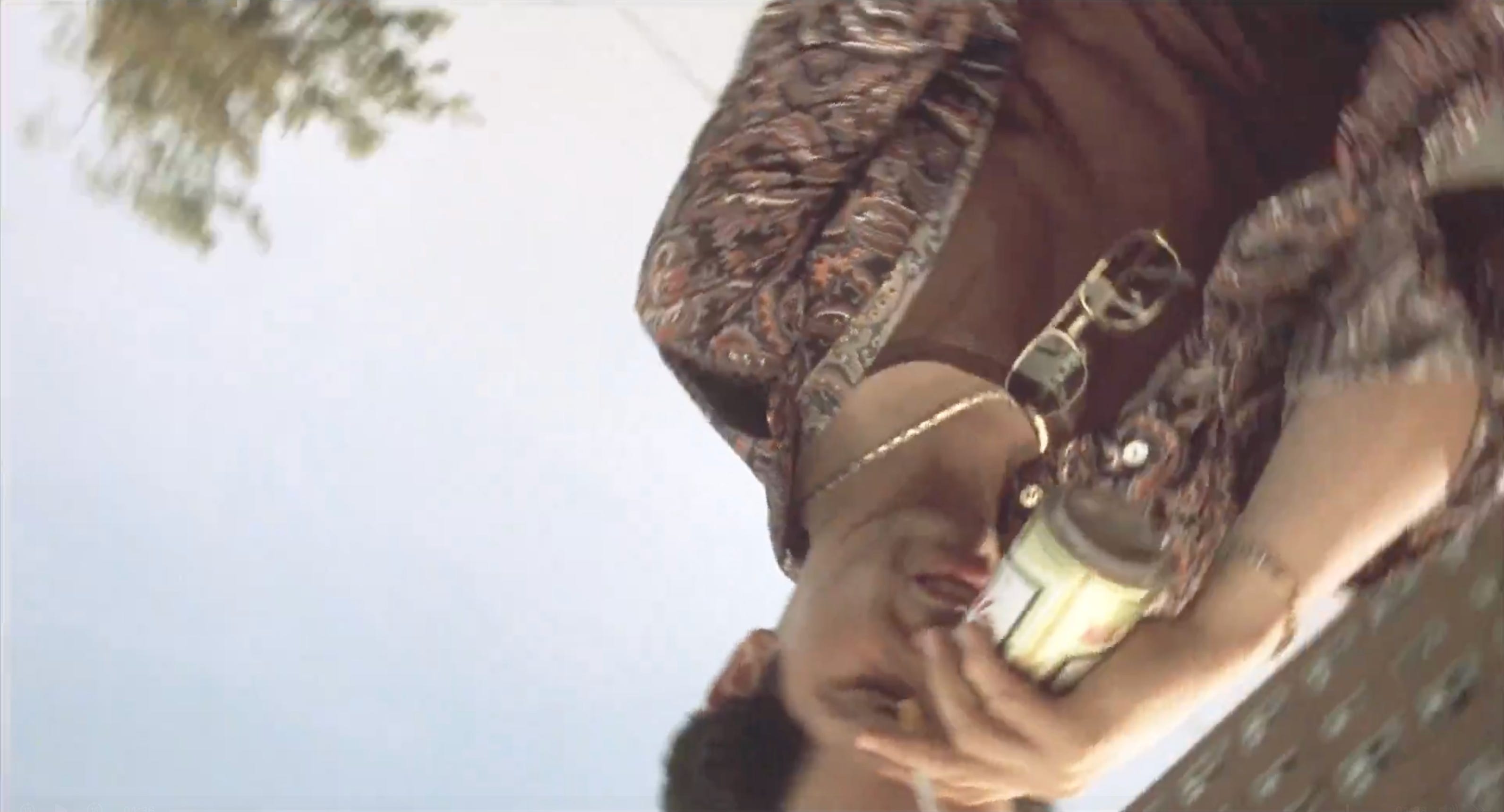
The entire sequence — including the scene at the back yard party — has been leading up to Vinny’s realization, that the Son of Sam killer must obviously be his friend Richie.
The shots have also been leading up to this spin-move, slowly getting more and more disorienting, from the transition, to the still shot matched with a moving shot, to the seeming non-sequitur of a movie theatre, and finally this wildly undulating shot.
Takeaways
If you have a significantly disorienting shot, you can work up to it by making the audience uneasy in smaller ways . . and the way(s) you work up to it do not have to be techniques related to the disorienting shot itself (ie in this case, a camera tilting back and forth before it spins).
Here, the final disorientation is a huge spinning-and-undulating camera movement, but the precursors are an unusual scene transition, a mismatch of moving / non-moving shot-reverse-shots, and a sudden and unexplained ‘imagination’ interjection.
And boy, does it ever work.
Film Details & Further Reading
Summer of Sam (1999)
Director: Spike Lee
Cinematographer: Ellen Kuras