
Crafting a Dream Sequence: DRUNKEN ANGEL
symbolism through crossfades
At the core of this melodramatic noir is a doctor fighting to save patients and a yakuza fighting to find his soul.
The yakuza Matsunaga is played by Toshirō Mifune, in his first collaboration with director Akira Kurosawa.
This is Matsunaga’s dream sequence; even without context, we can understand the symbolism through the powerful imagery, driven by strong visual techniques.
Entering the Dream
The beginning of the sequence is Matsunaga standing at the edge of filthy pond, staring down at a doll.
The crossfade between his face and the floating, discarded doll makes it clear he identifies with it in some way, just as the crossfade between that doll and the floating coffin in the next shot insinuates that the doll / Matsunaga may be inside that coffin.


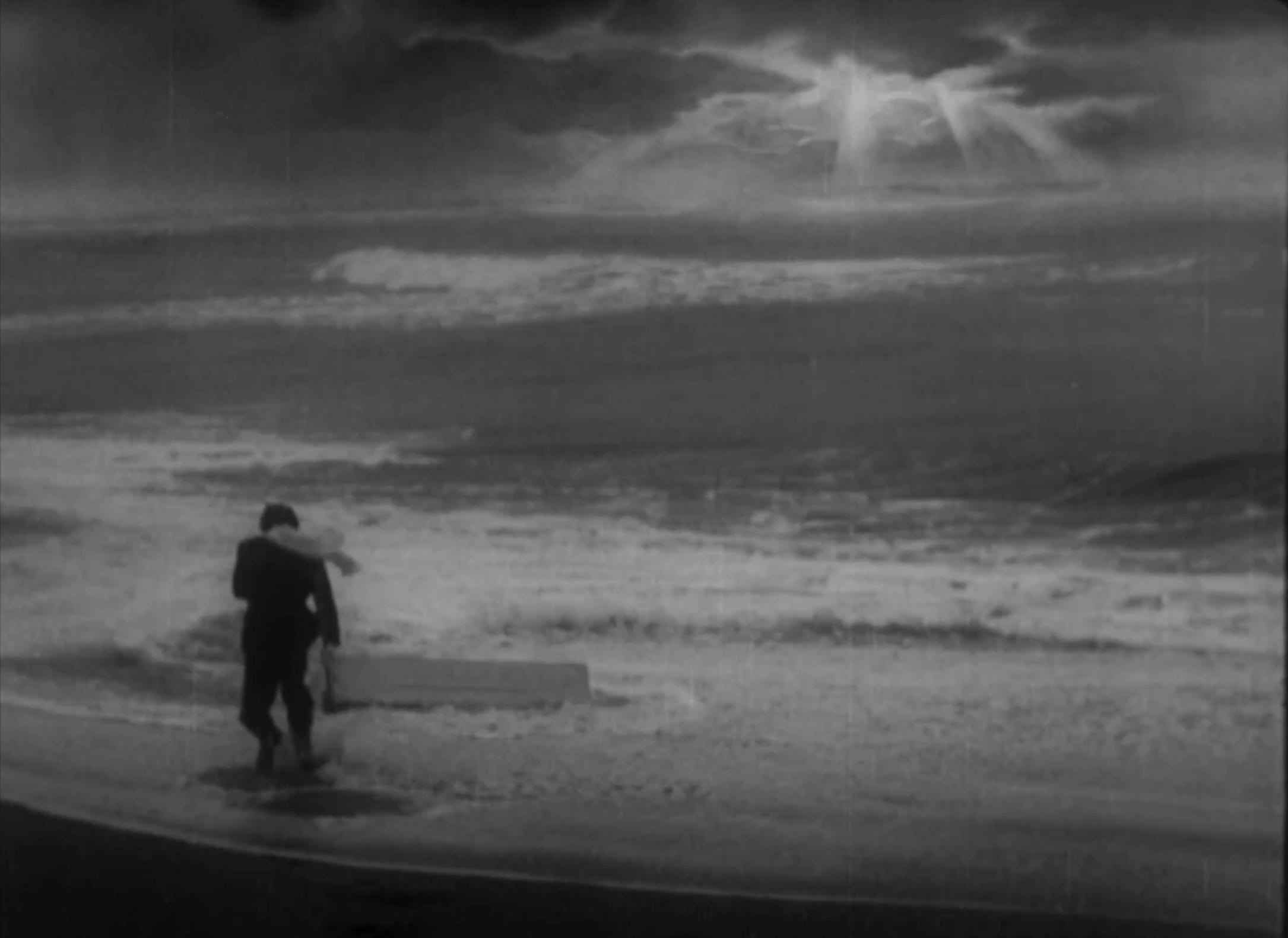
The coffin is clearly not in the pond, it’s at the edge of the ocean, so this crossfade has also changed locations, but it’s not necessarily apparent at first this is a dream, perhaps it’s merely a stylistic scene transition.
The next shots begin to make clearer this is a dream sequence . . .
Slow and Surreal
Now Matsunaga approaches; he’s wearing different clothes — completely inappropriate for a sandy stroll — and carrying an axe, definitely a sign this isn’t just a location change, but something else, likely a dream.
He begins to chop at the box, and some of the shots are cross-faded and slow, the film stock grainy.


Ramping Up the Symbolism
As Matsunaga breaks the coffin open, the scene crossfades from his axe-wielding body to himself lying in the coffin, then as he sits up it crossfades to his face looking down at himself, making explicit the earlier hints with the doll.


And then he begins to run . . .
Chasing Himself
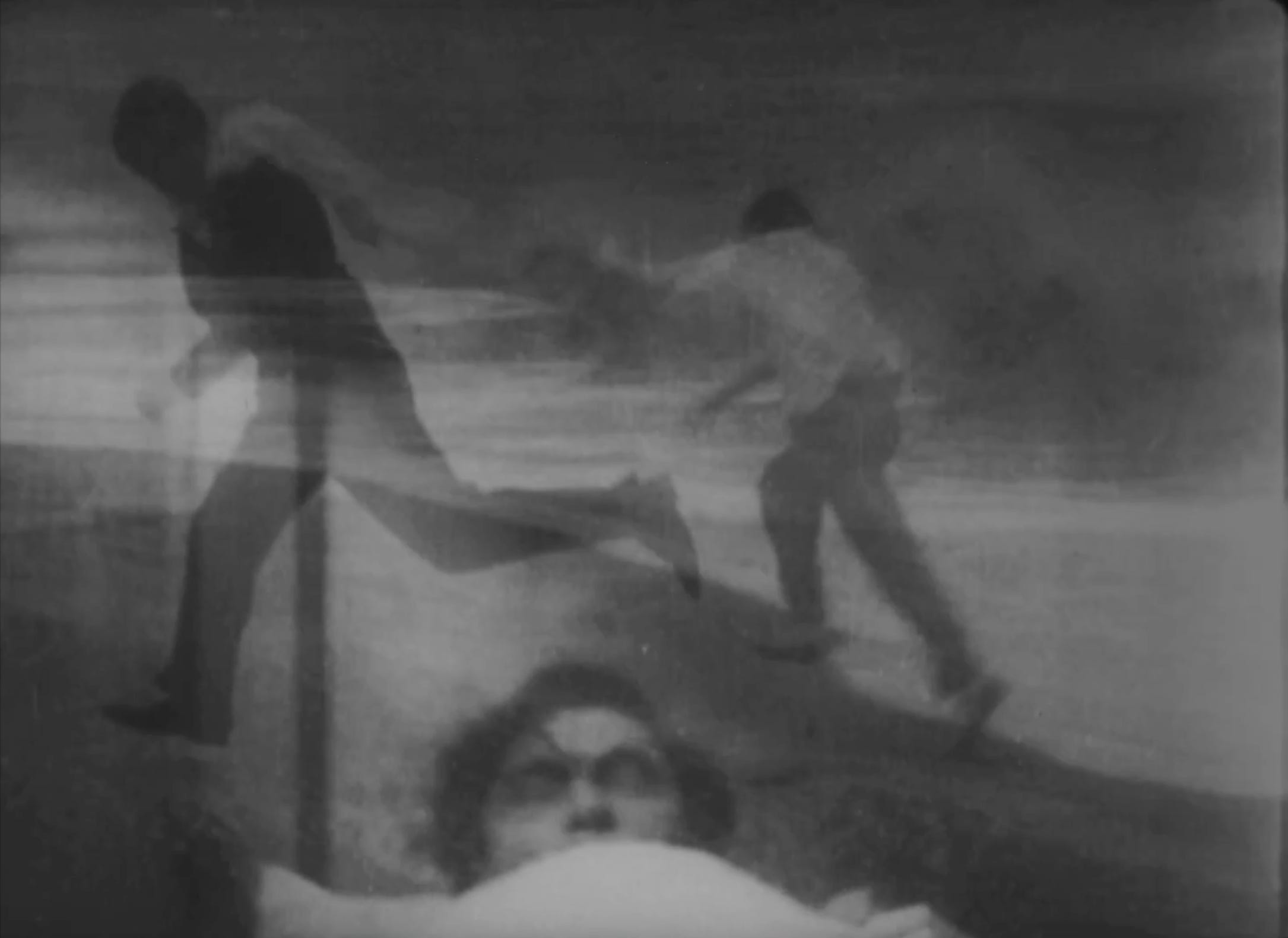
Here, even as the crossfading continues, Kurosawa also plays with framerate.
Often the ‘original’ or axe-wielding Matsunaga is running in slow-motion, and the second or ‘dead’ Matsunaga is running at normal or slightly-ramped-up speed.
Waking Up
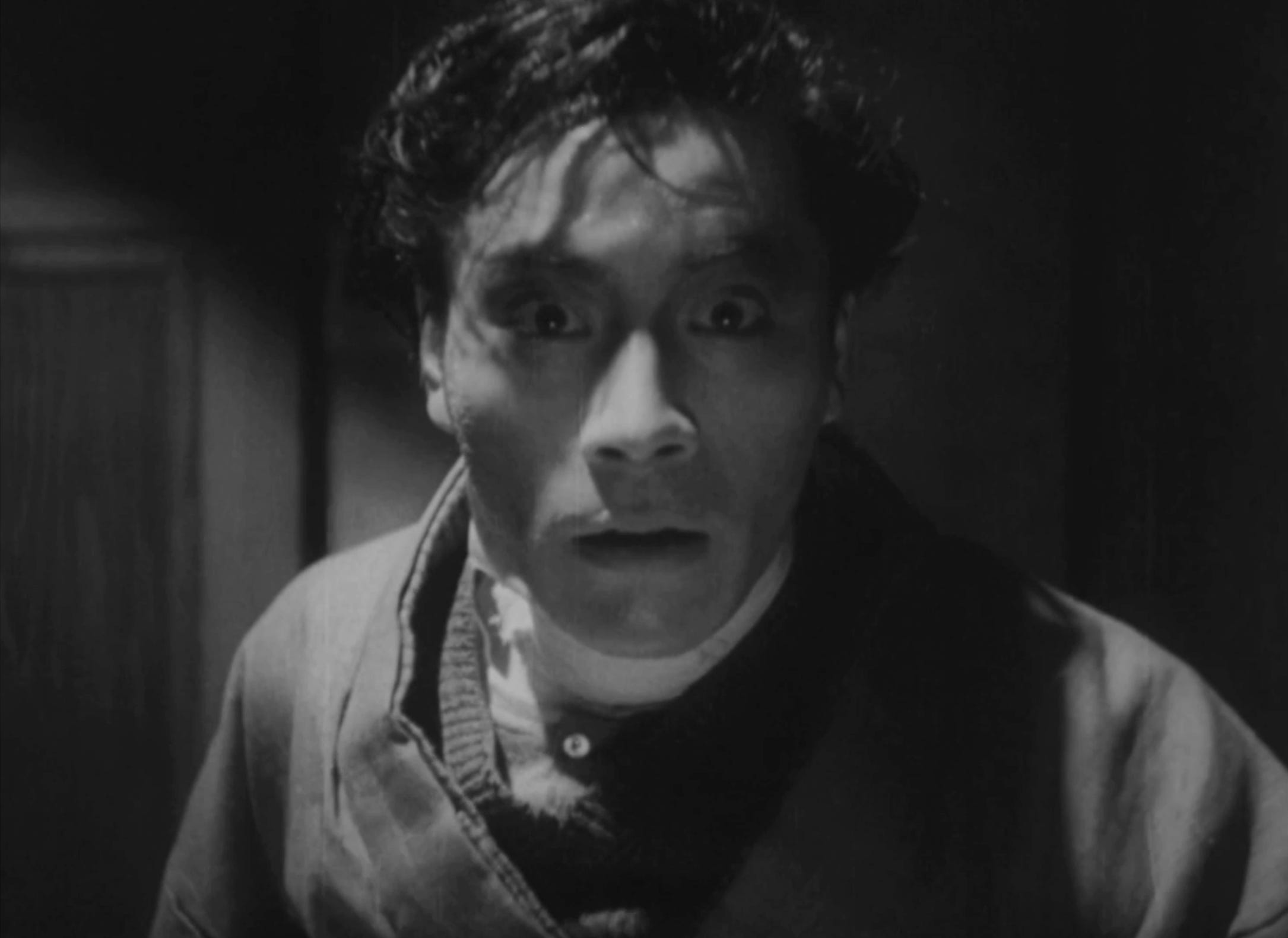
As the second Matsunaga catches the first, both those shots begin to crossfade into a new shot, and we see a sleeping Matsunaga, tossing and turning. As his head is at the very bottom of frame, this gives the illusion we can see the dream playing out in a giant thought bubble above his head.
Of course, that framing also provides plenty of room so when Matsunaga wakes up and sits up, he fills the frame as he stares directly at us.
Takeaways
Kurosawa had clearly thought through the implications of his shots before he ever filmed them, because he was able to arrange everything in the frame so the crossfades could create symbolism, and the characters would often — but not always — overlap in their chasing.
But he also used more than the one technique, playing with framerate and more extreme framing as well.
The resulting symbolism is clear, beautiful, and effective.


Film Details & Further Reading
Drunken Angel (1948)
Director: Akira Kurosawa
Cinematographer: Takeo Itō
Editor: Akikazu Kono