
Colour Theory: RED HOOK SUMMER
when nostalgia and modernity clash
Spike Lee loves red — he splashes it liberally throughout Girl 6, overwhelms with a stark brick wall Do The Right Thing, makes red a key part of Malcolm X’s complex colour theory, and centres the dolly move in Clockers around it.
But despite its moniker, Red Hook Summer concentrates on another colour to convey characters, world, and deeper concepts:
yellow.


Like all Lee’s work (see our breakdown of Jungle Fever), Lee’s techniques are inclusive of cinematography, film processing, wardrobe, props, etc., so we’re looking at how he uses the colour yellow in all elements of Red Hook Summer.
Props, Set Dressing, and Wardrobe
The church where Bishop Enoch (Clarke Peters) preaches has yellow stained glass; the house where he lives has yellowed wallpaper; when he makes breakfast for Flik (Jules Brown) he serves yellow juice and scrambled eggs; when vegan Flik refuses to eat the eggs, he sneaks into the snack room to eat chips in a yellow bag.
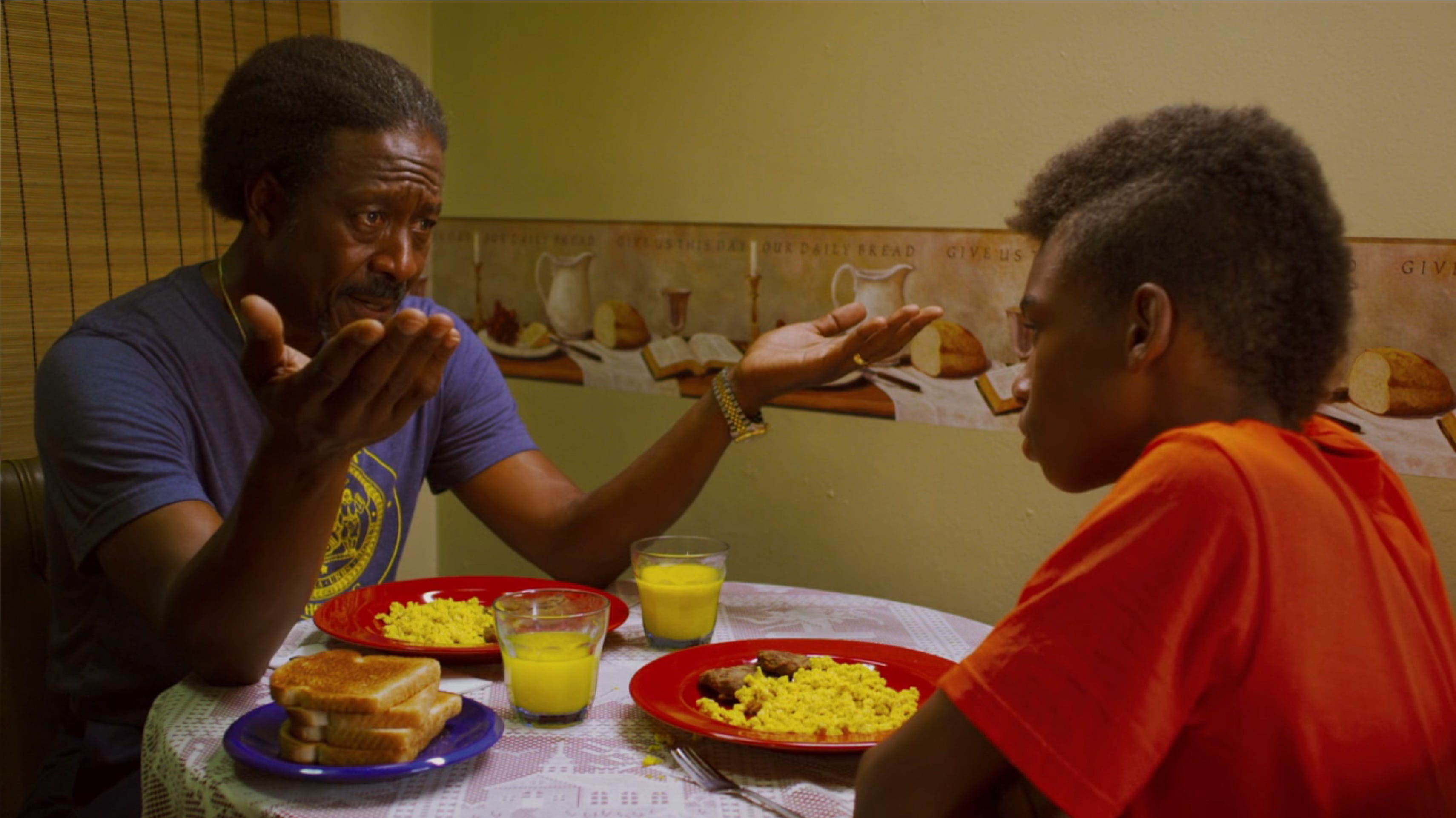
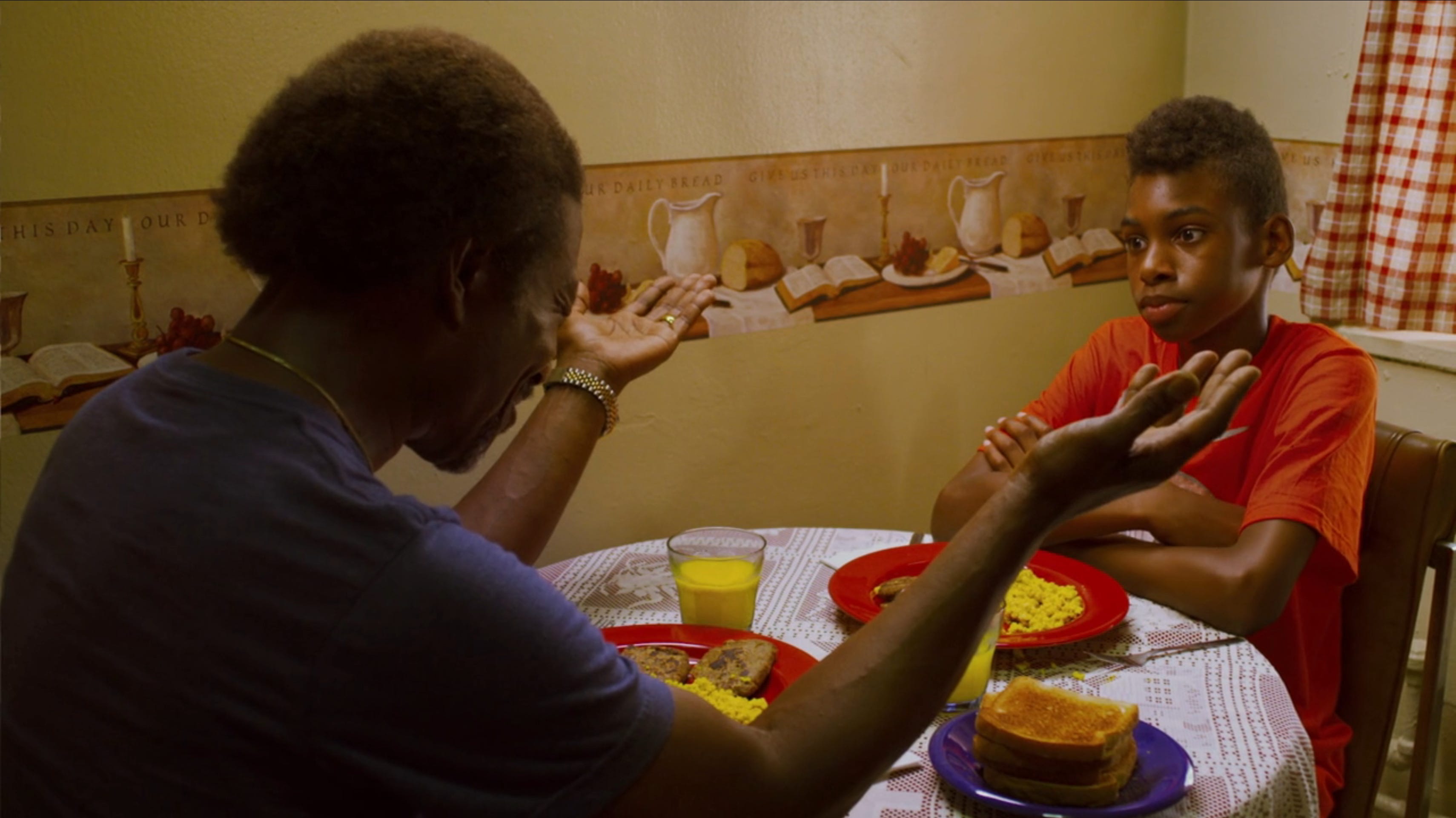


Yellow canoes, artwork with yellow elements, and several yellow shirts pop up through the film. (Both main characters also have a bit of blue in their wardrobe, but we’ll get to that in a minute!)
There are plenty of yellow lights as well, practical lamps which help add to the yellow sheen of most scenes, which brings us to . . .
Cinematography
Yellow is accentuated in both practical lighting and post-production tinting.


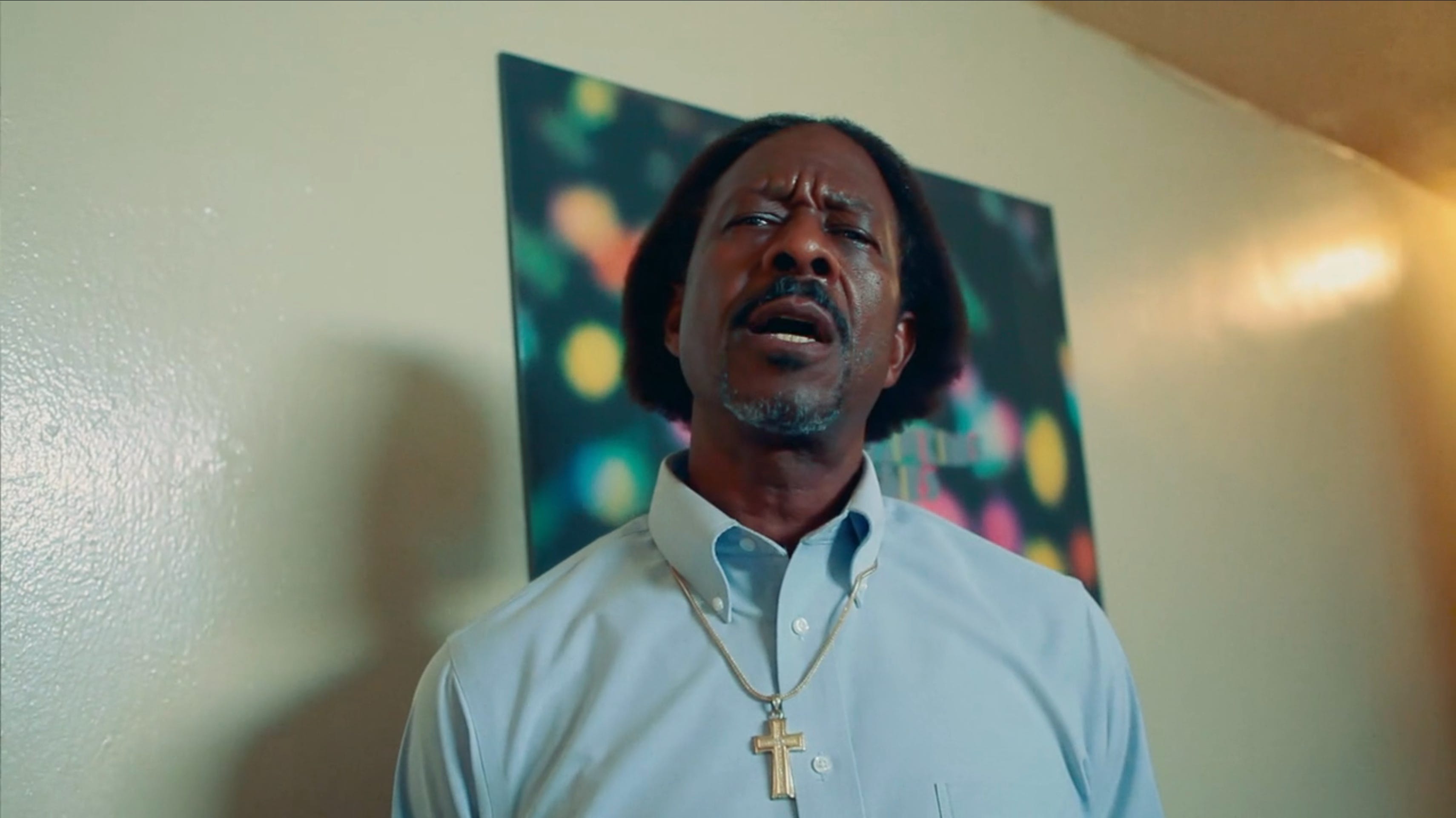
All this near-omnipresent yellow adds up (photo 1, below), so when we get shots which aren’t overwhelmingly yellow, it’s intentionally jarring.
What shots aren’t much yellow?
Everything Flik shoots on his iPad (photo 2, below).
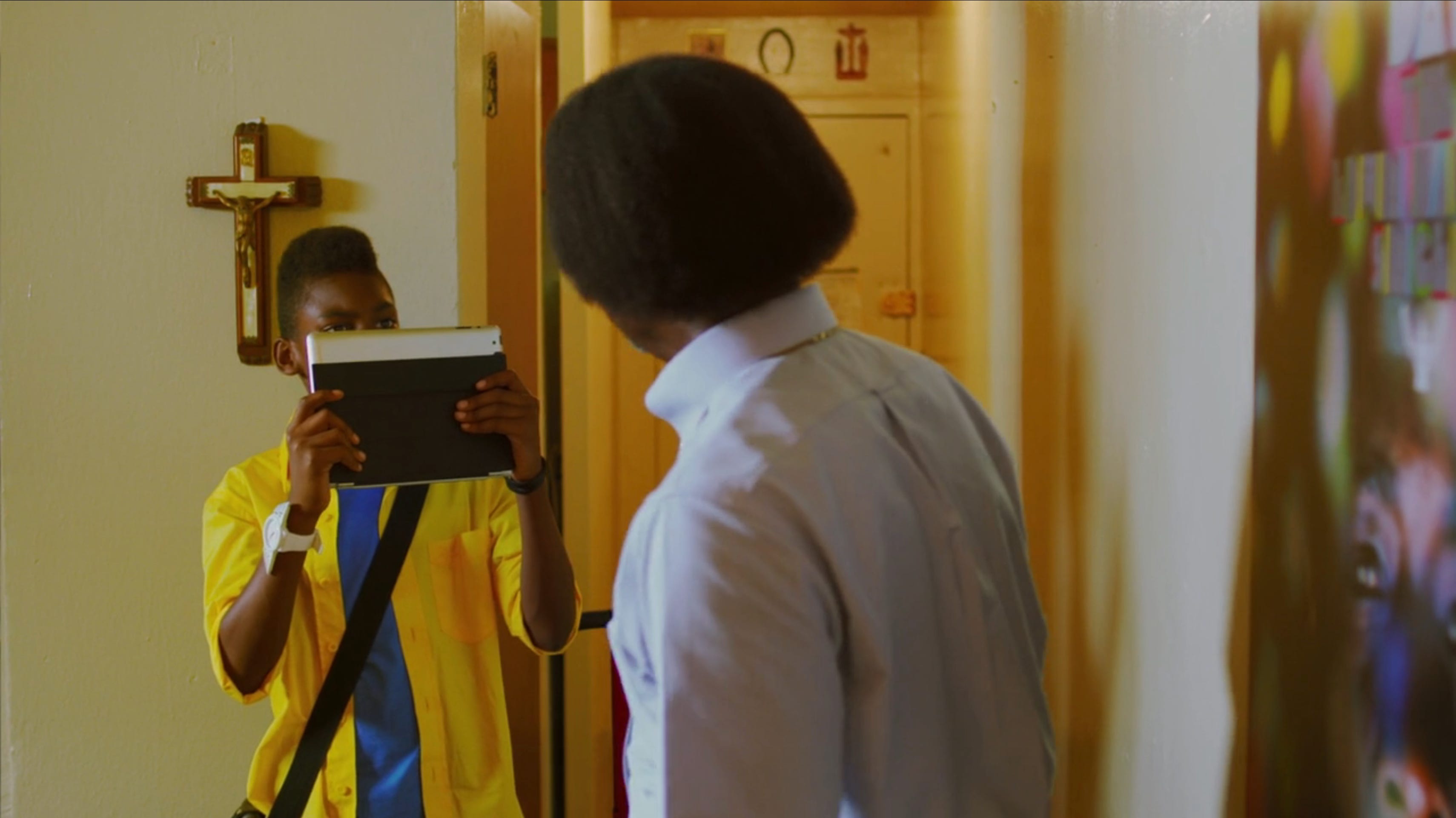
All of Flik’s videos are tinted blue and have ; in fact most don’t have any yellow wardrobe, props, or decor in them.
Red Hook Summer often cuts between Flik shooting, to the footage itself, and we always know which is which because the blue electronic lighting of his iPad footage (left photos, below) stands in stark contrast to the yellow of his current world (right photos, below).


What Does It Mean
Before the story reveals the main conflict between Flik and Bishop Enoch, the film’s overall colour theory already gives us an idea of the themes, contrasting a nostalgic (and often false) view of the world with a more brutal, cold reality of the world.
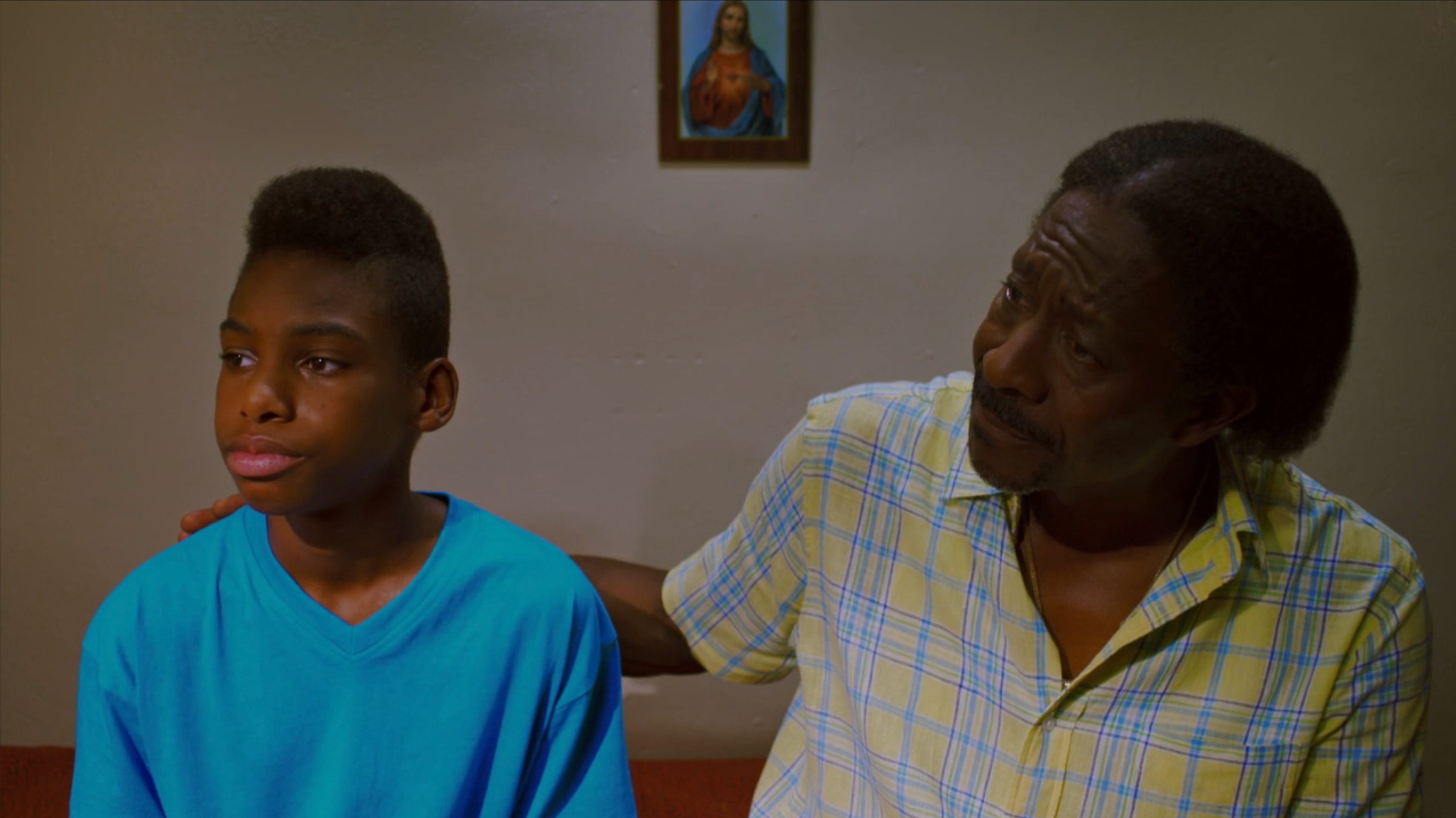
Switching the colours starkly when we’re within Flik’s POV exemplifies the vast differences between him and Bishop Enoch, which has even more devastating impact after the film’s late-act reveal.
The shots make us feel the wide gulf between Flik and Bishop Enoch’s worlds;
between the ‘objective in-film world’ and Flik’s digital way of seeing the world;
and between the antiquated and nostalgic ideas of Bishop Enoch and the developing modern ideas of Flik.


Takeaways
Most directors who show ‘character shooting footage within a story’, then show that footage, visually distinguish between the film and ‘in-world’ footage.
But Lee’s colour theory here really demonstrates how you can push that idea, and how the difference can carry themes through your whole film.
Even one significant difference can pack a wallop, whether it’s film grain, angles, aspect ratio, or as Red Hook Summer chooses: colour.
Loved this analysis. A film that works in fits and starts, but like any of Lee’s films is worth deep consideration. It also has what may well be his most emotionally devastating use of the double dolly shot.