
Blocking and Framing a Two Person Confrontation: THE MARVELOUS MRS. MAISEL
When Midge (Rachel Brosnahan) sees Lenny (Luke Kirby) in the airport tunnel in The Marvelous Mrs. Maisel Season 5 premiere "Go Forward", there’s nothing for it but to have A Conversation.
This setup gives the episode a visual problem: how do you keep three-plus minutes of two people talking in a beige tube interesting and dynamic?
WELL!
Establish the Scene
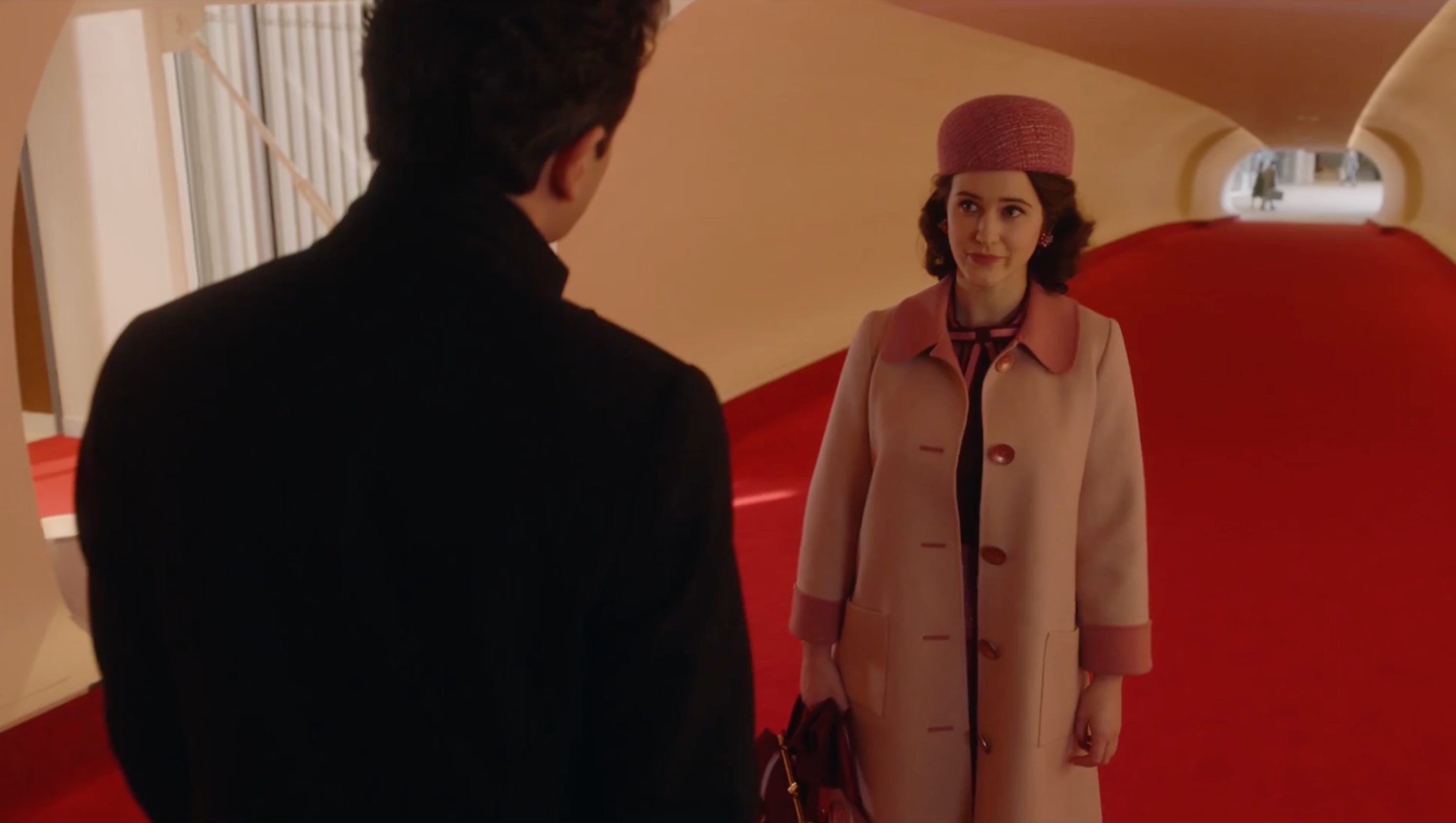
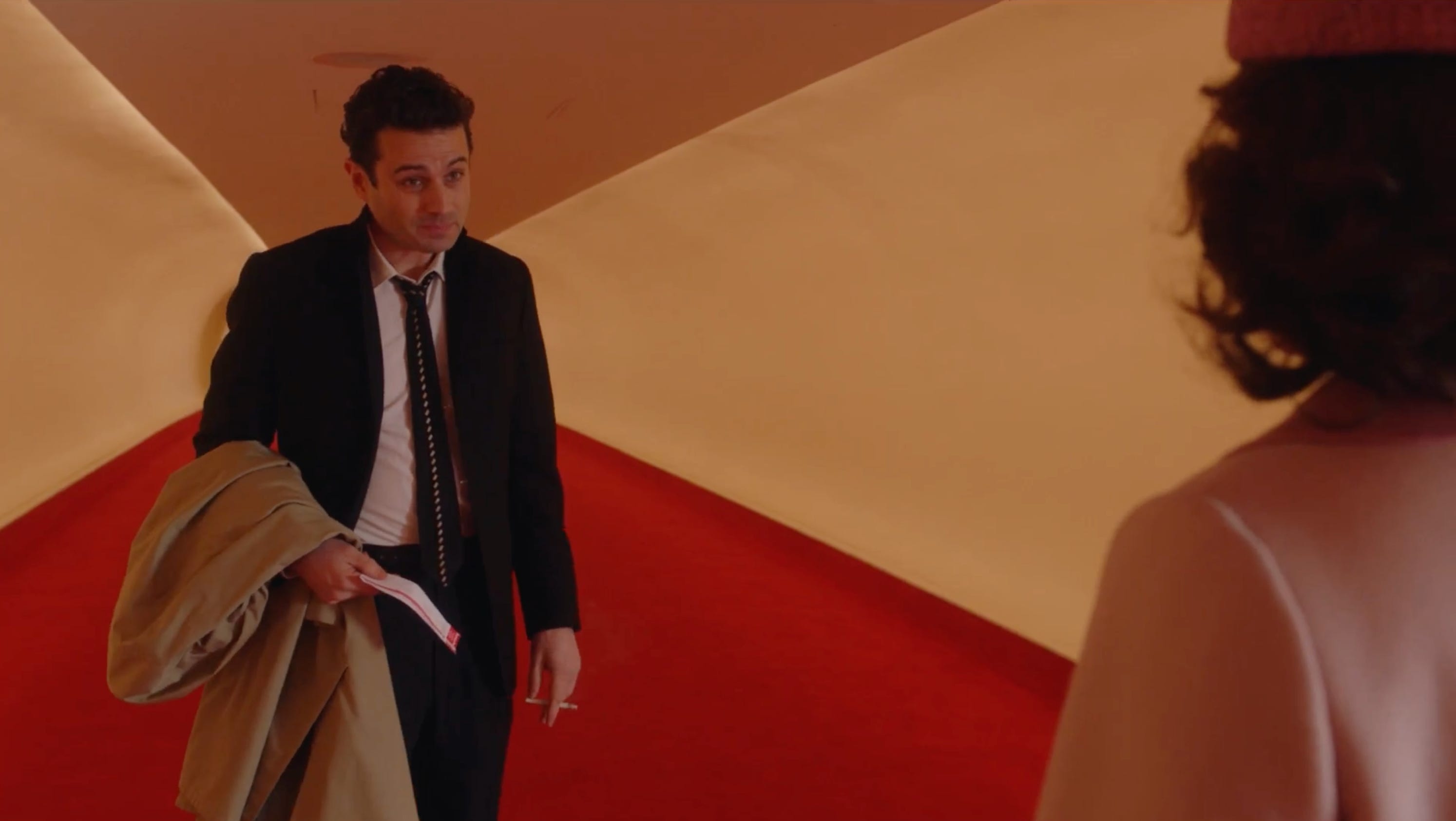
When they see each other, they’re slightly offset: Midge to the right, Lenny to the left.
The camera starts moving, then when the shot cuts back to Midge, she’s moving too; this linking of movement clearly establishing the shot of Lenny as her POV.
sMeanwhile the lines on the ceiling also draw our eyes straight to Lenny; even though 2/3 of the frame is taken with beige, the difference in tone between ceiling and wall, and the faint lines of light, create visual distinction which drive the blocking.


Midge gets closer and closer . . . and then walks into frame. This signals a switch, from the scene being about her seeing him, to them being on equal ground.
When Midge reaches Lenny, the next two shots are of both of them, establishing their proximity before they get down to business.
Note the leading lines are still guiding us to Lenny, keeping the scene leaning towards being about what Midge sees.
Action and ‘Busy Work’
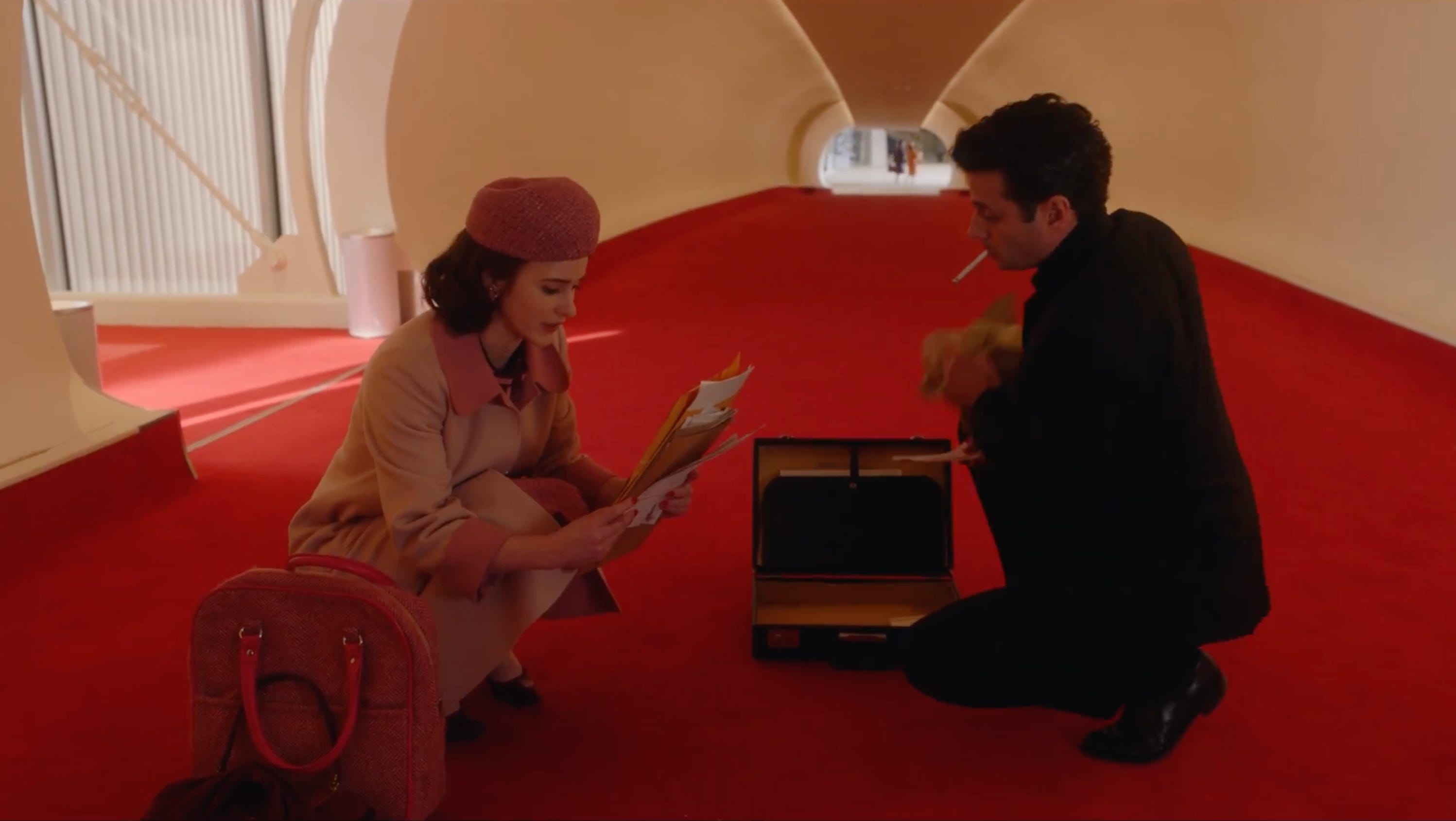
Lenny had dropped his briefcase several moments before Midge got close to him, but he didn’t pick it up, because he was intent on finding his boarding pass.
This continues the conversation while giving the actors something to do — Midge asks “can I, uuuh?” and then proceeds to help him pick everything up — but it also gives the camera something to do, as it rotates around the two of them, comes down to floor level, and then stands back up with them, all of which takes about 30 seconds, and gives an unusual angle on the hallway we would not generally get.
Shot Reverse Shot
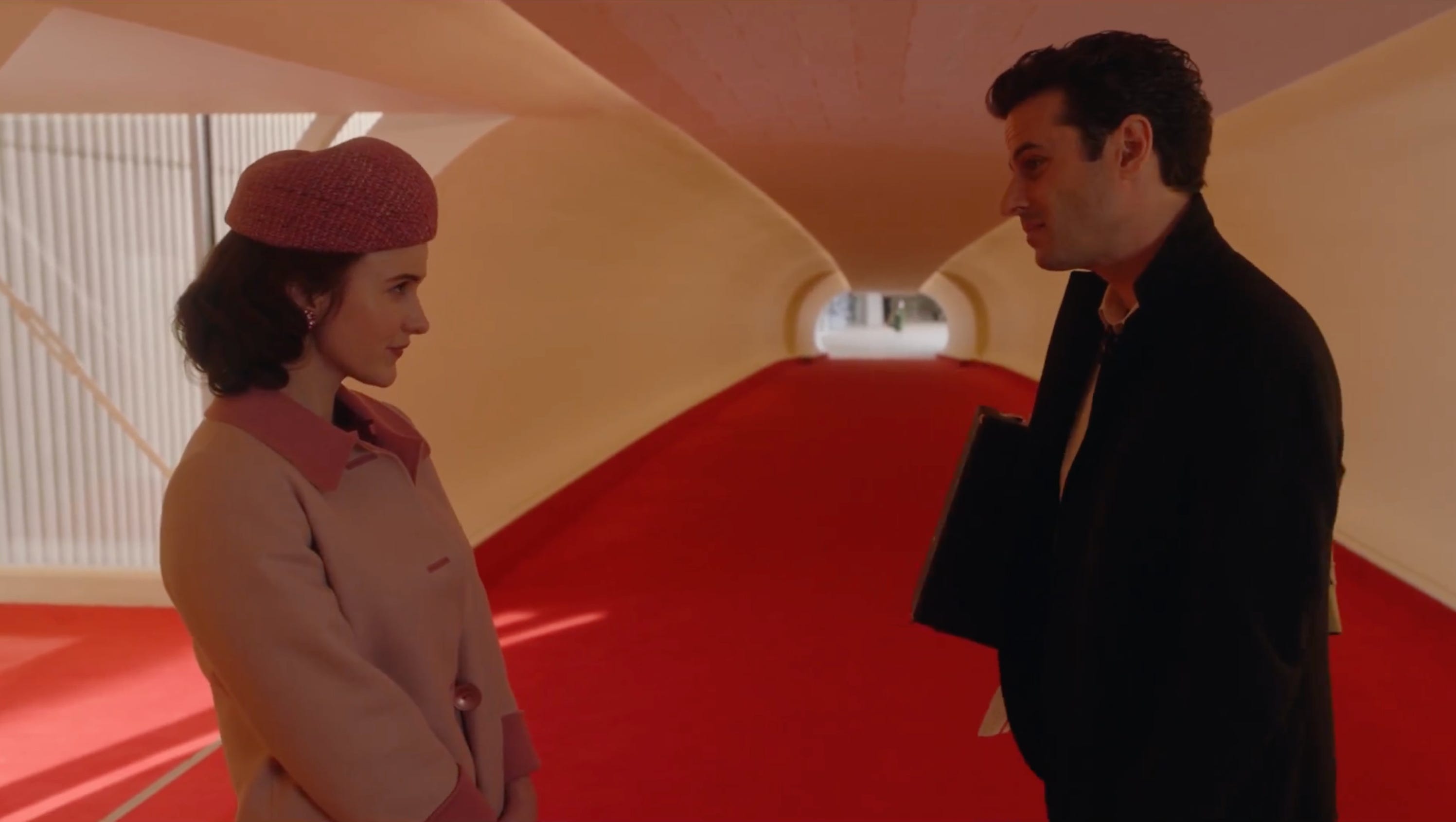
Once they stand, the scene moves into more typical coverage. Midge and Lenny are equal sized, dirty in each others’ frames, revolving around each other.


This goes on for a full minute, because now we’re into it, we don’t need so much visual stimulation: the snappy conversation is the main driver!
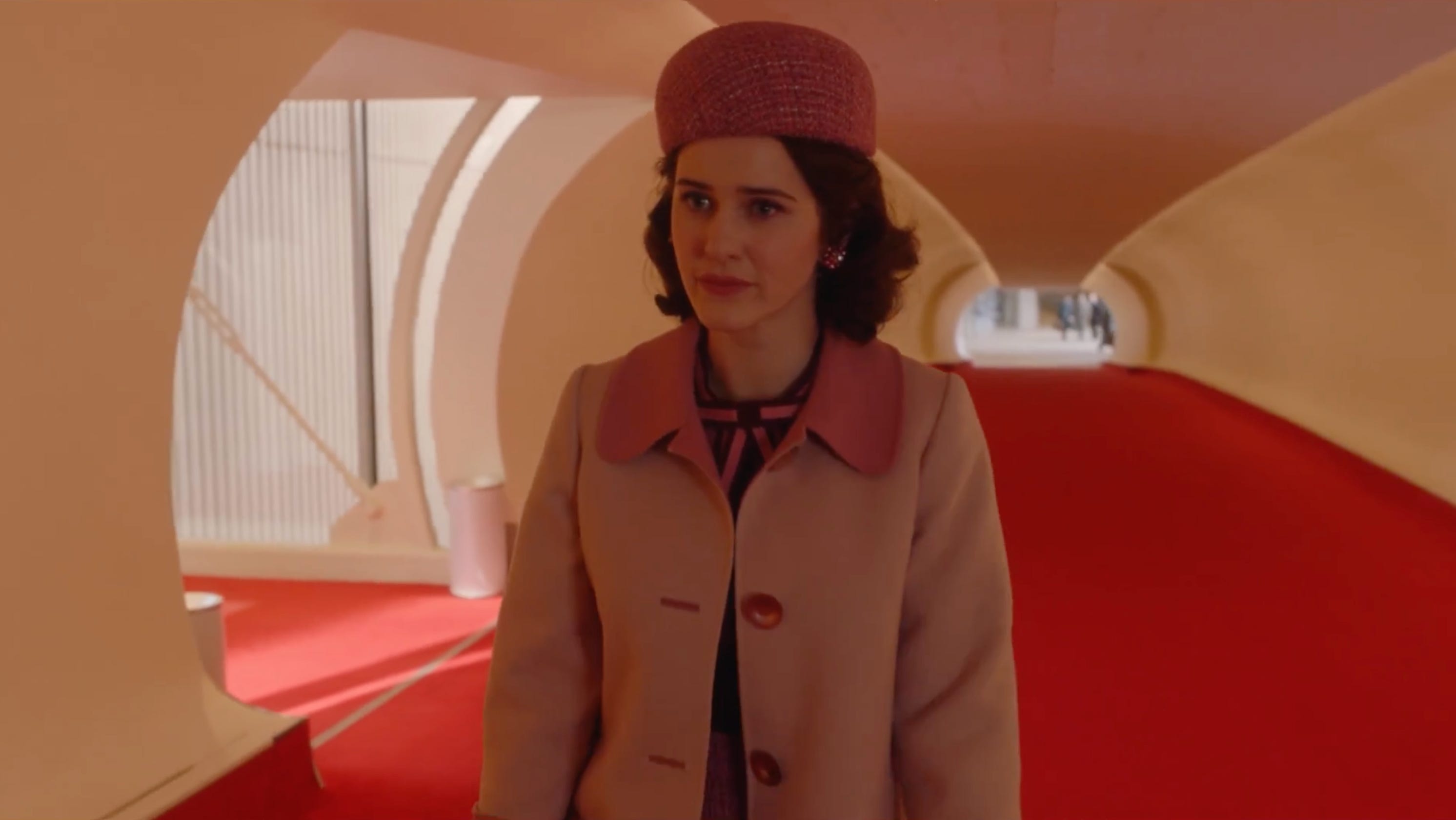
Though still of note is how Midge’s shot gives her a bit of background variation; where Lenny is against a wall of beige, she’s got some colour as well as a reminder they’re at the tunnel leading to Lenny’s flight.
Right as they’re about to transition, we go for a moment back to the two-shot from when they stood up from picking up the briefcase; but it’s not just a still shot, it transitions into a moving shot!
Ending the Conversation
Now it’s Lenny’s turn to walk, into the tunnel we’ve been constantly reminded of.
His movement motivates the camera, which moves to keep the shot a two-shot as he comes back to make his final statement and then leave again.


EXCEPT for one cut back to a clean single of Midge.
Why have this shot at all?
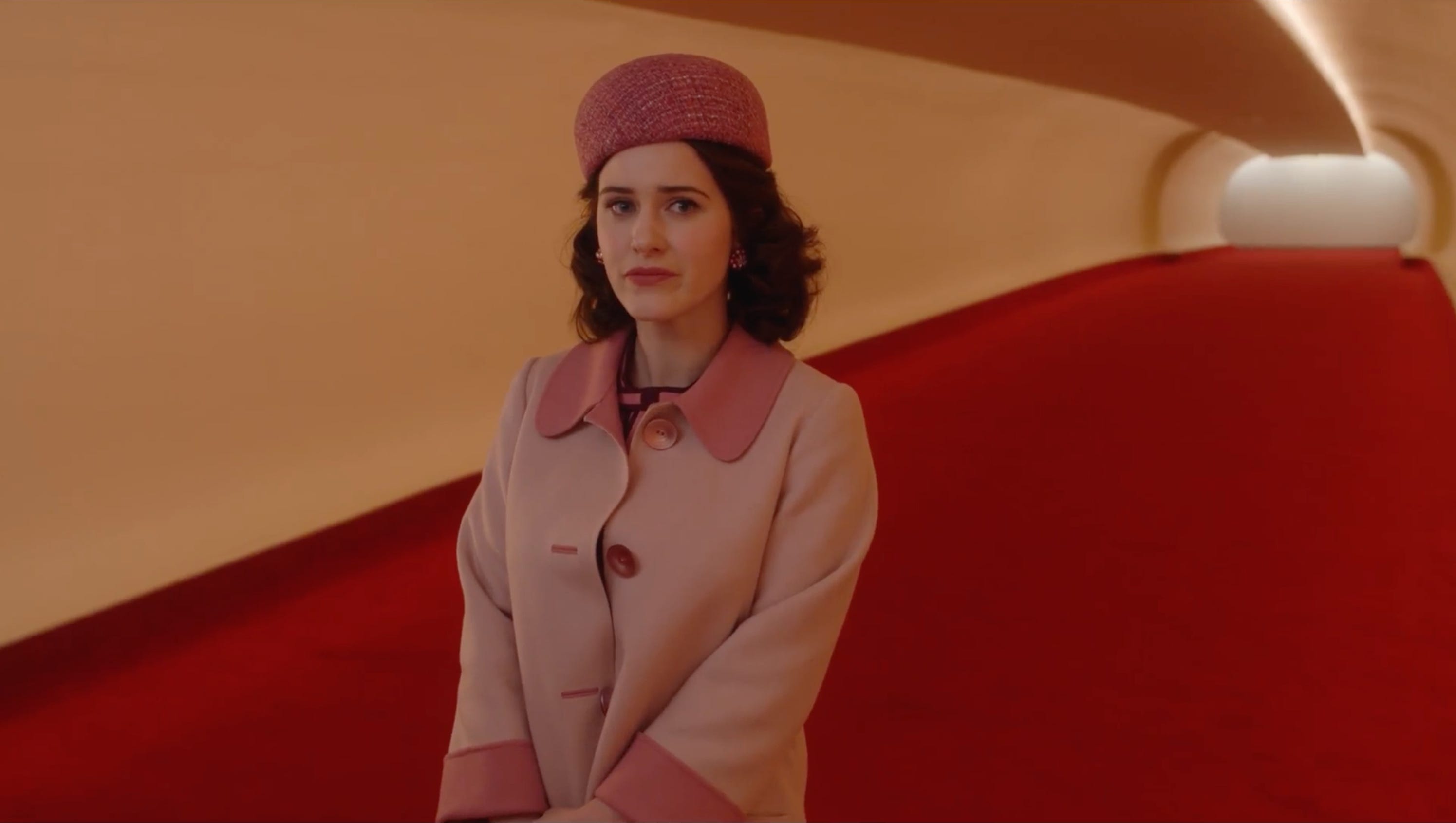
On a practical level, it’s a kind of shot which means you can switch between two different takes for better performances, or not have to rely on your actors to nail everything in one take.
While it’s possible this shot was used that way in the edit, The Marvelous Mrs. Maisel (like all Sherman-Palladino shows) has actors who are incredibly used to rattling off long dialogue and conversations, they don’t necessarily plan for coverage, they want everything to flow.
Add to that it’s a shot cleanly composed, as was the start of the scene and the shot-reverse-shots (but there’s no similar reverse from this angle to one of Lenny) it’s more likely this shot was because we’re still in Midge’s frame of mind and point of view. It’s not as direct as the moving POV shot which led into this scene, but using a single shot of Midge here puts us more into her emotional state than Lenny’s — as befitting the central character of the show, especially in this season premiere episode which is reestablishing her character’s wants and needs and feelings.
Transitioning Out
The scene ends with Midge walking out of frame, cutting just before her shoulder and poof of hair exit entirely, leaving us with the empty hallway where Lenny used to be.
Takeaways
This scene takes two people talking — alone but for each other, for three and a a half minutes, in a vast, liminal, two-toned space — and makes it riveting. It doesn’t use complex dutch angles, it doesn’t even vary the shots too much!
What it does is use the shots to move us through the scene, service the dialogue and characters’ actions, and subtly put us in Midge’s shoes.
Scenes like this are not exactly what The Marvelous Mrs. Maisel is known for, so what does the episode do next? It transitions into a wild, crowded, multicoloured, constantly moving oner.
Variety is truly the spice of Midge’s life.
Great performances too.