
Blocking a Sneak: DOUBLE INDEMNITY
For Draft Zero, Mel (and Chas!) talked about how Double Indemnity exemplifies noir in many ways, including the writing trick of portraying lying / cheating / murder / nihilism / etc. without endorsing it.
One of a thousand things which makes Double Indemnity a masterpiece is its use of symbolic and/or dramatic scene blocking.
Like so.
This is essentially three scenes in 90 seconds:
Eavesdropping — femme fatale Phyllis (Barbara Stanwyck) listens in on her boyfriend Walter (Fred MacMurray) talking to his boyfriend Barton (Edward G. Robinson)
Hiding — Barton leaves while Phyllis desperately shields herself with the door
Calling It Off — Walter tries to make Phyllis stop pursuing the insurance payout
Let’s take each ‘mini scene’ and see how they’re practical, symbolic, and dramatic.
Eavesdropping
Intercutting serves the purpose of ‘us seeing a character overhearing conversation about herself.’
But there’s another, practical element to letting us hear Walter and Barton while showing Phyllis walking from the elevator doors to the office door.
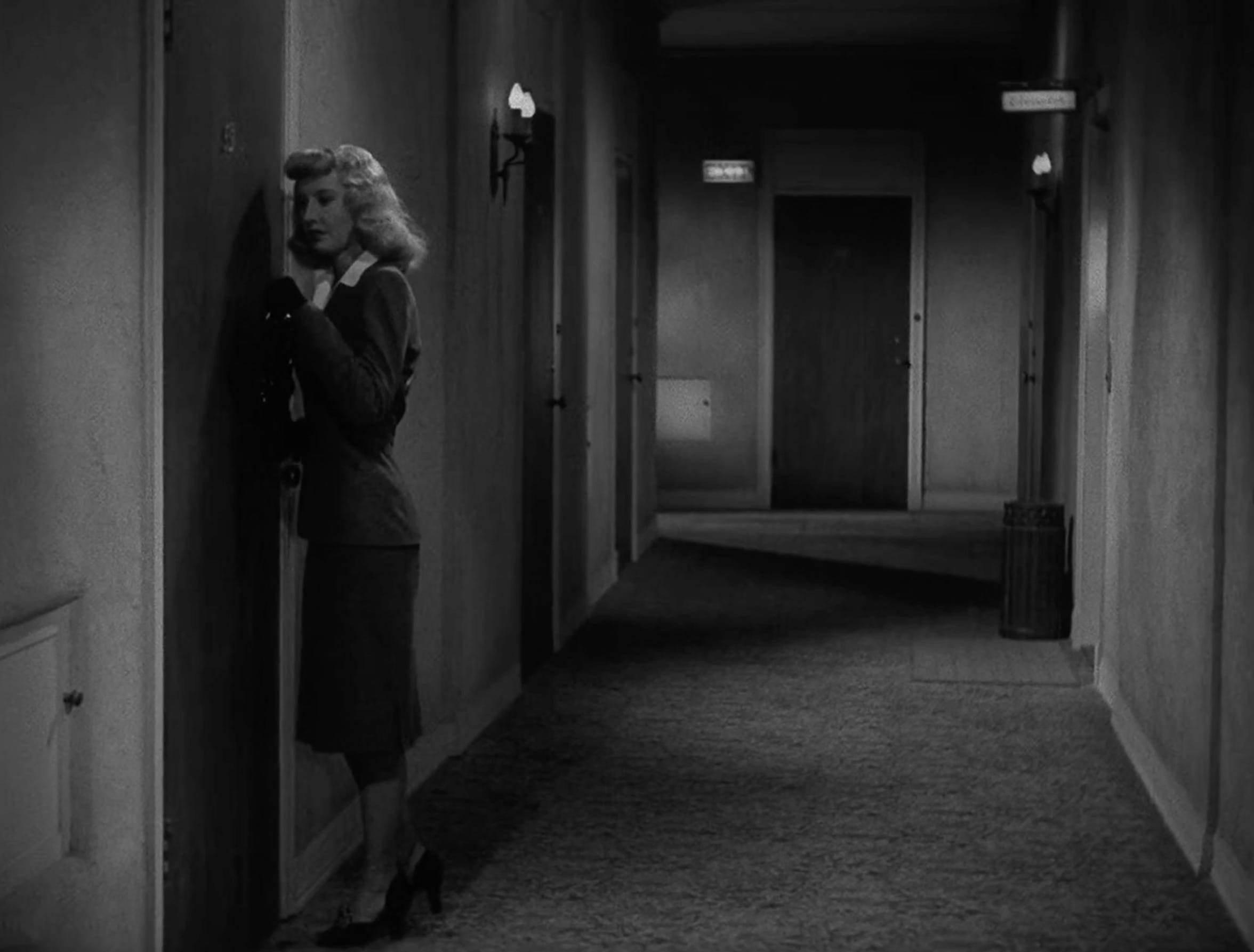
The conversation keeps the flow of the scene going while Phyllis demonstrates the geography of the hallway, showing us what doors Barton will be walking from and to while the space is wide and empty.
It’s about to get a lot more crowded . . .
Hiding
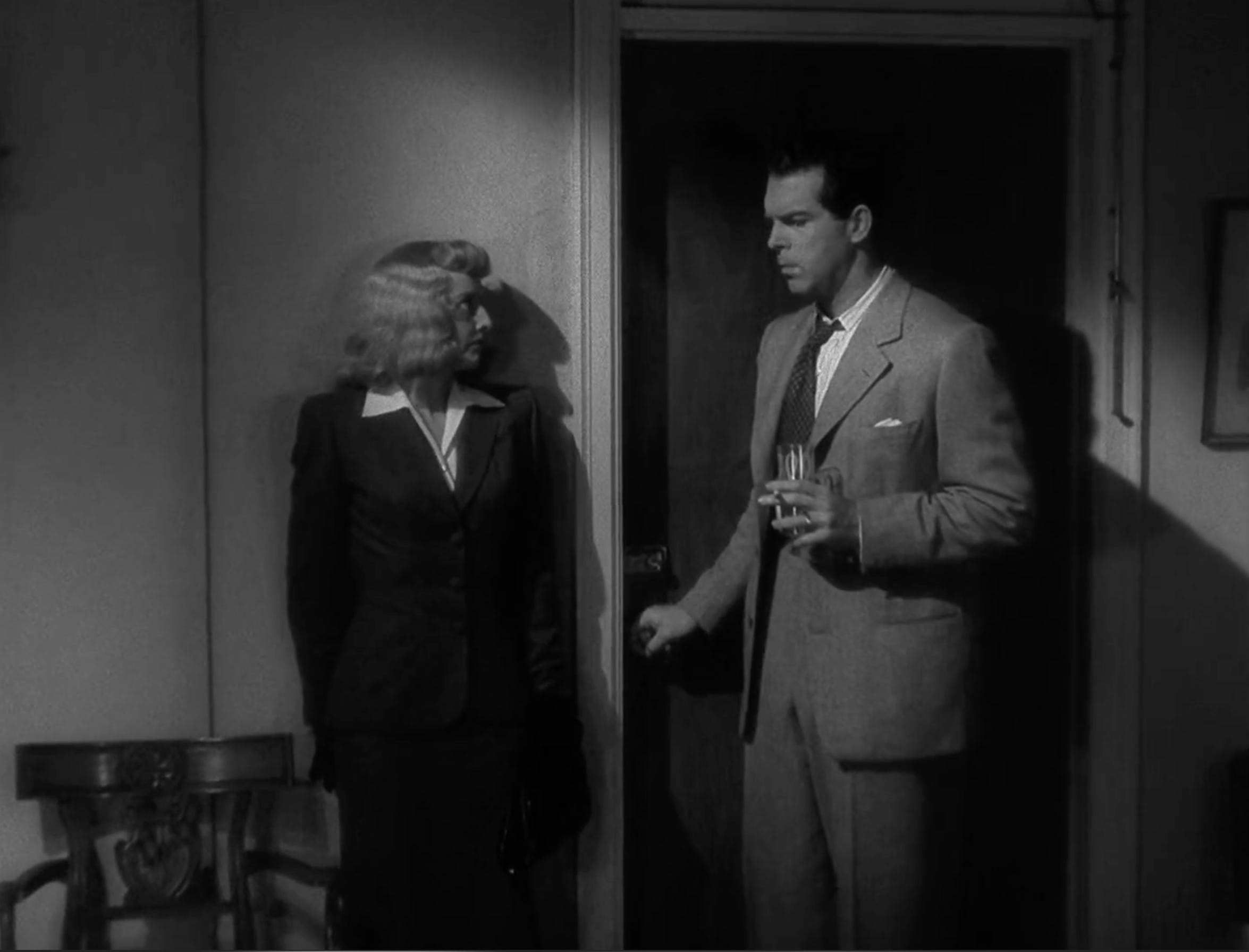
When Walter and Barton emerge, Phyllis grabs the doorknob to keep Walter from closing the door and revealing her.
Really just two angles for the rest of the scene, with two cutaways to closeups of Barton and Phyllis.


The scene uses Walter’s demonstrative eyes to show his recognition of where Phyllis is, as well as using his eye movements as ‘cut points’ — when he looks to Barton, the scene cuts to Barton (or an different angle which includes Barton), and so on.


Though Phyllis and Barton have their own shots, Walter doesn’t, which underscores the symbolism of how he is framed in the wide shots, as well.
Walter is torn between his girlfriend and his actual friend; between committing murder and living a ‘regular’ life; between the femme fatale and his potential future.
Calling It Off
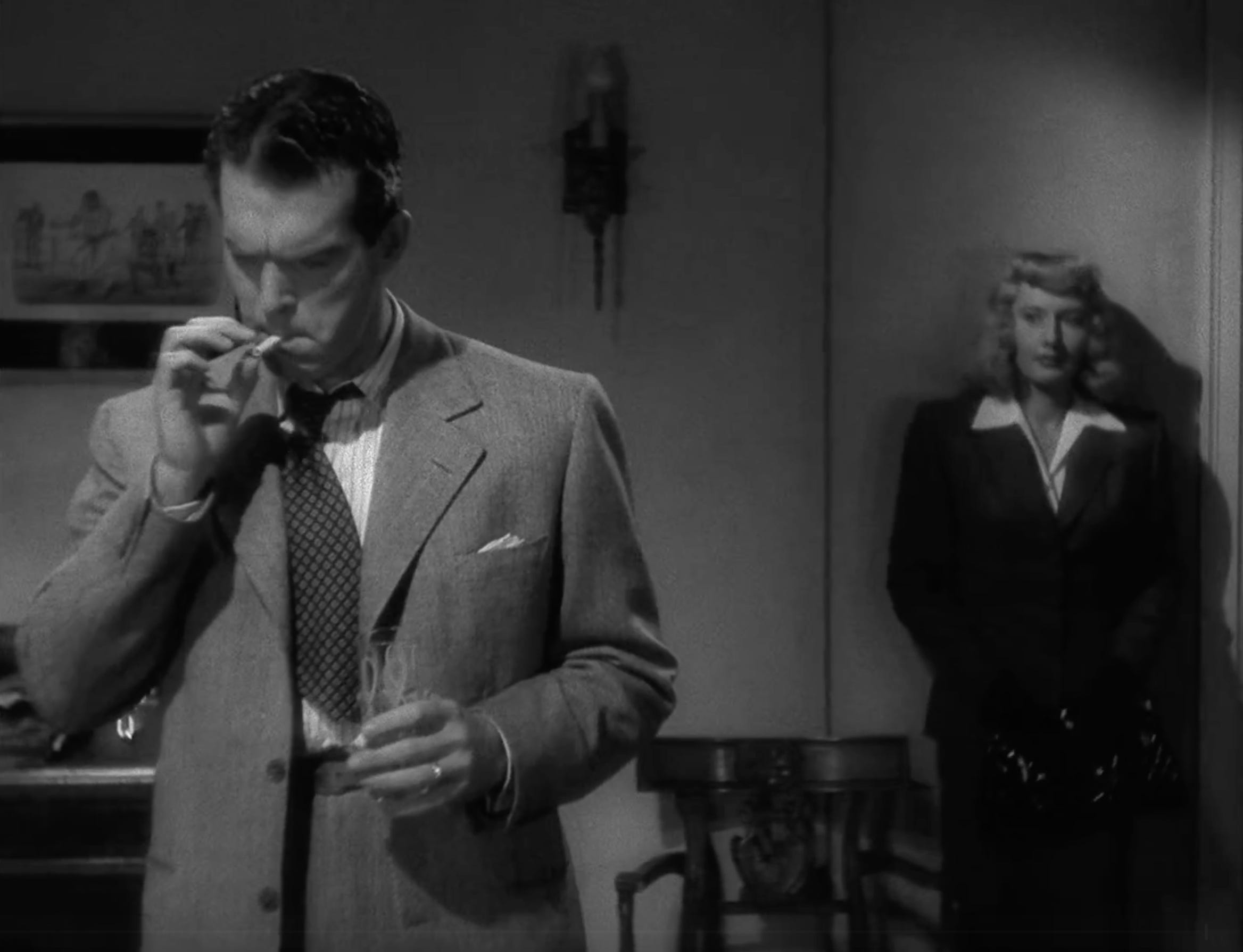
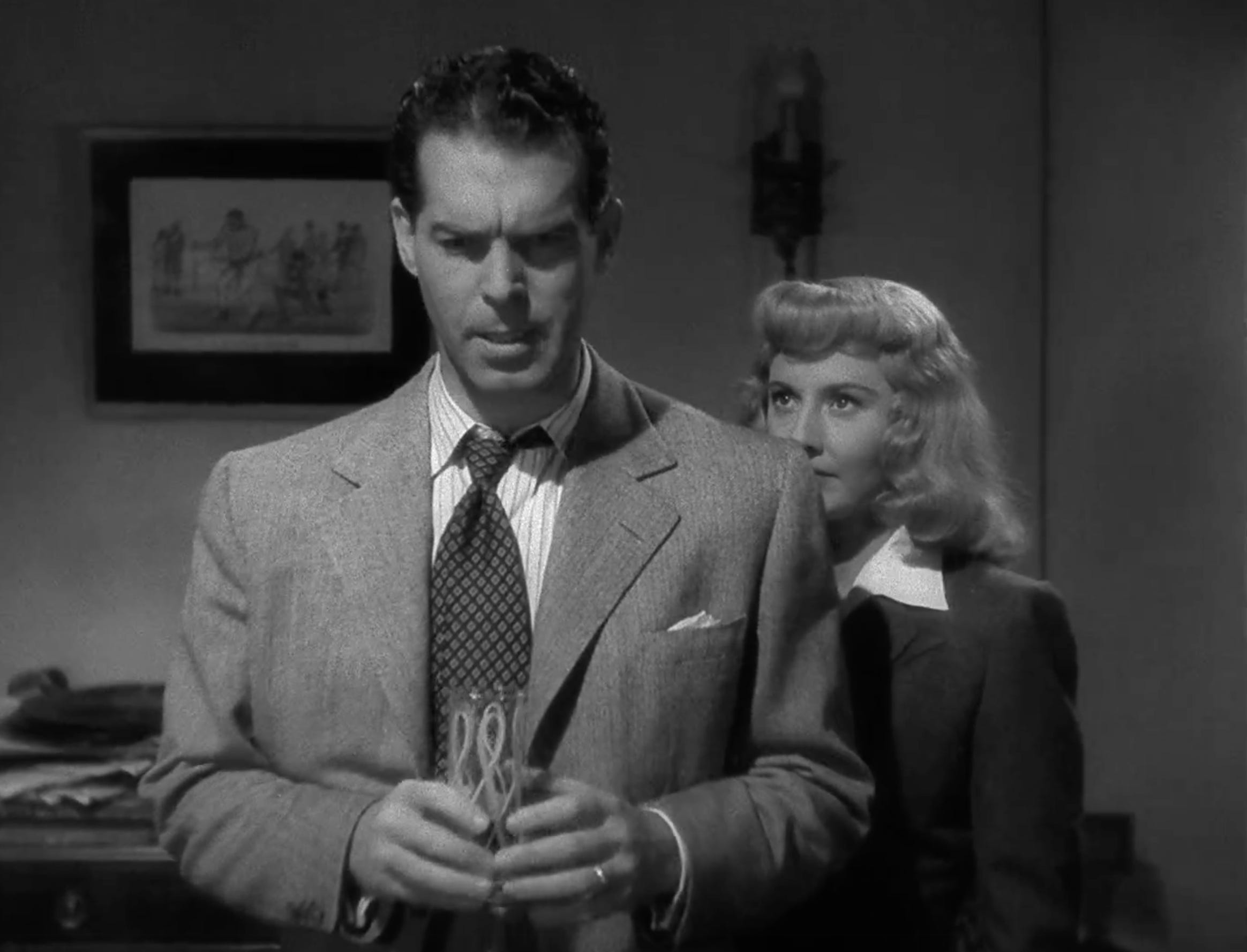
When they enter Walter’s office, Walter almost immediately walks towards camera, placing his back to Phyllis
This is not only practical for the film so we can see both their faces, it is symbolic because she has a clear shot of his back and is about to (figuratively) backstab him, and finally it is capital D Dramatic because look at Phyllis’s face conveying pure intensity, and look how the pools of light catch Barbara Stanwyck as she moves (really best in video, but the photos do some justice).
Takeaways
Double Indemnity is a perfect movie.